

A roof can look serviceable from the ground and still be carrying six figures of concealed risk. That is why a proper commercial roofing due diligence guide matters. If you are acquiring, refinancing, inheriting or taking handover of a commercial asset, the roof is not a line item to skim past. It affects water ingress risk, compliance exposure, tenant disruption, insurance disputes and capital planning in ways that can distort the whole deal.
Too many decisions still rely on contractor opinions gathered late and framed around repair sales. That is backwards. Due diligence is not about getting a quote. It is about getting the truth early enough to protect your leverage.
What commercial roofing due diligence is really for
Commercial roof due diligence is a decision-control exercise. Its job is to tell you what condition the roof is actually in, how long key systems are likely to remain serviceable, where defects sit, what urgency attaches to them and what that means for your budget and risk profile.
For asset managers and owners, this is about avoiding surprise capex and proving that maintenance decisions were informed and defensible. For developers and buyers, it is about making sure the roof condition aligns with price, warranties, design intent and future use. For builders and principals at handover, it is about identifying whether defects, non-compliant details or incomplete works are being pushed downstream as someone else’s problem.
The right process does not just identify defects. It sorts noise from material risk. A cracked lap seal in a low-consequence area is not the same as widespread drainage failure over a critical operations zone. Both may appear in a report. Only one should change the commercial conversation.
The biggest mistake in a commercial roofing due diligence guide
The most common mistake is treating the roof as a maintenance issue instead of an asset risk issue. When that happens, inspections become too narrow. People look for obvious leaks, ask for a repair estimate and move on. That misses the bigger questions.
Is the membrane nearing end of life even if it is not leaking today? Are box gutters holding water because falls were wrong from day one? Has plant installation compromised waterproofing and voided warranty positions? Are there safety access constraints that will make future maintenance slower and more expensive? Has previous patching masked recurring failure points rather than fixed root causes?
Those questions matter because roof failures are rarely isolated. They spread into ceilings, services, tenancy disputes, mould claims, corrosion, stock damage and lost operating time. A cheap inspection that only confirms the obvious often becomes an expensive blind spot.
What should be checked before purchase or handover
A sound due diligence scope starts with the roof system itself, but it cannot stop there. The membrane or sheet roofing condition matters, as do laps, penetrations, terminations, flashings, sealants, fixings, insulation condition and signs of movement. Drainage must also be assessed properly. If sumps, overflows, gutters and downpipes are undersized, blocked or badly detailed, the roof may fail in heavy weather even if the primary covering still looks acceptable.
Documentation also needs scrutiny. Existing defect reports, warranty records, maintenance history, as-built details and previous repair invoices often reveal a pattern. Repeated local patching in the same zone is rarely random. It usually signals unresolved movement, bad detailing or chronic ponding.
Then there is context. A healthcare facility, logistics warehouse, school or data-sensitive property carries different operational consequences when water gets in. The same physical defect can produce very different business risk depending on tenancy, plant below, hours of operation and access constraints. Due diligence needs that operational lens, not just a technical checklist.
A practical commercial roofing due diligence guide for decision-makers
Start with the trigger event. Are you buying, leasing, funding, taking practical completion, planning capex or responding to repeated failures? The trigger shapes the depth of investigation required. A pre-acquisition review may focus on condition, remaining life and near-term expenditure. A handover review may focus harder on workmanship, completeness, specification compliance and whether defects should still sit with the builder or contractor.
Next, define the decisions the report needs to support. If the outcome is budget planning, you need staged cost exposure and urgency. If the outcome is negotiation, you need clear defect evidence and a distinction between maintenance, latent defect and likely non-compliance. If the outcome is dispute management, documentation quality becomes critical.
Then get eyes on the roof from an independent specialist who does not sell the repair. That point matters. Once the person identifying the problem also profits from the solution, the advice is no longer clean. In commercial property, that conflict does real damage. It inflates scopes, distorts urgency and weakens your negotiating position because you are relying on someone else’s sales narrative instead of evidence.
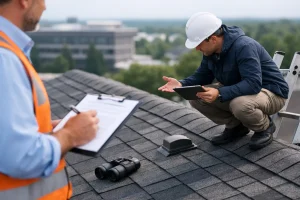
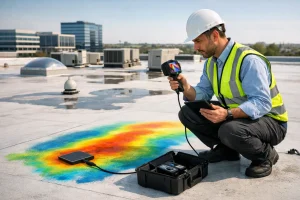
A proper inspection should include close-condition assessment of roof areas, drainage paths, penetrations and interfaces, along with a review of maintenance history and any available design or warranty documentation. Depending on the asset, it may also require moisture detection, intrusive checks, buildability review or targeted defect diagnostics where symptoms and root cause do not obviously align.
What a good report should tell you
A useful report is not a photo dump. It should tell you what the issue is, where it is, why it matters, how urgent it is and what options exist. It should separate immediate risk from monitor-and-plan items. It should also state where certainty ends.
That last point is important. Some roofs can be assessed confidently through non-destructive inspection. Others have concealed conditions that require targeted opening-up to verify substrate deterioration, trapped moisture or detailing failures. Pretending to have certainty where none exists is not expert advice. A commercially sharp report makes the limitations clear so you can decide whether more investigation is justified.
You also want plain language around consequence. If a defect creates a high likelihood of water ingress over plant rooms or tenant-critical areas, say that clearly. If the roof is tired but still manageable with disciplined maintenance for a defined period, say that too. Decision-makers need hierarchy, not waffle.
The trade-offs: repair, monitor or replace
This is where experience matters. Not every poor roof should be replaced immediately, and not every repair program is prudent. It depends on condition, occupancy risk, budget timing, access, warranty position and the intended holding period for the asset.
A short-hold investor may accept managed defects with known maintenance exposure if the pricing reflects it. A hospital or education campus with high consequence occupancy may need a lower risk tolerance even where failure is not yet widespread. An industrial owner with recurring gutter overflow into stock areas may find that repeated patching costs more than corrective redesign.
The point of due diligence is not to push one outcome. It is to let you choose the right one with your eyes open.
Where commercial roofing due diligence often uncovers hidden cost
The expensive issues are often not dramatic. They are systemic. Poor falls that leave standing water. Plant and service penetrations added without proper waterproofing. Membrane terminations that were never secure enough. Box gutter details that looked acceptable on paper but fail under real rainfall intensity. Inherited patchwork repairs that make warranty arguments messy and root-cause analysis harder.
These issues rarely stay local. They affect maintenance frequency, contractor callouts, tenant confidence and future replacement complexity. They also influence procurement because once a roof becomes a layered mix of original installation, reactive patching and undocumented modifications, pricing uncertainty goes up.
That is why independent due diligence creates value before a leak event, not just after one. It gives you evidence while choices still exist.
Why independence matters more than ever
When roof advice is tied to repair revenue, commercial objectivity suffers. That is not cynicism. It is incentive structure. The party selling works has every reason to frame urgency, scope and solution in ways that favour conversion.
Independent consultants exist to correct that imbalance. Roof Inspection Australia works on that basis for a reason. We do not sell roofing. We just tell you the truth. For owners, managers and project teams, that means clearer risk identification, stronger contractor challenge and better control over where capital actually goes.
In a market where one bad roof decision can distort operating budgets for years, truth is not a soft benefit. It is leverage.
If a roof sits on your asset, it sits on your risk register whether you have inspected it properly or not. Better to know what you are carrying before weather, tenants or handover disputes make the decision for you.