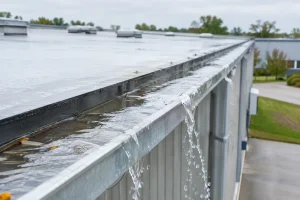




A roof can look serviceable at handover, pass a casual visual check, and still be carrying defects that cost serious money later. That is the real issue behind the question, what is roof latent defects. In commercial property, latent roof defects are faults that exist but are not reasonably obvious at the time of inspection, completion, purchase or handover. They sit in the background until water ingress, corrosion, membrane failure, drainage problems or internal damage forces them into view.
For asset managers, developers and facility teams, that distinction matters. An obvious defect can usually be identified, documented and argued over early. A latent defect is different. It often emerges after warranties start running, after contractors have left site, or after responsibility has shifted between parties. That is when a technical problem becomes a commercial problem.
What is roof latent defects in practical terms?
In practical terms, a latent roof defect is a hidden defect in the roof system that was present from construction, installation, design or material selection, but was not apparent through normal observation at the relevant time. It may be concealed within the build-up, masked by temporary weather conditions, or only become visible after the roof is exposed to thermal movement, ponding, heavy rain, wind uplift or ongoing service loads.
This is not just about a leak appearing months later. The leak is usually the symptom. The latent defect is the underlying cause.
On commercial roofs, that cause might be poor membrane termination, incorrectly installed flashings, inadequate falls, blocked or undersized drainage design, missing sealant continuity, fastener issues, incompatible materials, poor weld quality, insufficient lap integrity, or penetrations that were never detailed properly in the first place. In metal roofing, it may involve concealed fixing problems, incorrect lapping, poor end detailing, or early coating breakdown caused by bad specification or installation. In trafficable or plant-heavy areas, latent defects often relate to service coordination and damage created after installation but before final sign-off.
Why latent defects are so costly
Latent defects are expensive because they delay clarity. By the time the problem is visible, the roof system may already have allowed water into insulation, ceilings, services, structural elements or occupied spaces. The direct repair cost is rarely the whole story.
There is also disruption to tenants or operations, emergency call-outs, consultant fees, make-good works, internal damage, procurement delays and disputes over who is responsible. In healthcare, education, logistics and government assets, the consequences can extend well beyond repair invoices. Operational continuity, stakeholder confidence and compliance all come into play.
A hidden roofing fault can also distort capital planning. What should have been a targeted defect claim or localised remediation becomes a broader replacement discussion simply because the issue was not identified early enough. That is how preventable defects turn into unplanned capital expenditure.
Where roof latent defects usually come from
Most latent roof defects are not random. They tend to come from one or more of four sources: design failure, installation failure, material failure, or poor coordination between trades.
Design-related defects often begin with insufficient falls, poor drainage layout, badly resolved interfaces, or details that look acceptable on paper but are weak in real conditions. A roof can be compliant in a narrow technical sense and still be vulnerable in service.
Installation-related defects are even more common. That includes rushed workmanship, inconsistent welding, poor substrate preparation, missing components, non-compliant fixings, badly executed penetrations or repairs that were used to hide earlier mistakes. These are the defects that often sit unnoticed until the first sustained weather event or the first seasonal movement cycle.
Material issues can also be latent, but they need careful diagnosis. Not every membrane split or coating failure is a product defect. Sometimes the product was suitable but installed badly. Sometimes it was installed correctly but selected for the wrong environment. That difference matters when responsibility and remedial scope are being assessed.
Trade coordination is another repeat offender. Roofs fail where disciplines collide – mechanical penetrations, electrical mounts, hydraulic overflows, access systems, solar supports and signage fixings. A roof is rarely compromised by one dramatic error. More often, it is weakened by a series of small decisions made by different parties with no proper oversight.
Signs a defect may be latent rather than recent
Not every roof issue is a latent defect. Storm damage, lack of maintenance and unauthorised modifications can all create genuine new failures. The challenge is separating those from faults that were embedded earlier.
A defect is more likely to be latent when the pattern of failure points to original design or workmanship. Repeated ponding in the same areas, moisture entry around standardised penetrations, consistent lap failures, internal leaks after normal rain rather than extreme weather, or widespread detailing defects across a new roof all suggest an underlying defect that existed before the symptom appeared.
Timing also matters, but it is not definitive. Some latent defects show up within months. Others take years, especially where degradation is gradual or weather exposure has been mild. A roof can hold together long enough to get through defects liability periods and then begin to fail in service. That does not make the fault new. It often means the conditions needed to expose it took time.
Why contractor-led opinions are not enough
When a latent defect is suspected, the wrong first move is to rely solely on the party that installed, repaired or supplied the roof. That is where many owners lose control. A contractor may frame the issue as maintenance, storm impact, wear and tear or isolated damage because that interpretation limits their exposure.
Sometimes they are right. Often they are not. The point is that their commercial position is tied to the outcome.
Independent technical assessment matters because it separates symptom from cause and evidence from opinion. If the roof has concealed failures, the inspection needs to test assumptions, review detailing, assess water pathways, examine drainage behaviour and determine whether the defect profile is systemic or localised. That requires methodical reporting, not a sales quote dressed up as diagnosis.
Roof Inspection Australia operates in that independent space for a reason. We do not sell repairs. That means the findings are not shaped by a maintenance contract, a replacement agenda or a product pitch. For commercial asset owners, that independence is not a nice extra. It is leverage.
How latent roof defects are identified properly
A proper latent defect assessment goes beyond a quick walkover. It starts with evidence gathering across the roof system, interfaces and internal symptom areas. The objective is to understand not just where water appears, but how and why the system is failing.
That usually involves a review of roof design intent, as-built conditions, drainage performance, membrane or metal roof detailing, penetrations, terminations, plant zones, previous repairs and visible distress patterns. Depending on the roof type and the suspected issue, the assessment may also consider moisture mapping, flood testing, invasive inspection, photographic defect mapping and comparison between specification and installed condition.
The standard should be clear. The report needs to help a decision-maker act. That means identifying the probable cause, the likely extent of the issue, the associated risk, the implications for warranty or contractor accountability, and the most commercially sensible next step. Technical noise is useless if it does not improve control.
The legal and commercial angle
Latent defects sit at the intersection of building performance, contractual responsibility and risk allocation. That is why they become contentious.
In some cases, the issue may support a claim against a builder, contractor, consultant or supplier. In others, the evidence may show mixed causation – part original defect, part maintenance failure, part third-party damage. That is where simplistic answers fall apart.
Commercial property owners do not need guesswork. They need defensible evidence that can stand up in meetings, procurement decisions, warranty discussions and, if necessary, formal dispute processes. The earlier that evidence is assembled, the better the options usually are.
Waiting for a roof problem to become undeniable is rarely a smart strategy. Water does not care about budget cycles, lease obligations or internal reporting structures.
What owners and asset managers should do next
If you suspect a latent roof defect, act before the next weather event decides the timeline for you. Preserve records, review handover and warranty documentation, document leak history, and get an independent inspection focused on causation rather than repair sales.
Do not assume a temporary patch means the issue is resolved. It may only be masking the symptom. And do not accept broad statements like “the roof is old” or “it just needs maintenance” without evidence. Sometimes that is true. Sometimes it is a convenient story.
The better question is not whether the roof has leaked. It is whether the failure was built in from the start, whether it is isolated or systemic, and what that means for risk, responsibility and spend.
That is the real answer to what is roof latent defects. It is not just a technical label. It is a warning that hidden roof failures can quietly undermine your asset until the cost lands on your desk. The earlier you replace opinion with evidence, the more control you keep.