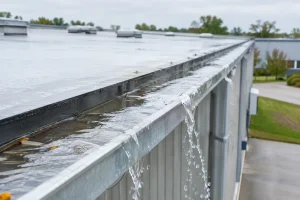



A leaking roof rarely starts as a legal problem. It starts as a contractor saying the roof is fine, a tenant still reporting water ingress, and a facilities team stuck between invoice pressure and operational risk. That is exactly where a roof contractor dispute expert earns their value – not by adding noise, but by establishing what is actually happening, what caused it, and who is responsible.
For commercial property owners and asset managers, roofing disputes are rarely about one isolated defect. They usually sit inside a larger commercial problem: delayed handover, warranty arguments, recurring call-backs, disputed variations, capital budget blowouts, or a contractor insisting that ponding, lapsing membranes, failed penetrations or drainage defects are somehow acceptable. When the facts are unclear, the loudest voice often wins. That is expensive.
What a roof contractor dispute expert actually does
A roof contractor dispute expert provides independent technical assessment when parties disagree about roofing condition, workmanship, scope, responsibility or remediation. The key word is independent. If the same party diagnosing the problem also wants to sell the repair, replacement or upgrade, their advice is not neutral. It is part technical opinion, part sales process.
That conflict matters. In a dispute, you do not need another quote dressed up as an inspection. You need evidence that can withstand scrutiny from builders, project managers, consultants, legal teams, insurers and internal stakeholders.
An effective expert looks beyond surface symptoms. They assess the roof system as built, compare installation quality against relevant standards and manufacturer requirements, examine whether defects are isolated or systemic, and document the commercial implications. The output should not be vague commentary. It should be clear findings, causation analysis, defect mapping, photographic evidence and practical advice on what must happen next.
Why roofing disputes become costly so quickly
Most contractor disputes drag on because too much is left open to interpretation. A builder says the leak is maintenance-related. A contractor says the design is at fault. A manufacturer suggests the product was installed incorrectly. Meanwhile, the asset owner is left carrying the risk.
The real cost is not limited to the repair itself. It sits in operational disruption, repeated access, internal escalation, tenant dissatisfaction, water damage, compliance exposure and wasted management time. On a large commercial or institutional site, a roof dispute can also affect procurement decisions, defect liability outcomes and future capital planning.
This is why timing matters. The earlier an independent expert is engaged, the easier it is to preserve evidence, identify root causes and stop the dispute from becoming a circular argument built on assumptions.
When to bring in a roof contractor dispute expert
There is no prize for waiting until the relationship has completely broken down. In many cases, the best time to engage an expert is as soon as the pattern stops making sense.
That might be when leaks continue after multiple repairs, when a contractor rejects liability during defects liability, when handover reports do not match site reality, or when the recommended scope suddenly shifts from minor defects to full replacement. It also makes sense when internal teams need a defensible position before challenging a contractor, withholding payment, approving rectification works or briefing legal counsel.
A good expert is not only useful in active disputes. They are equally valuable when a dispute is likely, but not yet formal. That early intervention can sharpen negotiations, reduce posturing and avoid paying for the same problem twice.
What credible evidence looks like in contractor disputes
Not all roof reports are equal. A dispute report needs more than broad statements like poor workmanship or signs of failure. Commercial decisions require detail.
That means identifying the exact defect types, their location, extent and severity. It means separating installation defects from maintenance issues, age-related deterioration from premature failure, and design limitations from contractor errors. It also means understanding how water actually moves through a roof build-up rather than assuming the visible leak point is the source.
In practical terms, credible evidence often includes intrusive inspection where appropriate, moisture tracing, review of drawings and specifications, assessment of falls and drainage performance, evaluation of waterproofing details, and comparison between the documented scope and the roof that was delivered on site. The goal is clarity. Not technical theatre.
The commercial value of independence
An independent expert changes the power dynamic in a dispute because they remove the contractor’s monopoly on technical interpretation. That matters more than many clients realise.
Without independent review, asset owners often have to choose between competing claims they are not equipped to verify. One party says the issue is cosmetic. Another says it is catastrophic. One insists the work complies. Another insists the whole roof is non-conforming. If you are responsible for budgets, governance and risk, guesswork is not a strategy.
Independent assessment gives decision-makers leverage. It allows procurement teams to challenge inflated scopes, facilities teams to prioritise urgent risks, project managers to push back on weak excuses and executives to make funding decisions based on facts rather than pressure. That is why businesses such as Roof Inspection Australia are structured around advisory independence. We do not sell roofing. We just tell you the truth.
A roof contractor dispute expert is not there to inflame the fight
There is a common misunderstanding that bringing in an expert automatically hardens positions. Sometimes it does. More often, it cuts through the theatre.
Clear technical evidence can narrow the issues quickly. If the defects are proven and well documented, the contractor has less room to rely on ambiguity. If the alleged defects are overstated, the client can avoid overreacting and spending capital where targeted rectification would suffice. In both scenarios, independent evidence reduces noise.
That is the difference between advocacy and objectivity. A useful expert is not hired to tell you what you want to hear. They are hired to tell you what can be defended.
Common dispute scenarios in commercial roofing
Across commercial, industrial, government and institutional assets, certain dispute patterns repeat. New roofs that leak shortly after completion are a major one, particularly where penetrations, box gutters, sumps and terminations were poorly executed. Another is disputed responsibility for ponding water, where parties argue over whether the problem sits with design tolerances, structural deflection or poor set-out.
Membrane failure is another frequent battleground. Contractors may blame product quality, while manufacturers point to substrate preparation, welding defects or incompatible detailing. On refurbishment projects, disputes also emerge when hidden substrate deterioration was either missed during pricing or used later to justify major variations.
Then there are handover disputes. The paperwork says practical completion. The roof says otherwise. Those are exactly the moments where an independent technical position protects the client from inheriting unresolved risk.
What to look for when appointing an expert
Experience matters, but not in a vague marketing sense. You want someone who understands commercial roofing systems, defect causation, drainage behaviour, buildability, workmanship standards and the realities of contractor delivery across occupied assets. They also need to write clearly. If the findings cannot be understood by non-roofing stakeholders, the report will not do its job.
It also helps if the consultant is used to working across complex portfolios and high-consequence environments such as healthcare, education, logistics and government property. Those assets bring operational constraints that affect both inspection and remediation planning.
Most importantly, check for independence. If the expert also offers roofing works, product supply or replacement packages, they are not purely assessing your risk. They are assessing a sales opportunity.
Better decisions start with technical truth
A contractor dispute is not won by emotion, volume or loyalty to the original scope. It is resolved when the facts are established and the commercial path becomes clear.
Sometimes that means confirming serious non-compliance and forcing proper rectification. Sometimes it means rejecting exaggerated replacement recommendations and containing unnecessary spend. Sometimes it means identifying shared responsibility across design, installation and maintenance. It depends on the roof, the evidence and the history of the project.
What does not change is the value of technical truth. When millions in asset value, operational continuity and stakeholder confidence sit underneath the roof, you cannot afford to let the party with the most to gain define the problem for you.
If the story on site does not match the story in the contractor’s report, that is usually the moment to stop debating and start verifying.