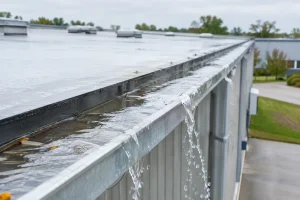




A bucket under a ceiling stain is not a diagnosis. It is a warning that water has already beaten your building systems, and every day spent guessing makes the eventual bill larger. A proper roof leak investigation report is not paperwork for the file. It is the document that turns a messy symptom into a defensible decision.
For commercial assets, that distinction matters. Leaks trigger tenant complaints, safety concerns, damaged finishes, mould risk, contractor disputes and unplanned spend. Yet many “leak reports” in the market are little more than a quote in disguise. They point at the nearest visible defect, recommend urgent works and skip the harder question: what is actually causing the water entry, how far has the problem spread, and what else is being missed?
What a roof leak investigation report is really for
A roof leak investigation report should do three things clearly. It should identify the likely source or sources of water entry, explain the condition factors allowing the leak to occur, and set out the commercial implications if the issue is ignored or poorly repaired.
That sounds obvious, but this is where weak reporting falls apart. If the document does not separate symptoms from causes, you are left approving patch repairs that may not address the actual failure mechanism. Water rarely travels in a straight line. It can enter at one point, track across insulation, purlins or membranes, and present several metres away. If the report only records where the drip appeared internally, it is already behind the problem.
The better reports also establish context. Is this an isolated failure after a storm event? A maintenance issue caused by blocked drainage? A design defect? A workmanship problem at a penetration, lap, box gutter or termination? Or a broader end-of-life condition where recurring leaks are simply the visible consequence of a roof system in decline? Those are very different commercial scenarios, and they require different decisions.
What should be in a roof leak investigation report
The report needs enough technical detail to withstand scrutiny, but not so much noise that the key decision gets buried. For commercial owners and asset managers, clarity is the point.
Clear description of the leak event
The report should record what has been observed internally and externally, including leak location, timing, weather conditions if known, occupancy impacts and any temporary controls already in place. If there are multiple leak points, they should be mapped properly. A vague note saying “roof leaking near plant room” is not adequate on a large commercial asset.
Evidence from the inspection
Good reporting is evidence-led. That means photographs, marked-up roof plans where relevant, notes on drainage paths, membrane laps, flashings, penetrations, sheet laps, sealant failures, corrosion, ponding, movement, debris loading and previous repairs. If moisture tracing, flood testing, thermal imaging or other diagnostic methods were used, the report should say so and state the limits of those methods.
This matters because leak investigations often involve probability, not certainty. Anyone who tells you every roof leak can be diagnosed from a five-minute walkover is selling confidence, not accuracy. A sound report explains what was found, what could not be confirmed, and what further investigation may be needed.
Cause analysis, not just defect spotting
There is a major difference between identifying a cracked sealant line and proving it is the cause of the leak. A useful report connects the defect to the failure mechanism. For example, it should explain whether overflowing box gutters are caused by inadequate falls, undersized outlets, blocked sumps, poor maintenance access or backwater effects during peak rainfall. It should distinguish between localised membrane damage and systemic installation failure. It should also note where internal condensation, services leakage or façade issues could be misread as a roof leak.
Cause analysis is what gives you leverage. Without it, every contractor can tell a different story.
Risk and consequence
Not every leak has the same urgency. A report worth paying for should prioritise issues based on building use, business interruption risk, safety exposure, asset damage and likely cost escalation. A leak above a warehouse aisle is one thing. A leak above operating theatres, switch rooms, server spaces or occupied education buildings is another.
Commercial reporting should also consider latent risk. The visible leak may be minor, but if the inspection reveals wet insulation, concealed corrosion, widespread membrane deterioration or chronic drainage failure, the real issue is bigger than the stain on the ceiling.
Recommended actions with scope logic
This is where many reports become useless. They jump from “defect observed” to “replace roof” with no middle ground, or they recommend minor patching where the condition data clearly points to broader failure.
A better report sets out staged options. Immediate make-safe measures, short-term targeted repairs, further invasive investigation where required, and longer-term capital planning if the roof system is no longer economically maintainable. The recommendation should match the evidence, the age of the roof, the extent of deterioration and the operational needs of the site.
Why independence changes the quality of the report
When the same party investigating the leak also wants to sell the repair, replacement or product, the report is rarely neutral. That does not mean every contractor is dishonest. It means their commercial incentive sits in the room with their diagnosis.
That is a problem for high-value assets. If the advice leans towards the most profitable scope rather than the most appropriate one, you lose control of budget, procurement and risk. An independent consultant has a different job: establish the facts, define the issue properly and give the client a position they can defend.
This is why an independent roof leak investigation report often has more value than the repair itself. It gives owners, facility teams and project stakeholders a technical basis to challenge quotes, reject weak explanations and avoid spending capital on the wrong fix.
Common gaps that should concern you
If you are reviewing a report, there are some obvious warning signs. One is a lack of clear causation. Another is no reference to drainage performance, despite water ingress being the issue. Another is a recommendation built around product substitution rather than failure analysis. You should also be cautious if the report relies heavily on sealant as the answer to everything. Sealant has a place, but it is not a strategy for systemic roof failure.
Another common gap is the absence of limitations. Every inspection has them. Access constraints, weather conditions, concealed build-ups, occupied spaces, safety exclusions and prior modifications all affect what can be confirmed. A credible report states those limits plainly. That does not weaken the advice. It strengthens it, because it tells you where uncertainty remains.
The commercial value of getting the report right
For portfolio owners and institutional asset managers, the value of a strong report is not just technical accuracy. It is decision quality.
A reliable report helps you separate maintenance from capital expenditure. It helps you communicate risk internally without exaggeration or guesswork. It supports procurement by defining the repair scope more clearly. It improves contractor accountability because the evidence base is already established. It can also support warranty discussions, handover disputes and claims where workmanship or design defects are in question.
Most importantly, it reduces the cost of being wrong. The biggest financial hits in roofing rarely come from the first leak. They come from repeated misdiagnosis, reactive call-outs, tenant disruption, damaged interiors and delayed capital decisions while everyone argues about the cause.
When a leak report should lead to wider review
Sometimes the leak is the issue. Sometimes it is the signal.
If the investigation finds repeated repairs in the same area, widespread ponding, corrosion at multiple laps, brittle membranes, failed terminations, chronic overflow paths or signs of concealed moisture spread, the smart move may be a broader roof condition assessment. Not because every leak means replacement, but because recurring failure often points to a larger asset problem that piecemeal repairs will not solve.
That is where experienced consultants earn their keep. They do not inflate the problem, and they do not minimise it. They tell you whether you are looking at a local defect, a maintenance backlog, a design issue or a roof system that is reaching the point where patching no longer makes commercial sense.
Roof Inspection Australia works in that space for clients who need facts, not a sales pitch. The point is simple: if the report cannot stand on its own, neither can the decision that follows.
A leak does not just test your roof. It tests the quality of the information behind your next move. Get the report right, and you regain control before the building and the budget absorb the consequences.