
A roof rarely fails without warning. What fails first is visibility. By the time water reaches occupied space, corrodes services or disrupts operations, the real problem has usually been sitting above the ceiling line for months or years. If you want to know how to reduce roof risk, start there – not with emergency repairs, but with better control of the asset before failure forces the issue.
For commercial property owners, facility teams and asset managers, roof risk is not just about leaks. It is about business interruption, safety exposure, contractor disputes, warranty arguments, accelerated asset decline and capital spend landing earlier than it should. The biggest mistake is treating the roof as a maintenance line item rather than a risk category that needs evidence, oversight and a plan.
How to reduce roof risk starts with knowing what you own
A surprising number of large assets operate without a clear baseline on roof condition. There may be old reports, fragmented maintenance notes or a contractor opinion tied to a proposed scope of works. That is not the same as knowing the asset.
A proper condition assessment gives you something far more useful – documented defects, likely causes, drainage performance, waterproofing weaknesses, signs of non-compliant work, remaining service life and priority rankings that can be tied to budget decisions. Without that baseline, every future decision becomes reactive. You are relying on whoever looked at the roof last, and that is a weak position when budgets tighten or claims are challenged.
This is where independence matters. If the same party diagnosing the issue also stands to profit from repairs or replacement, the advice is never fully clean. Commercial roofing decisions carry too much financial weight for that. You need facts before scope, and evidence before spend.
The highest roof risks are usually hidden, not dramatic
Most costly roof problems do not begin with a storm event punching a hole through the membrane. They begin with gradual failure that goes unnoticed because the roof is out of sight and access is irregular.
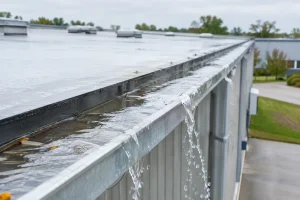
Blocked drainage is a common example. A roof can look broadly serviceable while carrying persistent ponding, overloaded outlets, poor falls or debris accumulation that shortens membrane life and increases leak risk. The same applies to failed laps, deteriorated sealants, flashing defects, unsupported penetrations and movement around plant. None of these issues need to be visually dramatic to become expensive.
There is also the problem of layered history. Many commercial roofs have been patched by different contractors over time, often with inconsistent materials and no strategic view of the whole system. Each minor intervention may seem reasonable in isolation. Across ten years, it can leave you with a roof that is harder to maintain, harder to warrant and far more vulnerable than anyone realises.
If you are managing healthcare, education, logistics, industrial or government assets, the risk multiplies because the consequence of failure is not just building damage. It can mean service disruption, contamination concerns, safety incidents or reputational fallout.
Inspection frequency should match consequence, not habit
Some portfolios inspect roofs only after a complaint. Others schedule annual checks because that is what has always been done. Neither approach is enough on its own. Frequency should be based on asset criticality, roof age, exposure, occupancy sensitivity and known defect history.
A low-risk ancillary building does not need the same inspection regime as a hospital plant roof, a distribution facility with high-value stock, or an education campus with ageing waterproofing. The question is not whether a roof can leak. It can. The question is what that failure would cost if it happened tomorrow.
That commercial lens changes the inspection program. High-consequence assets may justify more frequent reviews, seasonal drainage checks and targeted assessments after major weather events or construction activity. Newer assets may need closer handover and defect liability oversight rather than broad maintenance inspection. Older assets may need lifecycle planning tied to capital forecasting, not endless patching.
Contractor management is a roof risk issue
Many roof failures are not age failures. They are workmanship failures, design coordination failures or maintenance failures created by uncontrolled access and poor-quality interventions.
Every time another trade penetrates the roof, installs plant, alters drainage paths or disturbs waterproofing, risk increases. Mechanical, electrical, solar and communications works are frequent sources of future leaks because roofing details are treated as secondary. They are not secondary when the water gets in.
Reducing roof risk means controlling who works on the roof, how work is documented and whether details are checked before the trade leaves site. If penetrations are added without proper review, if temporary works become permanent, or if patch repairs are accepted without evidence of root cause, you are storing up disputes.
This is why handover inspections, defect reviews and independent oversight matter. They create accountability where it usually goes missing. A contractor saying the roof is fine is not a risk control measure. Evidence is.
Maintenance only works when it is strategic
There is a difference between spending money on a roof and managing it properly. Plenty of owners do the first and still carry unnecessary exposure.
Routine maintenance has value, but only when it is informed by condition, priorities and system behaviour. Cleaning outlets, removing debris and resealing obvious defects can reduce immediate risk. But if the roof has chronic drainage design issues, membrane fatigue, poorly executed previous repairs or widespread flashing defects, maintenance alone will not solve the problem. It will simply delay a larger decision while the risk remains live.
That does not mean replacement is always the answer. Often it is not. The right move might be staged rectification, targeted waterproofing upgrades, drainage correction or renewed maintenance protocols with tighter QA. The point is that strategy should follow diagnosis, not habit.
For portfolio owners, the commercial benefit is straightforward. When maintenance is tied to evidence, you can separate urgent risk from manageable deterioration, avoid premature replacement and defend budget requests with something stronger than anecdote.
How to reduce roof risk with better reporting
Most roof reports fail at the point where decision-makers actually need them. They describe defects but do not explain consequence, priority, cost exposure or what to do next. That creates confusion, and confusion creates delay.
Good reporting should help you act. It should identify the issue, locate it clearly, explain the likely cause, state the business risk and set out a priority-based response. It should distinguish between defects that threaten operations now and those that can be managed within planned works. It should also flag uncertainty where invasive investigation or further testing is needed.
This matters in boardrooms, procurement reviews and stakeholder discussions. If a report is technically dense but commercially vague, it will not help you secure funding or challenge bad advice. If it is clear, evidenced and independent, it gives you leverage.
That is the real value of specialist consultancy. Roof Inspection Australia operates on that basis – no repair sales, no product agenda, just clear technical evidence that helps clients make defensible decisions.
Budget protection depends on timing
Late decisions are expensive decisions. Once moisture has spread, insulation is compromised, internal damage has occurred or tenants are affected, your options narrow and costs rise quickly.
The smarter position is to intervene at the point where the problem is still contained. That might mean repairing a recurring flashing defect before it drives internal rectification costs. It might mean addressing falls and drainage before ponding accelerates membrane breakdown. Or it might mean planning replacement over two budget cycles instead of waiting for emergency failure and paying the premium for urgency.
This is where lifecycle planning earns its keep. Roofs do not move from good to failed overnight. They decline through stages, and each stage presents different options. If you understand that curve, you can sequence works, align spending to risk and avoid being cornered into reactive procurement.
Compliance, warranties and documentation are not side issues
When a roof problem turns contentious, documentation becomes the difference between control and guesswork. Was the roof installed in line with the design? Were defects noted at handover? Did later trades compromise waterproofing? Was maintenance carried out appropriately? Was drainage performance ever checked properly?
If you cannot answer those questions, every dispute gets harder. Compliance exposure also grows, especially on public, healthcare and education assets where governance expectations are higher.
Reducing roof risk therefore means protecting the paper trail as much as the roof build-up. Inspection records, photographic evidence, defect schedules and independent condition reports all strengthen your position when contractors push back or funding approval requires justification.
The roof does not need more opinions. It needs scrutiny, evidence and commercial discipline. If you treat it as a controllable asset rather than a periodic nuisance, risk drops, budgets hold their shape and nasty surprises become a lot less common.