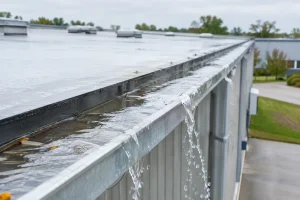




A roof defect report that lists 40 issues is not a strategy. It is inventory. The real value comes from deciding what matters now, what can wait, and what deserves closer technical review before anyone spends a dollar. That is the heart of how to prioritise roof defects in a commercial setting.
For asset managers, facility teams and portfolio owners, poor prioritisation is where cost blows out. Minor defects get overtreated because they are visible. Serious defects get ignored because they are hidden, intermittent or inconvenient to investigate. Contractors may push the loudest repair scope, not the highest-risk one. If the roof supports critical operations, public access, sensitive equipment or compliance obligations, getting the order wrong has consequences well beyond the roof itself.
Why roof defect priority is not just about leaks
A leak gets attention because it is obvious. A failed box gutter overflow provision, deteriorated membrane lap, corroded sheet fixing pattern or unsafe access condition may be more serious even before water enters occupied space. That is why roof defects should not be ranked on appearance alone.
The right approach weighs business risk, not just roofing symptoms. A defect over a hospital plant room, data area, food processing line or school circulation zone is not equivalent to the same defect over a low-use storage bay. The physical issue may be similar. The consequence profile is not.
This is where many inspections fall short. They describe the roof but do not translate the defect into operational, financial and compliance impact. Decision-makers do not need a longer list. They need a defensible order of action.
How to prioritise roof defects in commercial assets
The most reliable method is to assess each defect against five practical questions: what is the immediate safety risk, what is the likelihood of failure, what is the consequence if it fails, how quickly will the condition deteriorate, and what is the most cost-effective intervention window.
That sounds simple, but the judgement behind it matters. Two defects with similar visible damage may sit in completely different priority bands once context is applied.
Start with safety and statutory exposure
If a defect creates a credible risk to people, it moves to the top. Loose roof sheets, unstable flashings, trip hazards, non-compliant access points, failed guard systems, ponding that affects access routes, or deteriorated elements with wind-borne risk are not maintenance items to revisit next quarter. They are immediate control issues.
The same applies where water ingress or roof deterioration affects electrical services, fire systems, critical egress paths or mould-sensitive environments. In these cases, the roofing defect is only part of the problem. The broader liability sits with the building owner or responsible manager.
Then assess consequence, not just condition
A moderate defect in a high-consequence location often outranks a severe defect in a low-consequence one. For example, isolated membrane damage above a vacant tenancy may be less urgent than early drainage failure above an occupied clinical area. One is a localised repair risk. The other threatens service continuity, hygiene standards and stakeholder confidence.
This is where independent assessment matters. If the person identifying the defect also wants to sell the repair, there is an obvious incentive to frame everything as urgent. Priority needs to be based on evidence and consequence, not sales momentum.
Factor in defect behaviour over time
Some roof defects stay relatively stable for years. Others accelerate quickly once a threshold is crossed. Corrosion at fasteners can move slowly until fixings start losing integrity. Blocked drainage may seem minor until the next major rain event. Failed sealants around penetrations can remain contained, then open up sharply with thermal movement.
Prioritisation should account for this rate of change. The question is not only what the roof looks like today. It is what the defect is likely to become before the next inspection cycle, storm season or budget window.
A practical way to separate urgent from important
In most commercial portfolios, roof defects fall into four broad action groups.
Immediate action
These are defects requiring urgent controls, emergency make-safe measures or fast-tracked repair due to safety exposure, active water ingress into critical areas, major drainage failure, loose elements, severe deterioration or likely non-compliance. Delay is a risk decision, not an administrative one.
Short-term planned action
These defects are not yet causing major failure but show credible potential to worsen within the near term. Typical examples include local membrane failures, early corrosion in concentrated areas, failing sealants across vulnerable details, deteriorated flashings, or drainage defects before storm periods. These should be scoped, priced and programmed before they become reactive works.
Monitor and maintain
Some issues are real but not yet economically sensible to repair in isolation. Minor surface ageing, isolated cosmetic damage, early wear patterns or low-consequence defects may sit here, provided they are documented and reviewed. This is not the same as ignoring them. It means managing them intentionally.
Capital planning or renewal
When defects are widespread, systemic or tied to end-of-life materials, patch repairs stop making commercial sense. The priority then shifts from defect repair to lifecycle planning, staging and procurement strategy. Many portfolios waste money by treating a capital renewal problem as repeated maintenance.
What usually gets misprioritised
The most commonly misprioritised defects are not always the worst-looking ones.
Drainage defects are frequently underrated because they can appear manageable in dry weather. Yet poor falls, blocked outlets, undersized overflow provisions and chronic ponding often sit behind membrane breakdown, corrosion, internal leakage and avoidable structural loading. Ignore drainage and the rest of the roof pays for it.
Waterproofing terminations and penetrations are another blind spot. Small defects at upturns, joints, plant supports and service entries can create repeated internal damage with very little visible roof area affected. The repair may be modest. The disruption may not be.
Contractor workmanship defects after recent works also deserve sharper scrutiny than they often get. A new roof or repair package is not low risk just because it is new. Poor laps, inadequate fixings, weak detailing and incomplete terminations can lock latent defects into the asset early, especially if handover inspections are superficial.
Prioritisation should be tied to money
If defect ranking is not linked to budget decisions, it becomes a technical exercise with no commercial control. Every recommended action should support one of three outcomes: prevent a larger loss, defer unnecessary capital spend, or improve procurement leverage by defining the real scope clearly.
That is why broad statements like repair as required are not useful. Decision-makers need to know what must happen now, what can be bundled later, and where further invasive review is justified before committing funds. A precise defect hierarchy helps separate essential works from opportunistic upselling.
There is also a timing issue. The cheapest time to address some defects is not immediately, but during a coordinated access period, plant shutdown, tenancy changeover or planned capital stage. Other defects become more expensive every month they are deferred. Good prioritisation recognises both.
How to make the priority order defensible
A defensible roof defect priority framework should be evidence-led. That means photos, marked-up plans, condition mapping, moisture or drainage observations where relevant, and clear reasoning for why one item outranks another. It should also identify assumptions and gaps. If insulation saturation is suspected but not confirmed, say so. If a defect cannot be fully assessed due to access constraints, note the limitation and recommend the next step.
This matters when budgets are challenged, contractors disagree, or stakeholders want to know why a visible issue was not treated first. Clear prioritisation protects the decision-maker because the logic can be followed and tested.
For larger property groups, consistency matters as much as technical accuracy. If one facility labels every defect urgent and another understates systemic failure, portfolio planning becomes distorted. The same risk lens should be applied across sites so capital and maintenance funds go where they will reduce exposure most effectively.
How to prioritise roof defects without overreacting
Not every defect justifies immediate repair, and not every roof needs replacement because the report looks ugly. Overreaction is expensive. Underreaction is also expensive. The job is to sit between those two failures.
That is easier when the advice comes from someone who does not profit from the outcome. An independent consultant can tell you when to act fast, when to monitor, and when to challenge a repair scope that is broader than the evidence supports. Roof Inspection Australia works in that space because clients do not need another sales pitch. They need clarity they can use.
The strongest roof strategy is not based on fear or optimism. It is based on ordered facts, commercial consequence and timing. If your defect list cannot tell you what to do first and why, it is not finished. And if the priority order is wrong, the spend that follows usually is too.
The useful question is never how bad does the roof look. It is what failure hurts this asset most, and what is the smartest move before that happens.