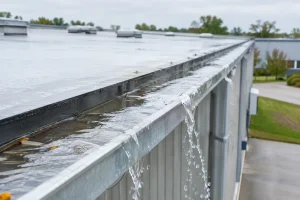



A roof replacement quote lands on your desk at $2.4 million, marked urgent, with photos of ponding water and rusted sheets. The problem is not just the number. It is whether the number is true, whether the scope is right, and whether this year is actually the year to spend it. That is where capital works roof planning stops being an admin exercise and becomes a control measure.
For commercial, government and institutional assets, roof decisions are rarely simple. A roof can be watertight enough to keep operating while still carrying hidden failure risk. Another may look rough but have years of service left if drainage, penetrations and localised defects are properly managed. Good capital works roof planning separates cosmetic noise from capital reality. Bad planning usually starts with a contractor telling you the answer before the asset has even been properly assessed, which is why independent roof asset intelligence belongs at the front of the process, not after the quote arrives.
Why Capital Works Roof Planning Goes Wrong
Most capital plans fail at the starting point. They rely on aged condition data, broad assumptions, or contractor-led advice tied to a repair or replacement agenda. The scope then gets shaped by who stands to win the work, not by what the roof actually needs.
In practice, budgets are often set too early and with too little evidence. A ten-year-old estimate gets carried forward. A leak history is treated as a proxy for whole-of-roof condition. One section fails and suddenly the entire building is flagged for replacement. None of that is disciplined asset planning, and none of it survives scrutiny when a board asks why the money is being spent now.
The other common failure is timing. Roofs are capital-intensive assets, but they do not deteriorate in a straight line. Exposure, design detailing, foot traffic, plant installation, blocked drainage, membrane compatibility and past workmanship all change the curve. If you are planning on age alone, you are guessing: sometimes you replace too early and waste capital, sometimes you wait too long and inherit water ingress, mould, ceiling damage, tenant disruption, electrical risk and emergency procurement. Getting the timing right is the whole purpose of capital planning support for roofing assets.
What Capital Works Roof Planning Should Actually Do
At a commercial level, capital works roof planning should answer four questions with evidence.
First, what is the current condition of the roof system, not just the surface visible from the ladder. Second, what is driving future risk: weatherproofing failure, corrosion, drainage, movement, detailing, non-compliant penetrations, or declining workmanship. Third, what intervention is justified: maintenance, staged remediation, partial replacement, or full replacement. Fourth, when should the money be spent to manage risk without bringing expenditure forward unnecessarily.
That sounds obvious, but many plans never get there. They jump from visual defects to capital recommendation without building the logic in between, and for asset managers that gap is the difference between a defensible forecast and a budget argument you cannot support. A useful roof capital plan is not a list of future projects. It is a decision framework built on evidence-based roof consulting for high-value assets: it tells you what must be done now, what can be deferred, what needs monitoring, and what assumptions would trigger a change in strategy. That gives procurement teams leverage, helps boards understand exposure, and reduces the chance of spending large amounts under pressure. Treated this way, capital works roof planning becomes long-term roof asset planning and advisory rather than a reactive budget line, and the same discipline underpins genuine roof asset advisory and risk management at the executive level.
Start With Independent Condition Evidence
If the advice is attached to a construction sale, treat it carefully. Roofing is full of genuine defects, but it is also full of inflated urgency, over-scoped replacements and convenient claims that a roof is beyond repair. Some roofs are beyond repair. Many are not. You need evidence before you need a contractor.
An independent assessment should go well beyond a quick walkover. It should identify the roof build-up, age profile, failure points, repair history, drainage performance, compliance issues, membrane or sheeting condition, flashing and penetration detailing, evidence of movement, signs of concealed moisture and the quality of previous workmanship. Above all it should separate localised defects from systemic failure, because that single distinction can move a recommendation from full replacement to staged works and change the capital outcome dramatically. This is the core of roof asset advisory and risk management: the evidence, not the sales pitch, drives the decision.
For portfolio owners, consistency matters as much as technical accuracy. If each site is assessed differently, the capital plan becomes uneven and impossible to compare. A standardised, evidence-based methodology, delivered as portfolio roof condition and risk assessments, lets you rank assets properly and avoid the common trap of the loudest site getting the money instead of the riskiest one. National roof inspections carried out to one methodology are what make a multi-site capital works roof planning exercise genuinely comparable, and national roof inspections delivered by the same independent team remove the variability that undermines most portfolio plans. Standardised commercial property roof inspection across every site is the mechanism that makes it work, so the capital works roof planning outcome rests on evidence rather than whichever contractor shouted loudest.
Roof Service Life: The Timing Behind the Budget
Capital timing starts with a realistic view of how long each roof system should last. Age alone is a weak predictor, but typical service life gives a planning baseline that condition evidence then adjusts up or down.
Indicative service life by system
- Metal and steel sheet: roughly 25 to 40 years, shorter in coastal or industrial corrosion zones
- Membrane (single-ply, modified bitumen): roughly 15 to 25 years, heavily dependent on detailing and ponding
- Concrete and terracotta tile: 30 years or more for the tile, though bedding, pointing and sarking fail sooner
- Liquid-applied and restoration systems: roughly 10 to 20 years, used to extend an existing roof rather than replace it
These ranges are starting points, not verdicts. A 15-year-old membrane with chronic ponding may be at end of life while a well-detailed one lasts well beyond 25 years. Matching the actual condition to the expected curve is what roof asset audits and lifecycle planning exist to do, and it is what places a replacement in the capital plan at the right year rather than the panicked one. Getting that timing right across an estate is the single biggest return that capital works roof planning delivers, and it depends on roof asset audits and lifecycle planning being run to a consistent standard rather than improvised site by site.
Grading Condition: Turning Findings Into a Plan
A capital plan needs a common language of condition, or every site is argued on adjectives. A simple condition rating scale converts assessment findings into a comparable score across a portfolio.
- Condition 1 (Very good): near new, no significant defects, routine maintenance only
- Condition 2 (Good): minor defects, well within service life, monitor and maintain
- Condition 3 (Fair): moderate defects, plan remediation, begin budgeting for future works
- Condition 4 (Poor): significant defects, staged or partial replacement likely within the short term
- Condition 5 (Very poor): widespread failure, replacement required, high risk of ingress and disruption
Applying the same scale everywhere is what lets strategic roof asset management rank a whole estate objectively, and it is the backbone of any credible portfolio roof condition and risk assessments programme. Consistent commercial property roof inspection is what produces a comparable rating in the first place, so a board sees a single defensible figure per asset instead of a stack of contractor opinions. This is evidence-based roof consulting for high-value assets reduced to a number executives can actually use.
Capital Works Roof Planning Is Not Maintenance Planning
This is where many programmes blur. Maintenance planning keeps the roof functioning and slows deterioration. Capital works planning deals with larger interventions tied to asset renewal, risk profile, lifecycle position and budget strategy. They are related but not interchangeable.
A roof may need annual maintenance without needing capital replacement. Equally, a roof may be receiving repeated reactive maintenance because the underlying design or material failure has already tipped into capital territory. Confuse the categories and budgets distort: operating expenditure masks a capital problem, or capital funds are pulled forward when a maintenance programme would have controlled the risk for another cycle.
The right answer often sits in the middle, with a staged approach where only certain elevations, gutters, box gutters, membrane zones or high-risk penetrations have materially declined. That balance is exactly what long-term roof asset planning and advisory is meant to strike, and it matters most across education, healthcare and logistics assets where operational continuity weighs as heavily as cost. For owners who also run a planned maintenance programme, our roof maintenance planning guidance covers that side in detail.
How to Prioritise Roof Capital Across Multiple Assets
When every site thinks it is urgent, priority has to be earned. Age is part of the picture but never the whole model. A 25-year-old roof in stable condition with manageable defects is not automatically a higher priority than a 12-year-old roof with design faults, chronic ponding and active leakage over critical operations.
Prioritisation should weigh condition severity, consequence of failure, occupancy sensitivity, business interruption risk, safety exposure, compliance issues, maintenance burden and replacement complexity. A warehouse with occasional nuisance leaks is one thing; a hospital, school, data environment or government facility with vulnerable operations is another.
This is where scenario planning helps: if capital is constrained this year, what package of works reduces the most risk per dollar spent, and if a major redevelopment is likely in three years, would targeted stabilisation protect the asset until the broader project proceeds? Good planning accepts that budget reality exists rather than pretending every technical issue deserves immediate full funding, and framing those trade-offs is a core part of capital planning support for roofing assets.
Ranking assets this way depends on consistent commercial property roof inspection across the estate, and it is where independent roof asset intelligence earns its place: it tells you which site is genuinely riskiest, not merely loudest. National roof inspections run to one standard are what make that ranking defensible when a board questions it.
Feeding the Capital Reserve and the Asset Register
A roof capital plan does not live on its own. For most institutional and government owners it has to feed a capital reserve, a sinking fund, or an asset management plan under frameworks such as ISO 55000 and the asset management practice promoted by IPWEA. This is exactly where portfolio roof condition and risk assessments prove their worth, because a framework is only as good as the condition data feeding it. The plan’s remaining-life estimate and condition rating are the two inputs those frameworks need.
Translating a roof’s remaining life into a funded reserve line is what stops replacement being a shock to the budget. If a roof is graded Condition 4 with five years of life remaining, the reserve should be accumulating against that replacement now, not scrambling for it in year five. Reports referenced to the relevant Australian Standards and National Construction Code performance requirements give auditors and boards the evidence trail they expect. Feeding that trail into long-term roof asset planning and advisory is what keeps the reserve honest year on year. Done properly, this is where strategic roof asset management connects the roof to the balance sheet, and where disciplined capital planning support for roofing assets turns a technical finding into a funded decision.
The Contractor Quote Is Not the Strategy
A common mistake in capital works roof planning is using a contractor quote as the planning document. A quote is a pricing response to a proposed scope. It is not an independent assessment of whether the scope is necessary, complete or correctly staged.
Before any serious capital commitment, the scope should be tested. Does the recommendation align with the actual condition evidence? Have underlying causes been identified, or is the proposed work simply replacing symptoms? Are drainage upgrades, structural interface issues, access constraints, asbestos risk, live-service coordination, staging requirements and weatherproofing continuity properly considered? If not, the project can look cheap at approval and become expensive once works start. Independent oversight from qualified roof inspection consultants gives clients a basis to challenge the scope, compare tenders on substance rather than marketing language, and avoid buying a replacement strategy when a targeted intervention would do the job. An independent roofing consultant answers to the asset owner, not to the party hoping to win the works, which is what keeps a capital works roof planning decision honest. This is the same discipline our roof procurement guidance applies at tender stage.
Roof Inspection Australia works in that space for exactly that reason. We do not sell roofing. We establish the condition and give clients the technical footing to act on it.
What a Defensible Roof Capital Plan Looks Like
A defensible plan is clear enough for executives and detailed enough for project teams. It usually includes condition findings, risk commentary, likely failure pathways, intervention options, budget ranges, timing windows and stated assumptions. Just as important, it explains why one option is preferred over another.
That explanation matters when budgets tighten or stakeholders challenge expenditure. If the recommendation is full replacement, the plan should show why repair is no longer commercially sensible. If it is staged works, it should identify what is being deferred, for how long, and what monitoring is required in the meantime. The best plans also respect procurement reality: access limitations, school-holiday windows, hospital operations, weather dependency, tenant constraints and regional contractor availability all affect timing and cost. Planning without those factors is theory, not strategy. Delivered well, a plan like this is the tangible output of evidence-based roof consulting for high-value assets, and it gives roof asset advisory and risk management something concrete to stand on when expenditure is challenged. It is also where roof asset audits and lifecycle planning stop being a report and start driving the budget. Independent roof inspection consultants are what keep that plan free of any repair agenda.
Better Roof Planning Gives You Leverage
The real value of capital works roof planning is not a prettier spreadsheet. It is leverage: in budget discussions, in procurement, in contractor negotiations, and when something goes wrong and you need to show the decision was based on evidence rather than pressure.
Roofs fail quietly until they do not, and by the time internal damage appears the cost argument has usually changed. The smarter move is to get ahead of that point with independent roof asset intelligence, realistic staging and a capital works roof planning process that reflects actual risk rather than sales urgency. As independent roof inspection consultants and an independent roofing consultant with no roofing to sell, we give owners of major assets a plan they can defend when the numbers get large and the stakes get larger. This is strategic roof asset management in practice: capital works roof planning grounded in evidence, not opinion.
Roof Inspection Australia does not publish a fixed price list for this advisory work. We confirm a single fixed fee once the scope of your asset or portfolio is understood, shaped by roof size and complexity, access, location, and the depth of assessment and reporting required. Once the scope is clear the fee is fixed before any work begins, and you can request a quote to know the full cost up front.
FREQUENTLY ASKED QUESTIONS
Capital works roof planning is the process of deciding which roofs across an asset or portfolio need major investment, what that investment should be, and when it should happen, based on independent condition evidence rather than a contractor’s quote. It produces a defensible, prioritised capital forecast, not just a list of projects.
Maintenance planning keeps a roof functioning and slows deterioration through routine works. Capital works planning deals with major renewal decisions tied to lifecycle position, risk and budget strategy. A roof can need maintenance without capital replacement, and confusing the two distorts budgets.
By combining the roof’s condition rating, remaining service life, failure pattern and consequence of failure. Localised defects on an otherwise sound roof point to staged repair; widespread systemic failure, chronic ponding or repeated reactive spend point to planned replacement. Independent evidence keeps that call objective.
Use the remaining-life estimate and condition rating as the inputs to your capital reserve, sinking fund or asset management plan. A roof graded poor with five years of life should be accumulating reserve funding now, so replacement is budgeted rather than an emergency.
A contractor’s quote is a price for a proposed scope, not an independent test of whether that scope is right. An independent roofing consultant has no stake in the work, so the recommendation and the staging reflect the asset’s real needs rather than a sales target.