
A roof leaks into a tenancy, the contractor says the membrane is sound, the builder blames plant vibration, and the asset team is left funding investigations while damage spreads. That is where commercial roof forensics matters. It is not a sales inspection and it is not a quick look with a repair quote attached. It is a structured investigation into what failed, why it failed, when the warning signs were visible, and what evidence stands up when budgets, warranties, defects, and liability are on the line.
For commercial property owners and managers, that distinction matters. A standard inspection tells you what can be seen. Forensic work goes further. It connects symptoms to causes, tests competing explanations, and documents the chain of evidence clearly enough to support action. If a roof has become a recurring cost centre, a disputed defect, or a handover problem, you do not need opinions dressed up as expertise. You need facts.
What commercial roof forensics actually covers
Commercial roof forensics is the technical investigation of roof failure, deterioration, water ingress, drainage issues, workmanship defects, and design or material shortcomings. The goal is not simply to identify damage. The goal is to determine causation with enough confidence that a client can make defensible commercial decisions.
That can include tracing leak pathways that present well away from the actual point of entry, separating maintenance issues from original construction defects, or distinguishing storm-related damage from long-term neglect. On complex assets, the answer is rarely obvious from a single ceiling stain or surface crack. Roofs fail as systems. Membranes, sheeting, flashings, falls, penetrations, fixings, insulation, plant interfaces, and drainage all interact. If you investigate one component in isolation, you can easily miss the real problem.
Forensic work also matters because roof failures are often misdiagnosed by parties with something to sell or something to defend. Contractors may frame a defect as age-related deterioration. Builders may argue that maintenance caused the issue. Manufacturers may point to installation. Facility teams are then forced to sort through competing claims without an independent technical baseline. That is expensive, slow, and risky.
Why commercial roof forensics matters to asset decisions
A leaking roof is not just a building problem. It is a financial and operational problem. Water ingress can interrupt tenants, damage stock, affect healthcare or education environments, and trigger wider compliance issues. Even when the visible damage looks minor, the hidden cost can be significant – saturated insulation, corrosion, mould risk, compromised safety, accelerated degradation, and avoidable capital spend.
This is why commercial roof forensics should be seen as a risk-control exercise, not an afterthought. When the evidence is clear, you gain leverage. You can challenge a contractor’s position, test whether defects fall within warranty, sequence rectification works properly, and avoid throwing maintenance money at the wrong issue.
It also sharpens budget decisions. Many portfolios carry roofs that are described as being near end of life when the actual problem is localised failure, poor detailing, or unresolved drainage design. The reverse is also true. Some roofs receive repeated patch repairs long after the underlying system has lost integrity. Forensic findings help separate salvageable assets from money pits.
When to call for a forensic investigation
Not every defect needs full forensic treatment. But some scenarios should trigger it immediately.
Recurring leaks are the obvious one, especially where multiple repair attempts have failed. If the same issue keeps returning, the original diagnosis is probably wrong or incomplete. Handover and defects liability disputes are another common trigger. New or recently completed roofs should not be experiencing premature failure, ponding, sheet movement, or waterproofing breakdown without a clear cause worth documenting.
Commercial roof forensics is also valuable after severe weather events, major tenant complaints, refurbishment works, or when an asset is being acquired and historical roof performance is unclear. In these cases, the issue is not simply whether the roof leaks today. It is whether there are latent defects, hidden moisture, workmanship shortcomings, or risk exposures that will affect future cost and accountability.
If significant capital works are being considered, forensic insight can also stop poor decisions before they happen. Replacing a roof based on vague assumptions is one kind of waste. Deferring replacement when the system is already compromised is another. Good evidence cuts through both.
How a proper forensic process works
A credible forensic investigation starts with document review, not guesswork. That includes drawings, specifications, product data, maintenance history, defect correspondence, warranty records, previous reports, and weather context where relevant. A roof does not fail in a vacuum. The history often reveals whether the issue is isolated, systemic, or inherited.
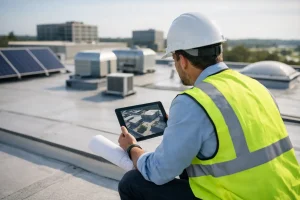
The site investigation then needs to be methodical. Surface observations matter, but they are only one layer. An experienced consultant looks at drainage behaviour, detailing at penetrations and terminations, movement joints, lap conditions, fixings, corrosion patterns, membrane integrity, substrate condition, ponding, and signs of moisture migration. Internal evidence matters too. Ceiling damage, wall staining, service routes, and plant areas often help map the actual water path.
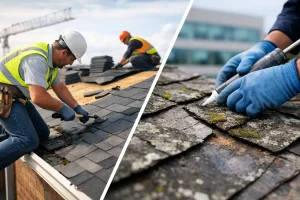
Depending on the problem, forensic work may involve moisture detection, targeted intrusive inspection, review of falls, and comparison between installed conditions and design intent. That last point is critical. Some roofs are built exactly as documented, and the design itself is flawed. Others fail because the documents were sound but the workmanship was not. If you do not separate those causes, you cannot allocate responsibility properly.
The reporting stage is where many investigations fall apart. A useful forensic report should do more than describe defects. It should set out findings, likely causation, contributing factors, consequence if left unresolved, and recommended actions in a logical order. It should also make clear where conclusions are definitive and where further testing may be required. Certainty matters, but so does honesty about limits.
The value of independent evidence
This is where independence stops being a branding line and becomes commercially important. If the person diagnosing the roof also wants to sell the repair, replacement, or product, the advice is never entirely clean. That does not mean every contractor acts badly. It means the incentive structure is compromised from the start.
Independent forensic advice gives decision-makers something far more useful than reassurance. It gives them control. You can use an evidence-based report to test quotes, challenge scope inflation, hold builders and subcontractors to account, and communicate clearly with boards, insurers, tenants, procurement teams, or project stakeholders.
For large property portfolios, this matters even more. Patterns emerge across assets – repeat detailing failures, procurement shortcuts, maintenance gaps, or product selections that do not suit environmental exposure. A single forensic investigation can improve decisions well beyond one roof if the findings are read properly.
What commercial roof forensics can and cannot do
Good forensic work can identify probable causes, isolate defects, support claims, and improve rectification strategy. It can reduce wasted expenditure and stop circular arguments. It can also expose uncomfortable truths, such as poor installation on a new build, inadequate supervision, or years of deferred maintenance that have now become a capital event.
But it is not magic. Some roofs have multiple overlapping failure mechanisms. Water can travel unpredictably. Prior repairs may have obscured original defects. Access limitations, safety constraints, and concealed construction can affect how far conclusions can go without intrusive testing. That is not a weakness in the process. It is the reality of investigating buildings after the fact.
The right consultant will tell you what is known, what is likely, and what still needs proof. That level of precision matters. Overstating certainty is just another form of bad advice.
Choosing the right forensic partner
If you are commissioning commercial roof forensics, look for technical depth, reporting clarity, and independence from repair work. Experience across commercial, industrial, government, education, and healthcare assets matters because roof failures behave differently across use cases and building forms. So does the ability to communicate findings in plain commercial language rather than burying the issue in jargon.
The best outcome is not a thicker report. It is a clearer decision. That means knowing whether the problem is design, installation, maintenance, product performance, or a combination of the lot. It means understanding what should happen next, who should own it, and what the cost of delay is likely to be.
At Roof Inspection Australia, that is the point of the exercise. We do not sell roofing. We just tell clients the truth, document it properly, and give them the leverage to act with confidence.
A roof problem becomes expensive when the facts stay blurry. Get the evidence early, and the conversation changes from blame and guesswork to control.