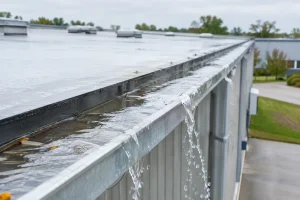




Hail hits hard and fast — and the damage it causes is rarely confined to what’s visible from the ground. Dented roof sheets, cracked coatings, compromised flashing, and blocked gutters are common outcomes after a significant hailstorm, but the more serious risk is what gets missed: hidden damage that quietly accelerates deterioration and complicates an insurance claim months later.
Getting an independent roof inspection after hail damage is the most effective way to establish exactly what your roof has sustained, document it accurately, and give your insurer the evidence they need. Roof Inspection Australia doesn’t sell repairs or restoration work — we inspect, report, and give you a clear picture of your roof’s condition without a sales agenda attached.
What Happens to Your Roof During a Hail Storm?
When hailstones impact a roof, the force concentrated on each strike point creates localised damage that varies significantly based on hail size, velocity, and roofing material. A metal roof will typically show as dented panels and damaged coatings. Tile roofs sustain cracking and surface spalling. Membrane systems on flat commercial roofs can be punctured or have seams compromised. The damage caused in a single storm can span from cosmetic surface marking to structural weakness that undermines the roof’s waterproofing performance entirely.
What makes hail storm damage particularly dangerous is the gap between immediate impact and visible consequence. A dent on a Colorbond roofing panel may look minor, but it strips the protective coating and exposes bare metal to corrosion. A cracked tile may not leak immediately, but it will once enough water cycles through it. The damage may not be visible inside the building for weeks or months, by which time water has already tracked behind linings and into structural elements.
Minor hail damage is one of the most underestimated risks in property maintenance. Left uninspected, what appears cosmetic can reduce the lifespan of your roof significantly and lead to leaks that require far more than a targeted repair to resolve. By the time a leak appears at ceiling level, the damage that caused it has typically been compounding for some time.
Book a roof inspection after your hail event today.
What Are the Signs of Hail Damage on a Roof?
The visible signs of hail damage on a roof depend on the roofing material. On a metal roof, look for dents across the panel surface; these are often easier to spot at an angle in raking light than straight-on. Colorbond roofing and similar painted systems will show chipped or abraded coating around impact points. Tiles may have visible cracks, chips at edges, or surface erosion. Roof sheets on industrial buildings often show distinctive circular denting patterns consistent with hailstones of a particular size.
Beyond the roof surface itself, inspect your roof’s supporting components. Flashing around penetrations and valleys is often first to fail after storm impact; the metal deforms under impact, and the seal between flashing and adjacent surfaces is broken. Gutters are another indicator: heavy denting to gutter sections or downpipes is a reliable proxy for the scale of hail impact the roof above sustained. Gutters filled with granule debris from tiles or coatings confirm surface material loss.
Hidden damage is the real concern after any significant hail event. Damage that may not be visible to an untrained eye includes micro-fractures in tile surfaces that allow water ingress before any visible crack appears, membrane punctures on flat sections that only manifest as a leak under sustained rainfall, and fastener damage where the hail impact has worked panel fixings loose. These are the signs of hail damage that only a thorough roof inspection will uncover, not a ground-level check or a drive-by assessment from a roofer looking for work.
Why You Need a Professional Roof Inspection After Hail Damage
Insurance companies require evidence. When you lodge a roof insurance claim for hail damage, your insurer will want documentation that establishes the damage, its cause, and its extent. A professional roof inspection that produces a detailed, timestamped report with photographic evidence and technical findings is the single most effective piece of documentation you can provide. Without it, claims are disputed, underpaid, or rejected entirely.
Accurate documentation also protects you from missing defects that your insurer later argues were pre-existing. When a damage inspection is conducted promptly after a storm event and the findings are clearly attributed to that event, the causal relationship between the storm and the damage is far harder to challenge. Delay weakens your position. Insurers are experienced at identifying gaps in documentation and using them to limit liability.
Professional roof inspection reports carry a weight that photos on a phone do not. A structured assessment from a qualified inspector that classifies damage, identifies repair requirements, and references the relevant roofing standards gives your claim the technical credibility it needs to proceed without unnecessary dispute. Prompt inspection and repair documentation in that order is how claims get approved and properties get restored efficiently.
How the Insurance Claim Process Works for Roof Damage
When you lodge a claim for storm and hail damage, your insurer will typically send their own assessor to inspect the roof. That assessor’s findings determine what gets covered and to what value. The problem is that an insurer’s assessor is not a neutral party; their role is to assess the claim on behalf of the insurance company, not to advocate for the full extent of your damage. Having your own independent inspection report before that assessor visits gives you a documented position that is difficult to simply override.
Disputes with insurers over roof damage claims are common, and they almost always come down to documentation. Common insurer objections include claims that damage is pre-existing, that it is cosmetic rather than structural, or that it falls below the policy’s excess threshold. Each of these objections is harder to sustain when the property owner has a professionally prepared damage roof inspection report that predates the insurer’s own assessment and is specific about what the damage is, where it is located, and what caused it.
Independent documentation also supports the claim process in cases where damage is found progressively. A roof may sustain initial impact damage during the hailstorm, but further damage may emerge as temperature cycling, water ingress, and load from subsequent rain events exacerbate the original impact points. Inspection reports that clearly establish the baseline condition immediately post-event create a documented chain of evidence that protects the homeowner or commercial property owner through the entire claim process.
Why Independent Inspectors Are Critical (Not Roofing Contractors)
A roofer who inspects your roof after a hailstorm and also quotes for the repair work is not in a neutral position. The business model depends on finding work, and after a significant hail event, there is considerable pressure to move quickly, inspect broadly, and recommend extensively. That does not necessarily mean the findings are fabricated, but the incentive structure pushes towards recommendation rather than objective assessment. Inflated scope and unnecessary roof restoration recommendations are a well-documented issue following major storm events, particularly in high-impact areas like Queensland and South East Queensland.
An independent inspector has no commercial relationship with what happens after the report is delivered. We do not refer work to roofing contractors, we do not benefit from a repair being larger than necessary, and we do not offer free roof inspection services contingent on winning remediation work. The moment an inspection is offered at no cost by a party who profits from the outcome, the independence of the inspection is compromised.
‘Objective assessment’ means finding what is there, not what generates the most revenue. For commercial property owners, this matters enormously. The difference between a targeted repair and a full roof replacement recommendation on a large commercial building can represent hundreds of thousands of dollars. An independent report that accurately identifies the scope of damage and separates necessary repair from optional restoration gives asset managers the information they need to challenge inflated contractor recommendations and negotiate with their insurer from a position of fact.
A third-party roof inspection from an independent specialist is the mechanism through which property owners reclaim control of the post-storm assessment process. It gives you a document that is yours, not a contractor’s sales tool or an insurer’s cost-minimisation exercise, but a factual record of your roof’s condition that you can use however you need to.
Get your roof and identify hidden hail damage with a professional inspection.
Our Hail Damage Roof Inspection Process
Every hail damage roof inspection begins with a structured site assessment. Our inspectors examine your roof systematically, panel by panel, section by section, to identify and document every impact point, coating failure, crack, loose fastener, and drainage issue present. Where roof access is restricted or the scale of the roof requires it, we use drone-assisted inspection to capture high-resolution imagery of areas that cannot be safely accessed on foot. Nothing is estimated from the ground.
Thermal imaging is deployed where moisture ingress is suspected. When hailstones have punctured or cracked the roof surface, water can track laterally through the roof assembly and become trapped in insulation layers or behind linings well away from the visible impact point. Thermal imaging identifies these moisture pathways before they cause secondary damage, and the findings are integrated into the inspection report as part of a complete picture of the damage caused.
The Asset Shield Report™ that follows every inspection classifies findings by urgency, documents every defect with photographic evidence, and provides technical recommendations that distinguish between damage requiring prompt repair and conditions that can be monitored over a defined period. The report is structured for dual use: as a claim document for your insurer and as a maintenance planning tool once the claim process is resolved.
Our inspection reports are prepared by qualified professionals with specialist knowledge of commercial roofing systems. Whether you need a commercial property roof inspection following a major storm event or a condition assessment of a residential roof after a hailstorm, our process delivers the same standard of rigour and independence. For those managing assets across multiple locations, including roof inspection in Brisbane and Sunshine Coast properties, we operate nationally and can mobilise quickly following significant weather events.
What Does a Hail Damage Roof Inspection Report Include?
Damage classification is the foundation of a useful inspection report. Every identified finding is categorised by type — impact damage, coating failure, structural damage, or drainage compromise — and graded by urgency. That classification is what allows property owners and their insurers to understand not just what was found but how serious it is and what the consequence of not addressing it will be.
Repair versus monitoring recommendations are clearly separated. Not every impact point requires immediate roof repair, and conflating urgent defects with cosmetic findings inflates repair scope and creates unnecessary cost. Our reports distinguish between damage that must be addressed immediately to prevent further water ingress or structural compromise and damage that can be monitored with defined inspection intervals. That distinction is commercially significant for both insurance claims and maintenance budgeting.
Technical findings are supported throughout by photographic evidence, drone imagery where applicable, thermal imaging data, and precise location references that allow a contractor or insurer to identify each item independently. Inspection reports of this quality give property owners a robust, defensible document that holds up under scrutiny whether the challenge comes from an insurer disputing scope, a contractor questioning findings, or a legal proceeding where expert testimony on the roof’s condition is required. For anyone managing roofing services across a commercial portfolio, having that standard of documentation consistently is what enables confident decision-making.
Start your hail damage inspection process today.


Book a roof inspection today
Book a Professional Roof Inspection After Storm Damage
Hail damage does not wait for a convenient time. The longer a damaged roof is left uninspected, the more the original impact damage compounds and the harder it becomes to separate storm-caused damage from deterioration that occurred after the event. Acting quickly protects both your roof and your insurance position. Whether you manage a commercial portfolio or a single residential roof, getting a roof inspection near me from an independent specialist is the first step in managing the outcome properly.
Contact Roof Inspection Australia to book your post-storm inspection. We provide upfront pricing based on your roof type and size, offer fast turnaround on reports, and work directly with property owners and their insurers to ensure findings are clearly documented and professionally presented. We don’t restore your roof or sell repairs; we tell you what’s there. That’s what makes our reports worth having.
On a metal roof, hail damage typically appears as dents, chipped coatings, and impact marks on panels and gutters. On tile roofs, look for cracks, chips, and surface erosion. Flat membrane roofs may show punctures or seam failures that are only visible on close inspection.
Yes. Cracked tiles, compromised coatings, and damaged flashing may not leak immediately, but damage can lead to water ingress once enough rain cycles through the affected areas. Hidden damage inside roof assemblies can also track laterally and appear far from the original impact point.
As soon as possible. Prompt inspection establishes the condition of your roof immediately after the storm, making it far easier to attribute damage to that specific event for insurance purposes. Delay gives insurers grounds to argue damage is pre-existing.
Yes. A professional roof inspection report with photographic evidence, damage classification, and technical findings is the most effective documentation you can provide to support a claim. Phone photos alone are rarely sufficient for a contested or high-value claim.
No. Minor hail damage that goes uninspected and unaddressed shortens the lifespan of your roof and can escalate into costly repairs when water begins tracking through compromised surfaces. What looks minor often isn’t.
Pricing depends on roof size, type, and access requirements. At Roof Inspection Australia, we provide transparent upfront pricing before booking. For commercial properties, understanding the commercial roof inspection cost for your specific asset is straightforward — contact us and we’ll confirm pricing before we schedule.
Our reports include high-resolution photographic evidence, drone imagery where applicable, thermal imaging data, damage classification by urgency, repair versus monitoring recommendations, and a full condition summary suitable for insurance submission and maintenance planning.
An independent inspector first — always. A roofer who inspects and quotes for repair work has a financial interest in the scope of what they find. An independent inspection establishes an objective baseline before any repair work is scoped or priced.
A free roof inspection is typically offered by a contractor who profits from the repair work that follows. An independent inspection is a paid service from a party with no commercial interest in the outcome, which is precisely why the findings can be trusted by insurers, asset managers, and legal proceedings alike. For complex commercial assets or disputed claims, using roofing consultants or independent inspectors for oversight is standard practice. For roof inspection for developers post-construction, the same principle applies.