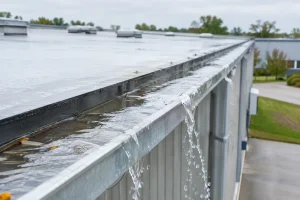




A leaking roof inside a commercial asset rarely starts as a maintenance problem. More often, it starts as a documentation problem. The roof warranty inspection is where owners, developers and facility teams either lock in leverage or lose it. If defects are missed, poorly recorded or dismissed as minor, the cost does not disappear. It simply moves downstream, usually onto the asset owner.
That is why a warranty inspection should never be treated as a box-ticking exercise. On high-value assets, it is a commercial control point. It helps confirm whether the installed roof system aligns with the warranty terms, whether visible and developing defects have been captured properly, and whether the contractor still carries responsibility for rectification.
For property professionals managing risk, budgets and stakeholder scrutiny, timing and independence matter as much as the roof itself.
What a roof warranty inspection is really for
On paper, a roof warranty inspection sounds simple. Someone looks at the roof before the warranty period expires and notes any issues. In practice, that approach is too shallow for large-scale or complex assets.
A proper roof warranty inspection is not just about spotting leaks or torn membrane laps. It is about testing the gap between what was promised, what was installed and what is now performing on site. That includes workmanship quality, drainage behaviour, flashing execution, penetration detailing, waterproofing interfaces and signs of early failure that may not yet have caused internal damage.
This matters because warranties are often narrower than clients expect. Many only cover specific materials, exclude poor maintenance, and leave workmanship disputes sitting in a grey zone. If an issue is not identified and documented in time, owners can find themselves arguing over liability after the warranty window has closed. At that point, the technical truth may still be on your side, but your commercial leverage is weaker.
Why contractor-led inspections are a risk
There is an obvious conflict when the party responsible for the roof, or hoping to win future repair work, is also the party assessing its condition. That does not mean every contractor report is wrong. It means the incentive structure is wrong.
A contractor-led inspection may understate defects, classify developing failures as maintenance items, or recommend short-term patching where deeper rectification is required. In some cases, the inspection focuses only on visible defects while ignoring drainage design, membrane termination quality, unfinished compliance items or workmanship that falls short of specification but has not yet failed.
For commercial and government assets, that is not good enough. You need evidence that can stand up in procurement discussions, contractor negotiations and internal reporting. Independent advice changes the conversation because it removes the repair agenda. Roof Inspection Australia operates on that basis for a reason. We do not sell roofing. We just tell clients the truth.
When to schedule a roof warranty inspection
The short answer is earlier than most people do.
Leaving a roof warranty inspection until a few weeks before expiry is risky. By then, access can be difficult to arrange, weather may delay review, and the contractor may have limited time to investigate, respond and complete rectification before the warranty period ends. If disputes arise, the clock works against the owner.
For most commercial assets, the smarter approach is to inspect several months before expiry. That allows enough time to identify defects, issue formal findings, obtain responses and verify that remedial work has actually been completed properly. On larger sites or multi-building portfolios, more lead time may be needed.
There is also a case for inspection before practical completion and again before the end of the defects or warranty period. The first review captures handover quality and obvious workmanship issues. The later review tests performance after exposure to weather, thermal movement and normal building use. What looks acceptable at handover can deteriorate quickly once the roof is operating in real conditions.
What should be checked during a roof warranty inspection
A credible inspection goes beyond a visual walkover and a few photos. It should assess how the roof is performing as a system.
That means reviewing membrane or sheeting condition, seams and laps, flashings, cappings, penetrations, fixings, sealants, rainwater goods, overflow provisions and evidence of ponding or restricted drainage. It should also consider interface risks, particularly where roofing meets façades, plant platforms, parapets, skylights or service penetrations. These transition points are common failure zones and are often glossed over in superficial reports.
Documentation matters too. The inspection should test what is seen on site against available drawings, specifications, warranty conditions and prior defect records. If the installed work differs from the documented design intent, that may have direct implications for warranty validity and future performance.
On some assets, closer investigation is needed. Moisture ingress can sit beneath a membrane, insulation can be compromised without obvious surface failure, and drainage falls can be wrong even when the roof looks tidy from ground level. It depends on the roof type, age, history and consequence of failure. A distribution centre, hospital or school campus does not carry the same operational tolerance as a low-risk storage shed.
The commercial value of independent evidence
The real output of a roof warranty inspection is not the site visit. It is the quality of the evidence and what that evidence lets you do next.
A strong inspection report should identify defects clearly, explain their likely cause, distinguish between maintenance and workmanship issues, and set out the implications if they are left unresolved. It should be specific enough to support a formal defect notice and practical enough to help asset teams prioritise action.
This is where many reports fail. They note issues without assigning significance. They photograph defects without linking them to warranty obligations, compliance exposure or future capital cost. They tell you something is wrong but not whether it is your problem, the contractor’s problem, or a design problem that needs escalation.
Commercial decision-makers do not need vague commentary. They need clarity that protects budgets and strengthens their position. If a contractor pushes back, the report should give you enough technical footing to challenge the response. If internal stakeholders ask why action is required, the evidence should make that answer straightforward.
Roof warranty inspection findings are not all equal
Not every defect justifies the same response. That is why nuance matters.
Some findings are straightforward warranty items, such as poor flashing termination, incomplete sealing, membrane stress at penetrations or evidence of premature deterioration linked to installation quality. Other issues may sit outside the warranty if they relate to damage from later trades, poor access management or lack of routine maintenance.
Then there are mixed-responsibility situations. Drainage failure, for example, may involve workmanship, design fall limitations and maintenance practices at the same time. Treating every issue as a simple warranty claim can waste time. Treating every issue as maintenance can cost you far more.
An independent inspector should separate those categories, not blur them. That distinction is what helps owners avoid two expensive mistakes: chasing unwinnable claims and paying for defects that should never have landed with them.
How roof warranty inspections support asset planning
A roof warranty inspection is often seen as a defensive exercise. It is that, but it is also a planning tool.
The findings can reveal whether a roof is likely to perform in line with expected lifecycle assumptions or whether early intervention will be needed. That affects capital forecasting, maintenance strategy and risk planning across the portfolio. If a relatively new roof already shows signs of stress, detailing weakness or drainage inefficiency, that should inform more than a warranty claim. It should influence how the asset is managed from that point forward.
This is especially relevant for owners with multiple sites, legacy contractor relationships or mixed roof types across a portfolio. Patterns matter. Recurring workmanship defects, repeated ponding issues or similar failures across comparable assets are not random. They point to procurement, design or oversight problems that need to be addressed upstream.
A good inspection does not just identify what failed. It shows you where future exposure sits.
What clients should expect from the process
If you are commissioning a roof warranty inspection, expect more than a condition snapshot. You should expect a technically grounded, commercially useful assessment that tells you where the risk is, who may own it, and what needs to happen next.
That means clear scope, site-specific evidence, practical recommendations and reporting that is written for decision-making, not just for the file. It also means independence. Once repair sales enter the equation, trust becomes harder to maintain.
The strongest position is simple. Inspect early, document properly and rely on evidence from someone who has nothing to gain from the repair outcome. That is how you keep control when warranty conversations become disputed, delayed or expensive.
A roof does not need to be visibly failing to be financially dangerous. The smart move is to find the truth while the warranty still has teeth.