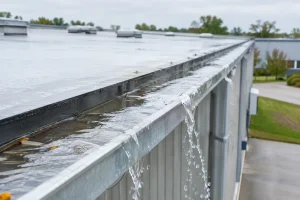



Water still sitting on a commercial roof a day or two after rain is not a cosmetic issue. It is an asset risk. The top causes of roof ponding are usually tied to drainage design, structural movement, construction quality, or maintenance failure – and each one has a direct cost impact through membrane stress, leak risk, accelerated deterioration, and avoidable capital spend.
For asset managers and facility teams, the real problem is not just the water you can see. It is what that water is telling you about the roof system underneath. Ponding often points to a defect chain rather than a single isolated fault. If you treat it as a minor maintenance item, the roof usually gets more expensive.
Why roof ponding matters commercially
A roof that holds water for extended periods is under a different level of stress than one that drains properly. Membranes stay wet longer. Laps, seams and terminations are exposed to prolonged hydrostatic pressure. Debris accumulates faster. Surface temperatures fluctuate differently. On metal roofs, corrosion risk rises around low points and blocked drainage paths.
That matters because ponding rarely stays in its lane. It can shorten service life, create slip hazards during maintenance access, affect internal operations through leaks, and complicate warranty or contractor disputes. On a large portfolio, even a modest drainage defect repeated across multiple buildings can turn into a serious budget problem.
Top causes of roof ponding
Inadequate roof falls
One of the top causes of roof ponding is simple – the roof does not have enough fall to move water efficiently to outlets, gutters, or sumps. This can start at design stage, where falls are undercooked on paper, or during construction, where the finished roof does not match the documented intent.
On low-slope commercial roofs, small errors matter. A roof can look flat from ground level yet still be expected to drain. If the actual finished levels are wrong, water will settle in the wrong places and stay there. This is especially common where tapered insulation, screeds, or structural set-downs have been poorly coordinated.
The commercial mistake is assuming this is acceptable because the roof is technically waterproof today. If drainage is poor from day one, the roof starts its life with a performance penalty.
Blocked outlets, gutters and sumps
Not every ponding problem is a design failure. Sometimes the drainage path exists but is obstructed. Leaves, silt, ballast movement, bird nesting, loose materials, or failed components can block outlets and turn a workable drainage system into a holding tank.
This is one of the more preventable causes, but it is also one of the most mismanaged. Many sites rely on reactive cleaning after visible overflow or internal leaks. By that point, the roof has already been holding water repeatedly, and the surrounding materials may have deteriorated.
There is also a false economy here. Teams often treat blocked drainage as a cleaning issue only, when the deeper question is why the blockages keep recurring. Sometimes the problem is maintenance frequency. Sometimes it is poor outlet detailing, inadequate leaf protection, or adjacent trees dropping more debris than the roof can tolerate.
Structural deflection
Roofs move. The issue is whether they move within expected limits or enough to create low points that trap water. Structural deflection is one of the most common top causes of roof ponding on older commercial assets, but it also appears on newer buildings where spans, loading assumptions, or construction tolerances were poorly managed.
Long-span steel members, ageing substrates, overloaded roof zones, and water weight itself can all contribute. Once a low point develops, ponded water adds more load, which can deepen the deflection and worsen the drainage pattern. That feedback loop is where a local drainage issue starts becoming a structural and waterproofing concern.
This is why ponding should never be assessed in isolation. If the water is collecting because the deck or supporting structure has sagged, cleaning the outlet will not solve the real problem.
Poor installation quality
Construction defects are a major driver of ponding, especially on large projects with multiple trades working across interfaces. In practice, this can mean badly set outlets, uneven substrates, insulation boards laid inconsistently, membrane build-up around details, or localised high spots created during repairs.
The result is often patchy drainage rather than total failure. Water gets most of the way to the outlet, then sits in a shallow depression caused by workmanship. That can be hard to identify without a proper inspection, particularly where defects are spread across a wide roof area.
This is also where independent assessment matters. Contractors are often quick to label ponding as normal on low-slope roofs. Sometimes it is tolerable. Sometimes it is evidence that the roof was not built to drain as intended. Those are very different commercial positions.
Design details that create recurring ponding
Undersized or poorly located drainage points
Even when falls are nominally adequate, drainage can fail if outlets are too few, too small, or placed in the wrong locations. Water follows the actual geometry of the roof, not the design intent. If the low points and the outlet locations do not align, ponding is predictable.
This becomes more pronounced during intense rainfall events, where the drainage system may be overwhelmed even if it functions adequately in lighter weather. In parts of Australia, that design gap is not theoretical. Storm intensity and short-duration rainfall can expose weak drainage capacity very quickly.
A roof may not need a full redesign, but it may need additional outlets, overflow review, or regrading in localised areas. The answer depends on whether the issue is systemic or confined to certain bays.
Inadequate overflow provisions
Primary drainage is only part of the picture. If overflow paths are missing, undersized, or installed too high, ponding can build beyond what the roof should ever be asked to carry. That raises both waterproofing and structural risk.
Overflow defects are particularly serious on high-consequence facilities where operational interruption is expensive. Healthcare, education, logistics and government assets do not benefit from learning this lesson during a storm event. They benefit from finding it earlier, in a report, with evidence.
Maintenance and lifecycle issues
Failed repairs and patchwork modifications
Roofs that have been patched repeatedly often develop drainage issues over time. New layers, localised build-ups, incompatible materials, and ad hoc detailing can alter water flow across the surface. A repair that stops one leak may create a ponding zone two metres away.
This is common on assets managed year to year rather than through a structured lifecycle plan. The roof ends up carrying the history of every urgent fix, but no one steps back to ask whether the overall drainage logic still works.
Ageing materials and substrate deterioration
As roof systems age, materials compress, shift, crack, corrode or lose shape. Insulation can deform. Decking can deteriorate. Membranes can shrink and pull at details. The roof may not have had a ponding issue when it was built, but age can change levels enough to create one.
That is why historical performance matters. If a roof that drained adequately for years suddenly starts holding water, the cause may be progressive deterioration rather than an original design flaw. The distinction matters because it changes the remedy and the budget response.
What commercial teams should do next
The right response depends on cause. That sounds obvious, but it is where plenty of money gets wasted. Cleaning, patching, or recoating a roof without understanding why water is ponding is often just a more expensive way of postponing the real decision.
A proper assessment should identify where water is collecting, how long it remains, whether the problem is local or systemic, and what is driving it – design, structure, workmanship, maintenance, or a combination. It should also separate defects that need urgent intervention from those that can be planned into capital works.
At that point, you have leverage. You can challenge a contractor’s claim that the condition is acceptable. You can test whether the issue falls within defects liability, maintenance scope, or renewal planning. You can brief stakeholders with evidence instead of opinion. That is the difference between managing a roof and merely reacting to it.
Roof ponding is rarely random. It usually points to a specific failure in slope, drainage, structure, detailing, or upkeep. Find that failure early, and you stay in control of the asset. Leave it to self-diagnosis or sales-led advice, and the roof will usually set the budget for you.