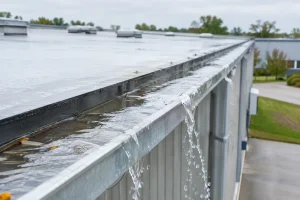



When a major roof starts leaking over a warehouse, school, hospital or retail asset, the first quote is rarely the full story. That is where the real question sits: roof consultant vs contractor. One is paid to diagnose and advise. The other is paid to build, repair or replace. If you are responsible for budget, risk, compliance or asset performance, that difference is not academic. It directly affects what work gets recommended, what gets missed, and how much unnecessary cost finds its way into the programme.
For commercial assets, the wrong roofing decision is rarely just a maintenance issue. It can trigger tenant disruption, stock damage, safety risk, warranty disputes, capital budget blowouts and difficult conversations with stakeholders. So the real comparison is not about which party is “better” in a general sense. It is about who should be doing what, and at what stage, if you want control.
Roof consultant vs contractor: the core difference
A roof contractor delivers physical roofing work. That may include repairs, replacement, membrane installation, sheet roofing, flashing works, drainage rectification or reactive maintenance. Their role is essential when work needs to be completed. Good contractors matter, and competent ones can save a project.
A roof consultant, by contrast, should be there to inspect, diagnose, assess condition, identify failure causes, review scope, challenge assumptions and provide independent advice. In a true consultancy model, they do not sell the repair. That matters more than many clients realise.
If the same party inspects the roof and profits from the remediation they recommend, there is an obvious commercial tension. That does not mean every contractor acts in bad faith. It does mean the advice is not fully separated from the sale. For high-value property assets, that is a risk position, not just a procurement detail.
Why independence changes the quality of advice
Roofing defects are often symptoms, not root causes. A leak appearing at one penetration may actually stem from drainage falls, concealed membrane failure, poor sequencing at previous repair interfaces, movement at joints or installation defects from years earlier. If the inspection is rushed or framed around selling immediate works, the diagnosis can be shallow.
Independent roof consultants are structurally better placed to ask harder questions. Is the issue localised or systemic? Is replacement truly necessary, or can targeted remediation extend service life? Is the roof failing, or is maintenance failing? Are defects isolated to workmanship, design detailing, access damage or asset age? Those distinctions affect cost, programme and risk.
For asset managers and facility teams, this independence creates leverage. It gives you evidence before procurement, not just opinion after the fact. It also gives you something more defensible when you need to challenge a scope, reject an inflated recommendation or explain funding needs to internal stakeholders.
When a contractor is the right call
There are plenty of situations where a contractor should be the first practical step. If storm damage has torn sheeting from an industrial roof, if a known defect needs urgent make-safe work, or if a tendered project is already clearly scoped and ready for delivery, you need a contractor.
Contractors are also central once the required works are properly defined. They bring labour, access planning, sequencing, materials knowledge and execution capability. No consultant replaces that. A roofing strategy that ignores the value of competent contractors is just as flawed as one that relies on them for every diagnosis.
The issue is role confusion. A contractor is best used to price and perform work, not to be the sole independent authority on whether that work is necessary, sufficient or correctly prioritised.
When a roof consultant should come first
If the roof history is unclear, the failure pattern is recurring, the asset is high consequence, or the expenditure decision is material, a consultant should usually come first.
That is especially true across commercial and institutional portfolios where one bad roofing call can cascade across budgets. A consultant can assess overall condition, identify hidden defects, separate urgent risks from manageable deterioration, and build a staged response that matches asset strategy. That may include maintenance planning, defect schedules, lifecycle forecasting, handover concerns, waterproofing risk reviews or oversight of contractor proposals.
This is where independent advice pays for itself. Not because it creates more paperwork, but because it improves decision quality before money is committed.
The commercial risk in contractor-led inspections
A contractor-led inspection often starts with a practical lens: what is broken, what can be fixed, and what will it cost? That is useful, but it is not the same as an evidence-led asset assessment.
On large or complex roofs, contractor inspections can understate systemic issues or overstate replacement needs depending on the business model, capability and time allocated. Some recommendations are based on what the contractor is equipped to sell, not necessarily what the asset needs. A sheet roofing specialist may lean one way. A membrane contractor may lean another. Neither bias has to be malicious to distort the outcome.
That is the point many clients miss. Bias does not require dishonesty. It only requires an incentive structure.
For procurement teams, project managers and owners’ representatives, that means every contractor recommendation should be read in context. Is this diagnosis independently verified? Was the roof assessed holistically, including drainage, movement, detailing and maintenance history? Is the proposed scope proportionate to actual condition? Without those controls, you are exposed.
Roof consultant vs contractor in tenders and disputes
The difference becomes even more important during tender reviews, defect disputes and post-completion issues.
If multiple contractors submit very different scopes and wildly different pricing, that usually signals one thing: the problem is not clearly defined. An independent consultant can normalise that process by clarifying the defect profile, setting the technical basis of scope and reviewing submissions against actual need. That creates pricing consistency and reduces the chance of awarding work on a false comparison.
In disputes, the value is sharper again. Where there are questions around workmanship, specification compliance, incomplete handover, waterproofing performance or recurring failure after recent works, contractor opinions are often self-serving on all sides. An independent roof consultant can provide evidence, defect mapping, causation analysis and a technically grounded position that cuts through noise.
That is not about being adversarial for the sake of it. It is about restoring facts to the conversation.
What smart asset owners actually do
The most effective clients do not treat this as an either-or decision. They sequence the roles properly.
They use an independent consultant to inspect, diagnose, report and define the risk. Then they use contractors to price and carry out the agreed works. Where the project is significant, they bring the consultant back to review methodology, monitor quality or verify completion. That structure improves scope clarity, strengthens procurement, and reduces the chance of paying twice for the same roofing problem.
It also helps internally. When you need to justify capital requests, explain a staged remediation plan, or show why a low quote was not the right quote, independent reporting gives you commercial cover. It replaces guesswork with evidence.
What to ask before you appoint either party
Before appointing a contractor, ask whether the failure has actually been diagnosed or simply priced. Before appointing a consultant, ask whether the advice is truly independent and commercially useful, not just technically descriptive.
The right consultant should tell you what matters, what can wait, what is causing the issue and what level of intervention is justified. The right contractor should then execute that work competently, safely and in accordance with scope.
If either party starts drifting into the other’s role without the right checks, your risk goes up. You either get advice shaped by sales, or technical commentary with no practical outcome.
For commercial roofing, clarity is everything. Roof Inspection Australia exists in that gap between contractor opinion and asset reality – not to sell repairs, but to tell clients the truth about condition, risk and scope before money is wasted.
The useful question is not whether you need a roof consultant or a contractor. On serious assets, you will often need both. The real question is who should be trusted to tell you what the roof actually needs before the spending starts.