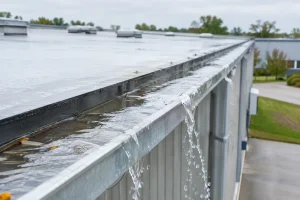




A school roof does not need to collapse to become a serious governance problem. Water entering classrooms, deteriorating asbestos cement sheeting, unsafe maintenance access and vague contractor allowances can quickly turn a planned works package into an urgent, high-cost event. This school asbestos roof case study shows why asset teams need evidence before they approve a scope, allocate capital or allow work to commence.
The scenario is representative of issues found across ageing education estates in Australia. It is not a substitute for site-specific asbestos advice, a current asbestos register or the legal duties imposed by the relevant state or territory. It does, however, show how an independent roof assessment can give a school authority control over a difficult decision.
The asset: an ageing roof with competing risks
The campus comprised several low-rise teaching buildings constructed across different periods. The main classroom block had a pitched corrugated asbestos cement roof, with later additions including metal roof sections, box gutters, flashings and roof-mounted services. The school remained operational throughout the year, with limited access windows during term breaks.
The immediate concern was water ingress. Staff had reported ceiling staining after heavy rain, while the facilities team had identified fractured roof sheets near a service penetration and debris accumulation in gutters. A contractor had recommended full roof replacement, presenting the issue as a straightforward removal-and-replace project.
That recommendation may have been correct. But it was not yet proven. A replacement proposal is not a condition assessment, and a price is not a risk strategy. Before committing a substantial capital budget, the asset owner needed clear answers: what was failing, what asbestos-related risk existed, whether repairs were viable, and how any works could be staged without exposing students, staff or contractors to avoidable risk.
Why a school asbestos roof case study matters
Asbestos cement roofing is often treated as an automatic replacement trigger. That is an oversimplification. The presence of asbestos does not, by itself, establish that immediate removal is required. The condition of the material, likelihood of disturbance, accessibility, weathering, maintenance needs and planned works all matter.
Equally, leaving an asbestos roof untouched is not automatically the prudent option. Repeated leaks can drive reactive maintenance. Every unplanned access event, temporary patch, gutter clean or services repair may increase the chance of disturbing fragile materials. The lowest upfront cost can become the highest-risk path if it relies on continual intervention.
For education facilities, the decision is sharper because operational continuity matters. A leak can affect classrooms, electrical systems, teaching schedules and parent confidence. Asbestos work also requires disciplined planning, appropriate controls and a communication approach that is factual rather than alarmist.
The independent inspection approach
The inspection began with document review. This included the asbestos register, available management information, previous maintenance records, roof plans, leak reports and the contractor’s proposed scope. The objective was to identify gaps before anyone assumed the roof could be safely repaired or that full replacement was the only commercially sound response.
A controlled site inspection then assessed the roof from accessible locations, with attention to sheet condition, fixings, flashings, ridge capping, penetrations, gutters, downpipes, drainage paths and interfaces between older asbestos cement sections and newer roofing. Internal signs of moisture were mapped against roof defects rather than treated as isolated ceiling issues.
The key finding was that the roof had several separate problems, not one uniform failure. Localised cracking and weathered sheets were present around penetrations. Failed flashings and poor detailing at newer service installations were allowing water ingress. Gutters were holding debris and ponding water. Some apparent roof leaks were being worsened by overflow and drainage deficiencies.
That distinction mattered. A contractor scope that simply says “replace roof” can bury defects in design, drainage and service penetrations under a single expensive line item. It may also omit the temporary works, access controls, waste handling, certification and reinstatement required for a properly managed asbestos removal project.
What the evidence changed
The inspection did not dismiss replacement. It changed the basis on which replacement would be considered. The roof was assessed as approaching the point where ongoing reactive maintenance was becoming commercially weak, particularly given the condition of vulnerable areas and the likely need for more intrusive future works.
However, the immediate risk was not evenly distributed across the entire roof. Some sections remained serviceable if left undisturbed and monitored under the asbestos management plan. Other areas required priority action because their condition, location and maintenance exposure created a higher likelihood of disturbance or water damage.
This produced a staged decision rather than a false choice between “do nothing” and “replace everything now”. The school could address urgent water-entry points and drainage defects under properly controlled arrangements, then package broader replacement works with accurate quantities, specifications and timing.
Turning an inspection into a defensible project scope
The critical output was not a generic defect list. It was a project-ready brief that separated condition findings from recommended actions and identified the information required before tender.
For the priority works, the scope needed to define the affected roof areas, access method, asbestos controls, temporary weather protection, drainage rectification, service coordination and making-good requirements. It also needed to state what would be inspected or tested during the works, because hidden deterioration around penetrations and flashings can alter the final scope.
For the replacement stage, the asset owner required a design response rather than a like-for-like roofing exercise. A new roof should not inherit the defects of the old one. The package needed to address falls, gutter capacity, overflow paths, penetration detailing, access for future maintenance and the interface with solar, mechanical plant and other services.
This is where independent advice creates leverage. Contractors should price a clear scope, not define the owner’s risk position while quoting for the solution. An independent inspection gives the school a factual basis to challenge exclusions, provisional sums and assumptions before a contract is awarded.
Removal is a project, not a line item
If asbestos roof removal proceeds, the project must be planned around the school environment. The relevant asbestos removal licensing, notification, control measures, air monitoring requirements where applicable, clearance processes and waste disposal obligations must be confirmed for the jurisdiction and site conditions.
The work sequence also matters. Works may need to be scheduled during school holidays or isolated from occupied areas. Weather exposure must be managed carefully once roof sheets are removed. Access routes, exclusion zones, contractor amenities, emergency procedures and communication with the school community all require consideration.
Poor planning commonly produces the same outcome: a contractor gains access, discovers more deterioration than allowed for, requests variations, and the school is left making urgent decisions under programme pressure. The cheapest tender is rarely cheap once unclear scope, wet weather and variations take over.
The commercial result: better timing, better control
In this case, the independent assessment allowed the asset team to distinguish immediate risk controls from longer-term capital renewal. Urgent defects could be addressed with a defined, controlled scope. The wider replacement could be planned as a capital project, with sufficient time for design review, procurement and works programming.
That approach protected more than the roof budget. It reduced the likelihood of unplanned classroom disruption, gave decision-makers a clearer record of why work was required, and strengthened the school’s position when assessing contractor proposals. It also prevented a common failure: spending heavily on a new roof while leaving drainage and service-interface defects unresolved.
The final recommendation was not based on fear of asbestos or a sales agenda. It was based on condition, exposure, operational risk and whole-of-life cost. That is the standard asset owners should expect.
Questions education asset teams should ask
Before approving any asbestos roof works, decision-makers should be able to answer a few basic questions. Is the asbestos information current and sufficient for the proposed work? Have roof defects been separated from drainage, flashing and service-penetration failures? Is repair genuinely viable without creating repeated disturbance? Does the scope define access, safety controls, weatherproofing, waste and reinstatement? And has the replacement design dealt with the causes of failure rather than simply supplied new sheets?
If those answers are unclear, the project is not ready for procurement. It is ready for an independent assessment.
A school roof is an asset, a safety issue and an operational dependency at the same time. Treat it as a contractor quote exercise and control moves away from the school. Establish the facts first, and the next decision becomes far easier to defend.