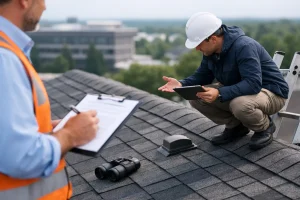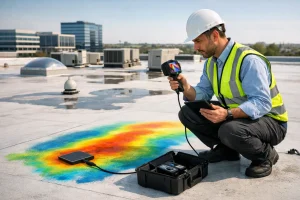




A roof can look serviceable from the ground and still be quietly setting up your next budget problem. Ponding water, failed laps, membrane fatigue, blocked drainage, loose flashings, corrosion at fixings – most of the expensive issues are not dramatic until they are. That is why roof condition reporting matters. It gives commercial asset owners and facility teams evidence, not guesswork, before minor defects turn into capital events.
For large property assets, the real cost of roofing failure is rarely just the repair. It is disruption to tenants, water ingress into critical areas, warranty disputes, emergency procurement, reputational damage, and a capital plan that gets blown apart by surprises. If the report you rely on is vague, contractor-led, or written to support a sales outcome, you do not have clarity. You have exposure.
What roof condition reporting should actually do
A proper roof condition report is not a photo dump with generic comments. It should tell you what is there, what is failing, how urgent each issue is, and what that means for maintenance, compliance, and replacement planning. For commercial and institutional assets, that means translating roof defects into business consequences.
The best reporting does three jobs at once. First, it establishes the current condition of the roof system and associated elements such as drainage, penetrations, flashings, waterproofing interfaces, and safety-critical details. Second, it identifies defect mechanisms, not just symptoms. Third, it gives decision-makers a practical path forward based on evidence and risk.
That last point matters. A report that says a roof is in poor condition without explaining whether targeted remediation is viable, or whether replacement is the more defensible option, is not finished work. The point is not to describe a problem. The point is to improve your position.
Why contractor-led reporting often fails the client
Many roof inspections are not really inspections. They are sales inspections. The person assessing the roof is also trying to sell repair work, a coating system, or a full replacement. That conflict shapes what gets emphasised, what gets ignored, and how recommendations are framed.
Sometimes the bias is obvious. A local defect somehow becomes justification for a complete reroof. Other times it is subtler. Moisture risk is downplayed because the contractor wants a quick patching scope. Handover defects are softened because no one wants a fight with the builder. Drainage design flaws are missed because they are harder to diagnose and harder to rectify.
Independent roof condition reporting removes that pressure. If the consultant does not sell roofing works, the findings can be blunt. That is exactly what commercial clients need when budgets, liability, and operational continuity are on the line. Roof Inspection Australia is built around that principle – no repairs to sell, no product to push, just a clear view of condition, risk, and the options in front of you.
What a commercial roof condition report needs to cover
The scope depends on the asset, roof type, and purpose of the inspection, but the report should go well beyond surface commentary. On large commercial, industrial, government, health, and education assets, the roof is a system. Failure often starts at interfaces and details rather than the broad field of the roof.
A credible report will assess roof coverings, substrate condition where accessible, flashings, terminations, penetrations, gutters, downpipes, box gutters, overflow provisions, falls, drainage performance, sealants, sheet laps, membrane seams, coating condition, previous repairs, and signs of water ingress or trapped moisture. It should also note workmanship issues, non-compliant details, and evidence of movement, corrosion, impact damage, or accelerated ageing.
Just as important is context. A defect means one thing on a ten-year-old roof with known maintenance history and another on an ageing asset with poor drainage and no reliable records. Good reporting connects observed defects to the roof’s age, design limitations, maintenance history, and likely remaining service life.
Roof condition reporting for budgets, not just maintenance
Asset managers do not commission reports for curiosity. They need to defend spending, prioritise works, and avoid being cornered by false urgency. That is where many reports fall short. They list defects but do not help the client separate maintenance issues from renewal triggers.
Strong roof condition reporting supports both operational and capital decision-making. It helps you distinguish between defects that require immediate intervention to prevent active failure, defects that should be programmed into planned maintenance, and broader deterioration that points to the end of economic service life. Those are different conversations, with different procurement pathways and different budget implications.
This distinction is especially important across portfolios. If every site claims to need urgent roofing expenditure, the problem may not be the roofs alone. It may be the quality of the information behind the request. Standardised, evidence-based reporting gives portfolio owners leverage. You can compare risk, stage expenditure, and challenge inflated scopes before they land in the capital budget.
Where roof condition reporting adds the most value
The biggest value is usually where uncertainty is highest or where the financial consequences of getting it wrong are significant. Pre-acquisition due diligence is an obvious case. A roof that appears acceptable during a transaction can hide drainage defects, latent waterproofing issues, or a maintenance backlog that becomes the buyer’s problem after settlement.
Handover is another common pressure point. New does not mean defect-free. Poor detailing, incomplete works, damaged membranes, blocked drainage paths, and non-compliant installations often sit behind practical completion paperwork. Independent reporting at handover gives owners and developers a factual basis to push defects back before warranties start getting diluted by time and argument.
It is equally valuable in live operational environments such as hospitals, schools, logistics facilities, and government buildings. In these settings, roof failure is not just an asset issue. It is a continuity issue. A leak over plant, clinical space, electrical infrastructure, archives, or tenant fitout can escalate quickly. Reporting helps teams act before disruption does the prioritising for them.
What separates a useful report from a useless one
Useful reports are specific. They identify defect locations clearly, use relevant photography, explain likely causes, classify severity, and provide practical recommendations tied to risk and timing. They do not hide behind filler language such as monitor and maintain unless that recommendation is actually justified.
They are also commercially literate. That means the report understands who will use it. A facility manager may need immediate defect priorities and maintenance sequencing. An asset manager may need lifecycle implications and budget staging. A developer may need evidence to pursue defect rectification. A government client may need a record that supports compliance and procurement scrutiny. The technical findings stay the same, but the reporting has to serve decisions.
Poor reports usually fail in one of three ways. They are too thin to support action, too technical to support decision-making, or too compromised to be trusted. Any one of those failures can cost the client real money.
The trade-offs: how much reporting is enough?
Not every asset needs the same level of investigation. A desktop review with a brief site walk may be enough for a low-risk building with a clear maintenance issue. It is not enough for a major facility with recurring leaks, disputed defects, or planned capital works.
There is always a balance between speed, access, and depth. Intrusive investigation, moisture testing, review of design documents, and targeted diagnostic work can add cost at the front end. But if the asset carries high consequence risk, shallow reporting is often the expensive choice. Spending less on diagnosis only makes sense if the decision in front of you is simple. If it is not, the report needs to match the stakes.
That is why the best approach is usually scoped, not generic. Start with the decision you need to make. Then build the reporting around the level of evidence required to make that decision defensibly.
Roof condition reporting as a control tool
Commercial property teams are under constant pressure to justify expenditure, manage contractor performance, and prevent avoidable failure. Roof condition reporting is not just a maintenance document. It is a control tool. It gives owners and managers the facts needed to test claims, sequence works, and hold parties accountable.
If a contractor says the roof needs full replacement, the report should tell you whether that claim stacks up. If a builder says post-handover leaks are maintenance related, the report should show whether the issue is actually defective design or workmanship. If a site team wants urgent funds, the report should explain what happens if works are deferred and what can reasonably wait.
That is the commercial value of independent reporting. It puts the client back in control of the narrative, the budget, and the decision.
The roof does not need to be dramatic to be dangerous. It just needs to be misunderstood. Good reporting fixes that before the building forces the issue.