
When a building inspector has no financial stake in the repairs that follow, you get a very different kind of report. This post covers what independent building inspections actually involve, why the independence of your inspector matters more than most property owners realise, what defects a thorough inspection uncovers, and why commercial roof systems deserve specialist attention, not a checkbox in a general report.
Whether you’re buying, managing, or maintaining a commercial property, the quality of your inspection shapes every decision that follows.
What Does an Independent Building Inspector Actually Do During an Inspection?
A building inspection is more than a walkthrough. An independent building inspector works through a structured assessment of the property’s condition from structural elements and drainage systems to roofing, cladding, and waterproofing. Every component that could affect the safety, performance, or value of the building gets documented. Nothing gets glossed over because there’s no repair quote waiting at the end.
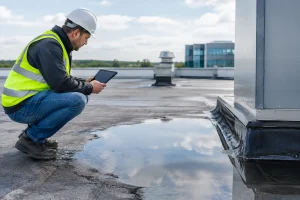
For commercial properties, the roof is often the most complex and highest-risk element. Dedicated roof inspections go beyond what a standard property inspection covers, assessing flashing, penetrations, membrane integrity, fastener condition, and drainage systems that often hide the earliest signs of failure. Tools like thermal imaging allow inspectors to identify moisture trapped beneath surfaces that is completely invisible to the naked eye.
What ends up in the inspection report is what separates a useful document from a liability. Comprehensive reports include high-resolution photographic evidence, defect grading by urgency, compliance notes, and maintenance recommendations that give property owners a clear picture of what needs attention now and what can be monitored. That level of detail is what makes an inspection report genuinely actionable.
Book a comprehensive building inspection today.
Why Independence Is Critical in Building and Pest Inspection Services
The conflict of interest in contractor-led inspections is straightforward: a business that profits from repairs has an incentive to find them. Building and pest inspection services delivered by the same company that quotes for remediation work cannot, by definition, be unbiased. That doesn’t mean every contractor inspector is dishonest, but the structural incentive is there, and it shapes what gets reported and how.
Independent inspectors have no financial relationship with the outcome of the inspection. Our only job is to document what we find. For commercial property owners and asset managers overseeing significant portfolios, that independence is not a nice-to-have; it is the entire point. An unbiased inspection report gives you a factual baseline to negotiate with, plan against, and make informed decisions from.
The consequences of biased or incomplete reporting compound quickly. A defect missed or underplayed at acquisition can translate into unbudgeted capital expenditure, insurance complications, or disputes with tenants. Independent building professionals who provide independent assessments without a stake in the outcome are the only reliable safeguard against that outcome.
What defects can a professional building inspection uncover?
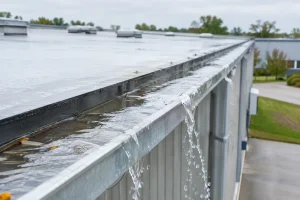
A professional building inspection is designed to surface issues that a casual walk-through would never catch. Structural defects, water ingress at roof penetrations, failed flashing, deteriorating membranes, and compromised drainage systems are among the most common findings on commercial properties, and most were present long before they became visible at ceiling level. By then, the damage behind the surface has already multiplied.
Thermal imaging changes the detection equation significantly. Heat signatures reveal moisture trapped inside roof assemblies, insulation failures, and air leakage paths that are completely invisible to a standard inspection. Early-stage leaks that would otherwise go undetected until they cause interior damage can be identified and graded before they escalate. The cost of addressing issues or defects at that stage is a fraction of what remediation costs once they compound.
The value of a detailed report is not just what it finds; it’s how those findings are communicated. Defect grading by urgency (urgent, moderate, monitor) gives property owners and asset managers a clear framework for prioritising maintenance spend. A thorough investigation documented properly is the difference between reactive, expensive repairs and a planned, budgeted maintenance programme.
Do building inspectors properly assess roofs? (And Why Specialists Matter)
A standard building and pest inspection covers a broad scope: structure, drainage, pest activity, and general condition. But commercial roofs are complex systems that rarely receive the depth of scrutiny they need from a generalist inspector. A building inspector checking dozens of items across a large commercial building cannot give a commercial roof the same attention as a dedicated specialist.
Building and pest inspectors are trained across a wide range of building elements. Roofing, particularly on commercial structures, involves specific knowledge of membrane systems, metal roofing profiles, cladding compliance, waterproofing standards, and roof access requirements. A building and pest report will typically note visible roof defects, but it won’t assess fastener pull-out resistance, membrane lap integrity, or drainage capacity against rainfall loading. Those gaps matter.
Commercial roofs carry significant financial exposure. A single failed penetration seal or blocked drain can cause damage that far exceeds the cost of the entire roof replacement. That is precisely why commercial property roof inspection requires specialists who understand these systems at a technical level, not generalists who include the roof as one item among many. A third-party roof inspection by a dedicated specialist gives commercial property owners a level of scrutiny that general building inspections simply cannot match.
At Roof Inspection Australia, we focus exclusively on roofs. That focus means every inspection goes to the depth a commercial roof system demands. We are not building consultants covering every element of a property; we are roof inspection specialists, and that specialisation is what our clients rely on. When you need a roof inspection near me that goes beyond the surface, specialist expertise is the difference.
Book a specialist commercial roof inspection today.
How Independent Inspection Services Help You Make Informed Decisions
Whether you’re acquiring a commercial asset, renewing a lease, or planning maintenance across a portfolio, the quality of your inspection data shapes every financial decision that follows. Pre-purchase inspections protect buyers from inheriting undisclosed defects. Pre-lease inspections establish the property’s condition at handover, protecting both landlord and tenant. Ongoing condition assessments give asset managers the data they need to budget accurately and avoid emergency expenditure.
Risk mitigation is one of the most tangible returns on inspection investment. When you know the condition of your roof system in detail — what’s failing, what’s approaching end-of-life, and what’s compliant — you can plan capital expenditure rationally rather than reactively. That data also supports insurance claims and compliance documentation, both of which rely on accurate, timestamped records of the property’s condition at a given point in time.
Long-term asset protection depends on making informed decisions with accurate information. A pre-purchase inspection that misses a failing membrane can result in a six-figure remediation bill that was entirely preventable. Independent inspectors who deliver comprehensive building inspections with no repair agenda give property owners the clarity to act in their own interests, not the interests of whoever fixes the problem next.
Our Independent Roof Inspection Services for Commercial Properties
Roof Inspection Australia delivers inspection services designed specifically for commercial property owners, asset managers, developers, and facilities teams who need facts, not sales pitches. Every inspection produces a detailed roof inspection report — the Asset Shield Report™ — that documents findings with high-resolution photography, defect grading, compliance notes, and maintenance recommendations. No patch job. No upsell. No agenda beyond accurate reporting.
Our condition assessments cover the full roofing system: tiles, metal sheeting, membranes, flashings, penetrations, drainage systems, and structural elements that affect roof performance. We grade every finding by urgency so clients know exactly what needs immediate attention and what can be planned into a maintenance cycle. That structure makes our reports useful for CapEx planning, insurance submissions, and contractor briefings. When you need a roof inspection in Brisbane or anywhere across Australia, our approach remains the same: independent, thorough, and built for decision-makers.
We do not sell repairs, manage contractors, or have commercial relationships with roofing companies. That independence is what makes our advice reliable. When our report says something needs urgent attention, it’s because the evidence supports it, not because someone needs a job. Clients use our inspection reports for everything from pre-purchase due diligence to expert witness proceedings, knowing the findings will hold up to scrutiny.
Tailored reporting is available for specific scenarios: end-of-warranty audits before a builder’s liability expires, dilapidation reports prior to neighbouring construction works, pre-handover inspections on new builds, and lifecycle assessments for portfolio management. We work with roofing consultants and building professionals where projects require it, but our inspection output remains independent of any downstream commercial interest.
Why Property Owners Trust Roof Inspection Australia
Trust in an inspector comes down to one thing: knowing they have no reason to tell you anything other than the truth. We are fully licensed and insured, we operate under Australian standards, and we have no financial interest in what happens after the report is delivered. That structure inspection only, with no repairs and no product recommendations, is what gives our clients confidence in what they receive.
Our specialisation in commercial roof systems means we bring a depth of knowledge that building inspections with a broader scope cannot replicate. We understand the specific failure modes of different commercial roofing systems, the compliance requirements under relevant Australian standards, and the financial implications of defects at different stages of their development. That knowledge shapes both what we look for and how we communicate findings. For roof inspection for developers and large portfolio managers alike, that specialisation is what makes the difference between a report and a decision-making tool.
Advanced tools, including drone-assisted inspection and thermal imaging, extend our visibility into areas and conditions that a standard visual inspection would miss. Moisture trapped inside roof assemblies, heat loss through compromised insulation, and early-stage membrane failure all show up clearly in thermal analysis. Combined with detailed photographic documentation and structured defect reporting, our inspections give property owners peace of mind that comes from knowing exactly what is above them.
Request your Asset Shield Report™ today.
Book a roof inspection today
Get an Independent Inspection Report You Can Rely On
Getting clarity on your roof’s condition should not require pressure, upselling, or waiting for a problem to become visible at ceiling level. Contact Roof Inspection Australia to book an independent commercial roof inspection — in person, by phone, or via our online enquiry form. We will confirm transparent pricing upfront based on your property type, roof size, and inspection scope. No surprises.
Whether you need a pre-purchase assessment before settlement, a condition report, or an annual Asset Shield Report™ to protect your portfolio, our team delivers the independent expertise your decisions depend on. Understanding the commercial roof inspection cost for your specific property is straightforward — contact us, and we’ll give you accurate pricing before we book. Request your inspection today and get a report you can actually use.
An independent building inspector assesses a property’s condition without any commercial interest in the repairs that follow. Their only job is to document what they find accurately and objectively.
Yes. A builder or contractor who also quotes for repairs has a financial incentive to find work. An independent inspector has no such incentive, which means the findings reflect the actual condition of the property, not a sales outcome.
Standard building and pest inspections cover roof condition at a general visual level. For commercial properties, a dedicated specialist roof inspection provides significantly greater depth covering membrane integrity, drainage capacity, fastener condition, and compliance against Australian standards.
A comprehensive building inspection report includes photographic evidence of defects, urgency grading, compliance notes, and maintenance recommendations. Our Asset Shield Report™ is structured specifically for commercial property decision-makers who need clear, actionable findings.
Yes. Thermal imaging identifies heat signatures caused by moisture trapped inside roof assemblies, including early-stage leaks that are not yet visible from below. It significantly extends what an inspection can detect compared to visual assessment alone.
For commercial properties, yes. General building inspections cover roofs at a surface level. A dedicated commercial roof inspection by a specialist delivers the technical depth that complex roof systems require, and it’s the only way to identify issues that a standard inspection would miss.
It depends on the size and complexity of the property. Residential inspections typically take two to three hours. Commercial roof inspections on larger or more complex properties may take longer, particularly where thermal imaging and drone assessment are included.
A contractor inspects to find work. An independent inspector inspects to find facts. For commercial property owners managing significant assets, that distinction determines whether your maintenance spend is driven by genuine need or someone else’s revenue targets.