


Roof problems on new developments don’t always show up during construction. They appear after occupancy — after the contractor has been paid, after handover documents have been signed, and after warranty disputes become the developer’s problem to manage. A roof inspection for developers before handover changes that outcome.
Relying solely on the builder’s sign-off isn’t enough. Roofing contractors have a financial interest in the project being accepted as complete. Independent roof inspection reports give developers unbiased documentation of the roof’s condition before they accept it. At Roof Inspection Australia, that’s exactly what we provide — across Sydney and NSW, with no repair agenda and no contractor relationships to protect.
In this guide, we cover why roof inspection for developers matters before project handover, what the inspection process covers, the most common defects found on new builds, how drone technology improves reporting accuracy, what independent inspections cost, and how Roof Inspection Australia supports developers across NSW.
Why Roof Inspection For Developers Is Critical Before Project Handover
Most developers engage a roofing contractor, review the invoice, and move on. The problem is that roofing defects rarely announce themselves during construction. Poor waterproofing, incorrect flashing installation, and inadequate drainage can sit undetected until rain, heat, or time forces them into view — usually after handover.
Roof inspection for developers at the pre-handover stage catches these issues while there’s still someone contractually responsible for fixing them. Once a developer accepts a building without documented defects, the contractor’s obligation narrows considerably. Identifying problems before sign-off is the most effective position a developer can be in.
Independent commercial roof inspections also prevent post-handover disputes from becoming protracted. When defects are documented in a comprehensive roof inspection report before completion, the evidence is clear and the timeline is established. That documentation protects the developer’s warranty rights and removes ambiguity about when problems first appeared.
Contact Roof Inspection Australia to arrange a pre-handover roof inspection for your development.
What does a roof inspection for developers cover?
A roof inspection for developers covers the full roofing system — not just what’s visible from the ground. We inspect roofing materials and membrane integrity across the entire roof surface, checking for installation defects, surface damage, and areas where workmanship falls short of Australian standards.
Flashings and roof penetrations are inspected in detail. These are the points where most roofing failures begin. Skylights, pipe penetrations, mechanical equipment bases, and roof access hatches all require proper sealing and correctly installed flashing to perform over time. Defects here are common and consequential.
Drainage systems and gutters are assessed for correct fall, blockage risk, and installation quality. Water overflow from poorly designed or installed drainage causes damage well beyond the roof itself—to facades, soffits, and internal structures. We also inspect fascia and structural elements where accessible, checking for installation defects that affect the roof’s long-term performance.
All findings feed into comprehensive roof inspection reports that document every defect with photographs, location descriptions, and severity ratings. Developers receive a structured report they can take directly to their roofing contractor for rectification.
What are the most common roof defects found during construction inspections?
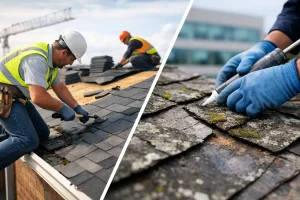
Incorrect flashing installation is the most frequent finding on new builds. Flashings that aren’t properly lapped, sealed, or fixed to adjoining surfaces create entry points for water that won’t show up until the first significant rain event. By then, the project is often complete and the contractor has moved on.
Poor waterproofing is the second most common issue. Membrane systems that aren’t correctly adhered, lapped, or terminated at edges and penetrations fail prematurely. On flat or low-pitch commercial roofs — the kind common on larger developments — waterproofing performance is the single most important factor in roof longevity.
Inadequate drainage is a problem that compounds over time. Gutters installed at insufficient fall, drainage outlets positioned incorrectly, and sumps that don’t meet the required capacity all contribute to water pooling on roof surfaces. Every roof should shed water efficiently. When drainage is compromised, the roof’s condition deteriorates faster than designed.
Structural installation defects and incomplete roof works also appear regularly during inspections. Missing sealant around penetrations, unfixed roof sheeting, and incomplete fascia installations are all examples of issues that a thorough inspection catches before handover. These are precisely the defects that protect a developer’s warranty rights when they’re identified and documented before project completion.
How to Identify a Bad Roof Before Building Handover
Some warning signs are visible without specialist equipment. Water pooling on flat roof sections after rain, visible membrane damage, and improper drainage slope are all indicators that something isn’t right. Developers who know what to look for can flag concerns early — but a visual check from ground level or a general walk-through misses most of what matters.
Professional inspections detect hidden structural issues that routine building inspections don’t reach. These include:
- Membrane separation or delamination beneath the surface
- Concealed flashing failures at parapet walls and penetrations
- Sealant voids around skylights and pipe boots
- Incorrect overlap dimensions in roof sheeting
- Structural movement at connection points
- Gutter and drainage installations that fail to meet fall requirements
Penetration sealing failures are particularly hard to identify without close examination. A sealant application that looks complete from a distance may have gaps, incorrect product selection, or insufficient depth that will fail under UV exposure within months.
Independent roof inspection reports give developers documented evidence of these issues — not a general impression, but specific findings with photographic evidence that can be acted on before handover is signed off.
Do building inspectors check roofs during construction inspections?
Building inspectors assess general structural compliance across the whole building. Their scope is broad, which means the depth they can apply to any single system — including the roof — is limited. A building inspection is not a roof inspection, and the two shouldn’t be treated as equivalent.
Roofing systems require specialist inspection expertise. The inspection process for a complex roof involves examining materials, membranes, drainage, penetrations, and flashings in a level of detail that falls outside the standard building inspection scope. Many roof defects are missed entirely when the assessment is conducted as part of a general building review.
Independent roof inspection reports, produced by dedicated roof inspectors, fill that gap. We inspect roofs only. That focus means our inspectors know exactly what failure patterns to look for in every roof type and installation method. Developers who rely solely on building inspections to verify roof quality are accepting a risk that an independent inspection would remove.
Contact Roof Inspection Australia for independent roof inspection reports separate from your building inspection.
How Drone Roof Inspections Help Developers Identify Defects Safely
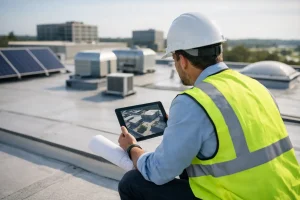
Drone roof inspections provide high-resolution imaging of roofing systems that would otherwise require scaffolding, elevated work platforms, or unsafe manual access. On large commercial developments, drones cover roof areas quickly and capture detail that ground-level inspection simply can’t reach.
Complex roof designs present access challenges that affect both safety and inspection accuracy. Drones navigate these without putting inspectors at risk and without the cost and delay of installing access equipment. The imagery produced supports accurate defect identification and feeds directly into the inspection report with photographic evidence attached to specific findings.
For developers, the practical benefit is clear documentation of every roof section — including areas that a roofer on foot might skip due to access difficulty. Drone roof inspections improve reporting accuracy and reduce the risk of defects being missed because access was inconvenient.
What tools are used in professional roof inspections?
Professional roof inspections use a combination of technology and physical assessment. Drone imaging technology provides aerial access and high-resolution documentation. Moisture detection equipment identifies water trapped within roof assemblies before it becomes visible internally. High-resolution inspection cameras capture close-up detail of penetrations, flashings, and membrane conditions that the naked eye can miss at a distance.
Safety access systems — including safety harnesses and controlled access procedures — allow our inspectors to physically examine sections of the roof that require hands-on assessment. Structural assessment tools support evaluation of roof framing and support elements where access permits.
A qualified roof inspector with accreditation and experience uses these tools as part of a systematic process. DIY roof assessments, regardless of the equipment available, lack the technical knowledge to interpret findings accurately or produce inspection reports that stand up to scrutiny. That distinction matters when the report is being used for warranty claims or handover compliance.
How much does a roof inspection cost in Sydney?
Roof inspection for developers in Sydney is priced based on several variables. The cost of a roof inspection is not fixed — it reflects the scope of work required for the specific project.
Key factors that affect inspection costs include:
- Size of development — Larger roof areas require more inspection time and more extensive reporting
- Roof complexity — Complex roof designs with multiple levels, penetrations, and drainage systems take longer to inspect thoroughly.
- Accessibility — Roofs requiring drone inspection or specialised access equipment affect pricing.
- Inspection technology — Drone roof inspections and moisture detection add to the scope and cost.
- Level of reporting required — A comprehensive defect report with detailed photography costs more than a basic condition summary.
Professional roof inspections for developers help avoid costly post-construction defects that can run into tens of thousands of dollars in rectification work. The inspection cost is a small fraction of the risk it removes.
Case Study: Gungahlin Marketplace Commercial Roof Inspection (ACT)
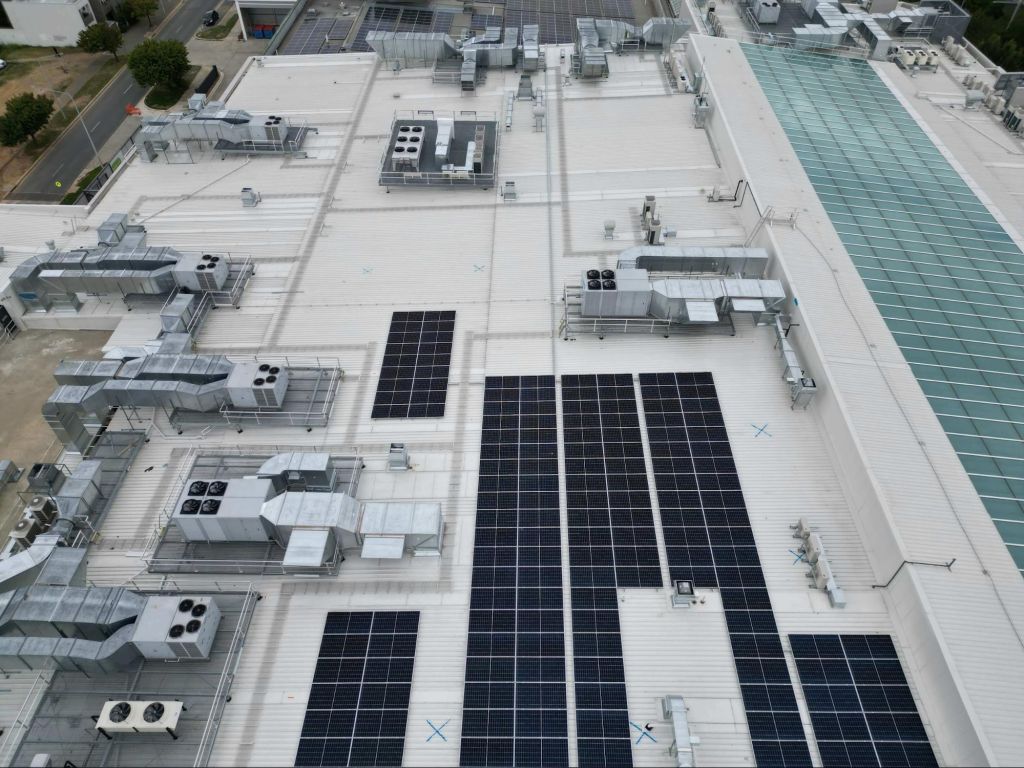
Roof Inspection Australia was engaged to conduct a comprehensive commercial roof inspection at Gungahlin Marketplace, a large-format retail development in the ACT. The scale and complexity of the roof required a structured approach combining drone inspection and physical assessment across multiple roof sections.
Project Overview
The Gungahlin Marketplace development presented the inspection challenges typical of large commercial property projects — extensive roof area, varied roof design across tenancies, and multiple penetrations requiring individual assessment. The developer required an independent roof inspection and report to support project completion and verify the condition of the roof before handover.
Our team conducted a thorough inspection of the entire roof system, documenting findings across all sections with high-resolution photography and detailed written descriptions.
Inspection Process
Drone roof inspections were used to access and document roof areas that were difficult or unsafe to reach through manual inspection alone. Every roof section was assessed — roofing materials, membrane condition, flashings, drainage systems, gutters, and all penetrations. The inspection process was systematic and documented in full.
Physical inspection of accessible areas complemented the drone work, allowing close examination of flashings, sealant applications, and drainage outlet conditions that aerial imagery alone couldn’t confirm.
Findings
The roof inspection report identified roofing defects that posed a long-term water ingress risk if left unaddressed. Drainage concerns were detected across multiple sections of the roof, with areas of inadequate fall and partially blocked outlets identified. Flashing installations at several penetration points were documented as incomplete or incorrectly terminated.
Each defect was recorded with photographic evidence, a location reference, and a description of the potential consequence if not rectified.
Outcome
The developer received a comprehensive roof inspection report before project completion — independent of the roofing contractor and structured for direct use in defect rectification. The findings were addressed before final handover, ensuring the roof met the required standard before the building was occupied. The report provided documented protection for the developer’s warranty rights and a clear record of the roof’s condition at completion.
Schedule your roof inspection for developers with Roof Inspection Australia before project handover
Why Developers Rely On Independent Roof Inspectors For Compliance And Warranty Protection
Independent inspections give developers something a contractor’s sign-off can’t: unbiased verification of construction quality. When a qualified roof inspector with no connection to the roofing company assesses and documents the roof’s condition, that report carries a credibility that internal sign-offs don’t.
Warranty claims depend on documented evidence. If a roof defect emerges after handover, a developer’s ability to pursue the roofing contractor depends on establishing when the defect existed and what its cause was. An independent roof inspection report produced before handover provides exactly that evidence — a timestamped, photographed, professionally prepared document that establishes the condition of the roof at completion.
Independent documentation also protects developers against contractor disputes that would otherwise come down to one party’s word against another’s. Every commercial roof inspection for developers that we conduct is produced without commercial bias and without any interest in the outcome of subsequent repair or maintenance decisions.
Book a roof inspection today
Roof Inspection Australia: Independent Roof Inspection Reports for Developers Across NSW
We provide independent roof inspection services for developers and commercial projects across Sydney and NSW. Our scope is inspection and reporting only — we don’t carry out repairs, and we don’t refer contractors. That independence is the foundation of every report we produce.
Our inspection services cover new builds, complex commercial developments, and multi-tenancy projects requiring comprehensive roof inspection and report documentation. We use drone roof inspections and detailed defect reporting to ensure every section of a roof is assessed and documented regardless of size or access difficulty.
We support developers through construction handover and warranty compliance, producing roof condition reports that are structured for use in defect resolution, insurance documentation, and contractual sign-off processes.
Our reports include a detailed condition assessment of the roof system, photographic evidence of all identified defects, location descriptions, severity ratings, and recommendations for corrective action. Reports are structured for use in defect resolution and warranty processes.
Builders and roofing contractors have a financial interest in the project being accepted as complete. Independent inspections provide unbiased documentation of the roof’s condition before handover — protecting developers’ warranty rights and providing evidence for any defect disputes that arise after completion.
Yes. Defects that aren’t identified and documented before handover can be difficult to pursue under warranty once the building is occupied. An independent roof inspection report produced beforehand establishes the condition of the roof at the time of completion and supports warranty claims if issues emerge later.
The most critical point is before final handover. We also conduct inspections at key construction milestones for larger developments — particularly after waterproofing installation and before roof finishes are applied over membrane systems.
Yes. Drone inspections are particularly well-suited to large commercial developments where roof area and access complexity make manual inspection alone insufficient. High-resolution drone imagery improves both coverage and reporting accuracy.
It depends on the size and complexity of the development. Smaller commercial projects may take two to three hours. Large multi-tenancy developments can require a full day on-site, with report preparation completed in the days following the inspection.
Our report documents each defect clearly with photographic evidence and descriptions. You take that report to your roofing contractor for rectification before accepting handover. We don’t carry out repairs — our role is to give you the independent evidence needed to hold the right parties accountable.