
A commercial roof can appear sound from ground level while holding thousands of litres of water above occupied space, critical equipment or high-value stock. Roof drainage is not a minor maintenance item. It is a core part of the roof system, and when it fails, water finds defects that might otherwise have remained dormant for years.
For asset managers, facility teams and project directors, the issue is not simply whether a roof drain is blocked. The real question is whether the entire roof drainage arrangement can remove water reliably during the conditions the building will face, without overloading the structure, compromising waterproofing or creating avoidable operational risk.
Why roof drainage is a commercial risk issue
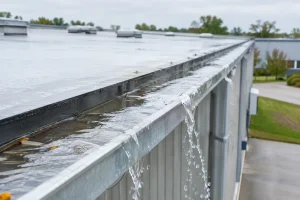
Ponding water accelerates roof failure. It places sustained stress on membranes, laps, flashings and penetrations. It increases the chance of leaks at minor defects and can conceal deterioration until water enters the building. On metal roofs, poor drainage can contribute to corrosion around gutters, sumps, fixings and overflow points. On low-slope membrane roofs, it can turn a local defect into a widespread moisture problem.
The cost rarely stops at a roofing repair. A drainage failure can mean damaged ceilings, electrical risk, mould remediation, disrupted tenants, contaminated stock, equipment downtime and difficult insurance conversations. In healthcare, education, logistics and government facilities, the consequences can extend to service continuity and safety obligations.
That is why a report stating that drains are “clear at the time of inspection” is not enough. It says little about capacity, falls, overflow paths, outlet condition or how the roof performs in a major rain event. A commercially useful assessment identifies the cause of water retention and quantifies the risk of leaving it unresolved.
The difference between a blockage and a drainage defect
Blocked outlets are visible and straightforward. Leaves, silt, packaging, ballast migration and other debris can restrict flow, particularly where routine maintenance is inconsistent. Cleaning is necessary, but it should not be mistaken for a diagnosis.
A drainage defect is systemic. It may involve inadequate roof falls, poorly located outlets, undersized gutters, sagging trays, insufficient overflow provision, damaged sumps, incompatible outlet details or discharge points that cannot cope with the catchment area. Cleaning a drain will not correct water that naturally settles 15 metres away from it.
This distinction matters during budget planning. Reactive cleaning belongs in operating expenditure. Regrading a roof, modifying drainage paths or replacing failed gutters may be a capital works issue. Combining both under a generic “roof maintenance” allowance is a reliable way to underestimate the problem.
Falls are often the hidden issue
Low-slope commercial roofs are particularly vulnerable to construction tolerances. A design may specify falls to outlet, yet installed levels can produce local low points, reverse falls or broad ponding areas. Deflection can make the problem worse over time, especially where plant has been added without a clear assessment of structural and drainage impacts.
Not all residual water is automatically a failure. Some roof systems tolerate limited shallow ponding better than others. The relevant question is duration, depth, location and the effect on the specific membrane, detailing and structure. Persistent ponding around seams, penetrations and door thresholds deserves attention. So does water that remains long after rainfall has ceased.
Overflows are not optional insurance
Primary drainage will eventually be challenged. Intense rainfall, sudden debris loads and partial blockages occur. Secondary drainage and overflow provisions are intended to direct excess water safely away before it enters the building or causes excessive loading on the roof.
Overflow locations must be visible, free-draining and set at appropriate levels. An overflow that discharges into a concealed cavity, onto a pedestrian entry or directly against a façade may meet neither the practical nor commercial purpose of an overflow. It can simply transfer the failure elsewhere.
What a meaningful roof drainage assessment should examine
A proper assessment looks beyond the outlet grate. It considers the roof as a connected water-management system, from the highest catchment point to final discharge. The scope should be matched to the building type, roof construction, weather exposure, access constraints and operational consequences of a failure.
At a minimum, inspection should establish the condition and location of outlets, sumps, gutters, downpipes, overflows and rainheads; evidence of ponding, staining, corrosion and membrane stress; roof falls and localised low points; debris sources and maintenance access; and the relationship between drainage components and adjacent waterproofing details.
Where the consequences warrant it, the assessment should also test whether drainage capacity and overflow arrangements align with the roof catchment and relevant design requirements. This may require review of drawings, rainfall design assumptions, site levels and changes made after construction. A visual inspection alone cannot always confirm hydraulic adequacy.
The output should be evidence-led. Photographs, marked-up roof plans, defect locations, severity ratings and clear recommendations allow a building owner to distinguish urgent intervention from planned works. Vague language creates room for dispute. Specific evidence creates leverage.
Common warning signs asset teams should not dismiss
Water stains inside are a late-stage indicator, not the first sign. By the time staining appears on a ceiling, the roof assembly may have been wet for some time. The earlier warning signs are usually visible on the roof, provided someone is looking with a critical eye.
Recurring debris at outlets, water marks around sumps, algae growth, membrane wrinkling, corroded gutter joints, rust beneath overflows and sediment lines all indicate that water is not moving as intended. So do repeated calls for leak repairs in the same area after heavy rain. Recurrent leaks are rarely random. They usually point to an unresolved drainage or detailing condition.
Pay attention to changes in use as well. New HVAC equipment, solar installations, cable trays and access walkways can alter catchments, obstruct flow paths or introduce penetrations in known ponding areas. A roof that drained acceptably at handover may no longer do so after successive modifications.
Maintenance matters, but it cannot carry a bad design
Planned maintenance remains essential. Drains and gutters need inspection before and during high-rainfall periods, particularly where nearby trees, construction activity or exposed industrial environments increase debris loads. Maintenance teams also need safe access, clear ownership and records that show what was cleaned, when, and what defects were observed.
But maintenance is not a substitute for corrective works. If a gutter has insufficient fall, if a sump is too shallow, or if water ponds around a failed membrane lap, increasing the cleaning frequency only treats the symptom. It can also normalise a condition that should be escalated to capital planning.
This is where independent advice is valuable. A contractor engaged to clean or repair may identify genuine issues, but their recommended scope can be shaped by the work they are positioned to sell. Roof Inspection Australia does not sell repairs or replacement systems. The purpose of an independent review is to establish what is actually failing, what needs immediate action and what can be managed through a staged plan.
Using drainage findings to control cost and accountability
Drainage findings should feed directly into asset decisions. Urgent defects may require immediate clearing, temporary protection or targeted repairs. Medium-term works could include replacing corroded sections, modifying overflows, repairing sumps or correcting localised falls. Major deficiencies may need a broader design review before renewal work is committed.
The order matters. Replacing a membrane without resolving drainage geometry can leave the owner with a new roof and the same water problem. Likewise, approving large-scale drainage alterations without confirming the actual cause can waste capital and create new waterproofing risks.
For projects under construction or approaching handover, drainage review is especially important. Water testing, level verification, overflow checks and photographic records can identify defects while responsibility still sits with the builder or contractor. Once warranties expire and site conditions change, proving causation becomes harder and more expensive.
A clear independent report also strengthens procurement. It gives the client a defined scope against which contractor proposals can be compared, limits ambiguous variations and makes it easier to challenge recommendations that are disproportionate to the evidence. That is practical control, not paperwork.
Treat retained water as evidence
Water on a roof is not always an emergency, but it is always evidence. It shows where gravity, construction, maintenance or design is not working as intended. The right response is not to assume the nearest drain is the answer. It is to identify the full drainage path, understand the failure mechanism and act at the level the risk requires.
For high-value assets, that approach protects more than the roof. It protects operating budgets, tenant confidence, compliance obligations and the ability to make capital decisions without being pushed by the loudest repair quote.