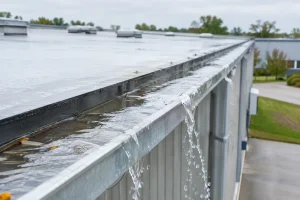




If a contractor tells you the roof is “shot” and the only answer is replacement, you do not have a roofing problem. You have an information problem. A proper roof defect report gives you something far more useful than opinion – it gives you evidence, scope clarity and commercial leverage.
For owners and managers of commercial property, that matters. Roof defects rarely stay contained to the roof. They turn into internal damage, mould risk, safety issues, tenant disruption, warranty disputes and unplanned capital spend. The cost is not just in the defect itself. The cost is in making the wrong decision too early, too late or on the basis of bad advice.
What a roof defect report is really for
A roof defect report is not a generic checklist and it is not a sales document dressed up as technical advice. Its job is to identify what is wrong, explain why it is happening, assess the level of risk and set out what needs to happen next.
That sounds straightforward, but the quality gap in the market is wide. Many reports list visible symptoms without diagnosing the defect pathway. Others overstate urgency because the person writing the report also wants the repair contract. Neither helps an asset manager defend a budget, challenge a contractor or plan works across a portfolio.
A useful report gives decision-makers control. It turns a vague roofing issue into a defined technical and commercial problem. That means you can separate routine maintenance from defect rectification, distinguish local failure from systemic failure and avoid replacing an asset that may still have serviceable life left.
What a roof defect report should include
The first test is simple. Can the report stand on its own in front of a board, insurer, contractor or superintendent? If it cannot, it is not doing enough.
Clear defect identification
The report should identify each material defect in plain language, supported by technical accuracy. That includes membrane failures, sheet laps, flashing defects, ponding, blocked or undersized drainage, corrosion, failed penetrations, unsecured components, sealant breakdown, waterproofing failure and installation non-compliance.
A vague statement such as “roof requires attention” is useless. A decision-maker needs to know exactly what the issue is, where it is, how widespread it appears to be and whether it is likely to worsen quickly.
Evidence, not guesswork
Photos matter, but photos alone are not enough. The report should tie observations to evidence from the inspection, including defect locations, patterns of deterioration, moisture entry pathways, drainage behaviour and signs of previous ineffective repairs.
Where relevant, it should also distinguish between symptom and cause. Water staining at a ceiling tile is a symptom. The failed penetration detail 12 metres away may be the cause. If that gap is missed, the repair budget goes to cosmetic works while the leak continues.
Condition and risk assessment
Not every defect carries the same consequence. Some issues are nuisance leaks. Others expose the asset to major water ingress, slip hazards, electrical risk, corrosion of structure or accelerated failure of adjacent building elements.
A strong report ranks defects by urgency and consequence. This is where commercial value sits. If you are managing a hospital, school, logistics facility or public asset, sequencing matters. The question is not only what is defective, but what creates the biggest operational or financial exposure if left unresolved.
Why independence matters in defect reporting
The biggest weakness in many roof reports is not technical. It is commercial bias.
If the same party inspecting the roof is also selling repairs, replacement or a new system, their report is never purely diagnostic. That does not mean every contractor report is wrong. It means the incentive structure is wrong. There is a difference.
An independent consultant has no repair agenda to feed. That changes the quality of the advice. The report can say a defect is isolated when it is isolated. It can say replacement is premature when replacement is premature. It can also say that a roof is being patched beyond reason and capital works should no longer be delayed.
That objectivity is not academic. It affects procurement, contractor negotiations and budget approvals. When the report is independent, you can use it to test quotations, challenge inflated scopes and hold delivery parties accountable.
Common gaps in a poor roof defect report
A weak report usually fails in one of three ways. It is too shallow, too vague or too convenient for the person who wrote it.
The shallow version records what is visible without explaining causation. The vague version uses broad language that cannot support action. The convenient version jumps straight to a preferred repair outcome without enough evidence.
There are other warning signs. No defect mapping. No distinction between priority levels. No comment on likely remaining service life. No reference to drainage performance. No recognition of safety, compliance or warranty implications. And no practical direction on what should happen next.
For commercial assets, these omissions are expensive. A bad report creates false urgency, false comfort or both. Neither is acceptable when significant capital or operational continuity is on the line.
A roof defect report should support decisions, not just observations
The best reports are written for action. They do not stop at documenting problems. They help the client decide what to do, when to do it and how to avoid wasting money.
Repair now, monitor or plan replacement
This is one of the most important distinctions. Some roofs need targeted defect rectification and better maintenance. Some need monitored intervention with a staged works plan. Others have reached the point where repeated patching is poor asset management.
The answer depends on defect severity, extent, roof age, workmanship history, compatibility of previous repairs and the consequences of failure at that site. There is no honest one-size-fits-all answer. A report worth paying for makes that judgement call with evidence.
Scope clarity for tenders and contractor control
If works are required, the report should help define scope. That reduces ambiguity in tendering and makes contractor pricing easier to compare.
Without that clarity, you get three common outcomes. Quotes that vary wildly because each contractor assumes a different scope. Cheap pricing that excludes critical items. Or inflated pricing built around unnecessary replacement. None of these helps budget control.
A well-structured defect report gives the client leverage before the first quotation lands.
Where roof defect reports add the most value
They are especially valuable at moments where roofing risk intersects with commercial exposure.
That includes pre-acquisition due diligence, portfolio condition reviews, end-of-warranty inspections, practical completion disputes, recurring leak investigations, storm event assessments and capital planning. In each case, the report does more than identify technical defects. It protects the decision-making process.
For example, during handover, a defect report can separate builder rectification from owner maintenance. In a lease context, it can clarify whether the issue is sudden damage, long-term deterioration or neglected upkeep. In capital planning, it can stop minor but visible failures from distorting the real priorities across a property portfolio.
This is why experienced asset teams do not wait for major internal damage before seeking advice. By then, the roof defect has already become a building problem.
What commercial clients should expect from the inspection process
The report quality starts with the inspection quality. A serious inspection is not a quick walkover followed by a generic recommendation.
It should involve close review of roof coverings, penetrations, laps, terminations, drainage points, outlets, sumps, overflow provisions, plant interfaces, previous repairs and signs of movement or moisture entry. Depending on the asset, it may also require review of workmanship quality, code compliance issues and handover defects.
Just as important is context. A warehouse with high-value stock, a healthcare site with critical operations and a school with ageing buildings do not carry the same risk profile. The same physical defect can justify a different response depending on what sits underneath it.
That is where specialist judgement matters. Technical findings need to be translated into business consequences.
The commercial standard is simple
A roof defect report should tell the truth clearly enough that you can act on it with confidence. It should expose risk, not soften it. It should narrow the real options, not create confusion. And it should leave you better equipped to question contractors, allocate budget and protect the asset.
Roof Inspection Australia works in that space because commercial clients do not need another sales pitch from the roof. They need facts they can use.
If your current reporting does not give you cause, consequence and a defensible path forward, it is not reporting. It is noise. And noise is expensive when water is involved.