

A commercial property roof inspection and roof repairs assessment is a structured evaluation of a commercial roof system. It covers surface materials, drainage, flashings, penetrations, and structural integrity — documented in a report that building owners, asset managers, and insurers can actually use. Undetected roof problems don’t stay minor. Leaks can lead to internal damage, business disruption, and repair costs that compound quickly when left unaddressed, often resulting in the need for roof inspection and roof repairs.
Commercial inspections differ from residential ones in scope, complexity, and safety requirements. Larger roof areas, varied roofing systems, and stricter access protocols all change how an inspection is conducted. At Roof Inspection Australia, we provide independent roof inspection and roof repairs assessments for commercial properties across Sydney — no repairs, no upsells, just accurate reporting.
In this guide, we cover what a commercial property roof inspection and roof repairs assessment involves, why it matters for building owners and investors, what the inspection process looks like, what a roof condition report includes, and how Roof Inspection Australia delivers independent assessments across Sydney.
What is a commercial property roof inspection?
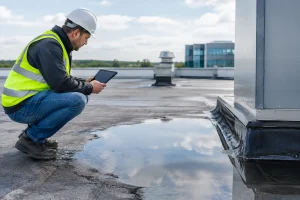
A commercial property roof inspection is a thorough inspection of the full roofing system on a commercial building. That includes surface materials, membrane condition, drainage systems, flashings, roof penetrations, gutters, and any visible structural elements. The goal is a clear, documented picture of the roof’s condition — not a quick pass with a clipboard.
The purpose is straightforward. Building owners and property managers need to know whether their roof is performing as it should, where problems are developing, and what needs attention. Regular roof inspections for commercial buildings feed directly into maintenance planning, insurance renewals, and capital expenditure forecasting.
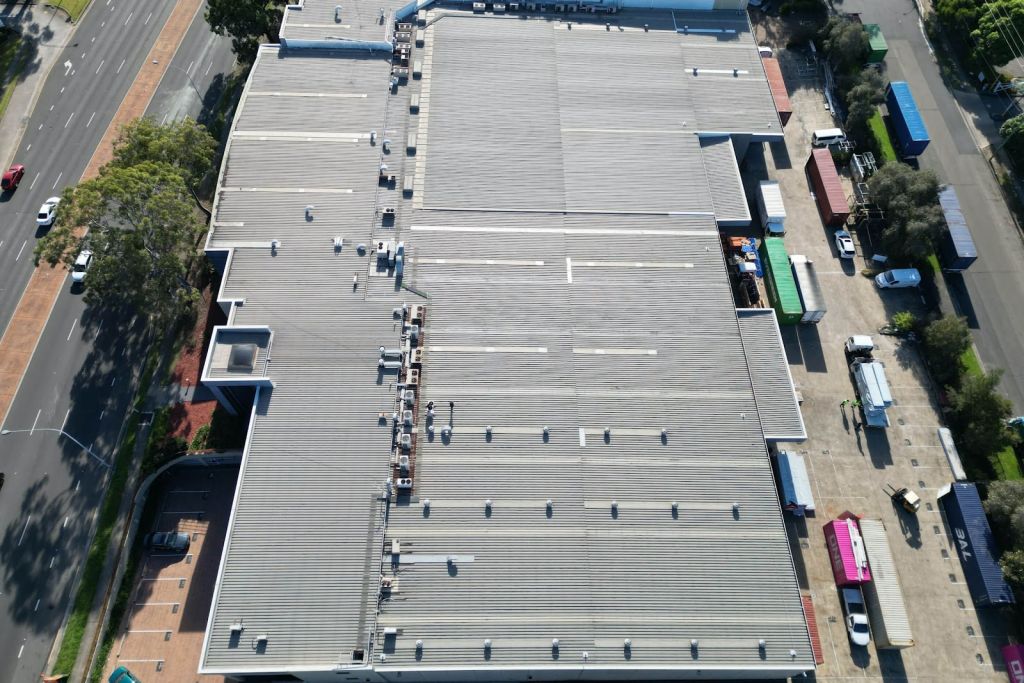
Commercial and industrial properties require a different approach to residential inspections. Roof size alone changes the methodology. Large flat or low-pitch commercial roofs with multiple penetrations, skylights, and drainage outlets take considerably more time to inspect thoroughly than a standard residential roof. Specialised inspection methods — including drone technology where access is restricted — are often necessary to cover every section properly.
Book a commercial property roof inspection report with Roof Inspection Australia and get a report you can act on.
Is it worth getting a roof inspection for commercial properties?
Yes. A commercial property roof inspection protects asset value in ways that are difficult to recover after the fact. Roof failures on commercial properties don’t just create repair costs — they can disrupt business operations, trigger insurance complications, and reduce the market value of the asset. Catching issues early keeps those consequences manageable.
Early detection changes the cost equation entirely. A roof inspector identifying deteriorating flashings or blocked drainage during a routine inspection gives the building owner time to address it affordably. The same issue found after water damage has tracked through the ceiling space is a far more expensive problem to fix.
Regular roof inspections also support compliance. Insurance companies often require documented evidence of roof maintenance for commercial buildings. A roof condition report from an independent inspector provides that documentation and demonstrates a proactive approach to asset management.
What does the commercial roof inspection process involve?
Our process is systematic. We work through each stage in sequence so nothing is missed and every finding is documented with evidence.
Initial Roof Assessment
We start with a review of available information about the building — age, construction type, previous inspection reports if available, and any known roof problems. This context shapes what we look for. An older roof with a history of patching needs a different focus than a newer commercial building with no maintenance record.
On-site, we assess general roof condition from the outset. The initial walkthrough identifies obvious problem areas and informs how we allocate time during the detailed inspection that follows.
Inspection of Roofing Materials and Membranes
We inspect surface materials for signs of deterioration, wear, cracking, and workmanship defects. For membrane roofs, we check adhesion, seam integrity, and any areas where the membrane has lifted or separated. Metal roof systems get examined for corrosion, fastener failure, and panel movement.
Different roofing systems fail in different patterns. Our inspectors know what to look for in each system type across commercial and industrial properties.
Checking Roof Penetrations, Flashings, and Drainage
Penetrations and flashings are where most commercial roofs develop problems. We inspect every penetration — skylights, pipes, mechanical equipment bases, roof access hatches — for proper sealing and signs of water ingress. Flashings get checked for lifting, cracking, and separation from adjoining surfaces.
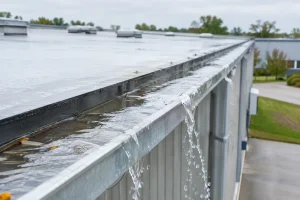
Drainage is assessed for blockages, incorrect fall, and gutter condition. Poor drainage is one of the most common contributors to roof deterioration on commercial buildings, and it’s often overlooked in basic visual inspections.
Identifying leaks, deterioration, or structural damage
We document every identified defect with location, description, and severity. Leaks are traced to their likely source where possible. Signs of structural damage — sagging, deflection, or compromised supports — are flagged separately given their safety implications.
Where moisture detection is required, thermal imaging can be added to identify water trapped within roof assemblies before it becomes visible internally.
Documenting Findings in a Roof Condition Report
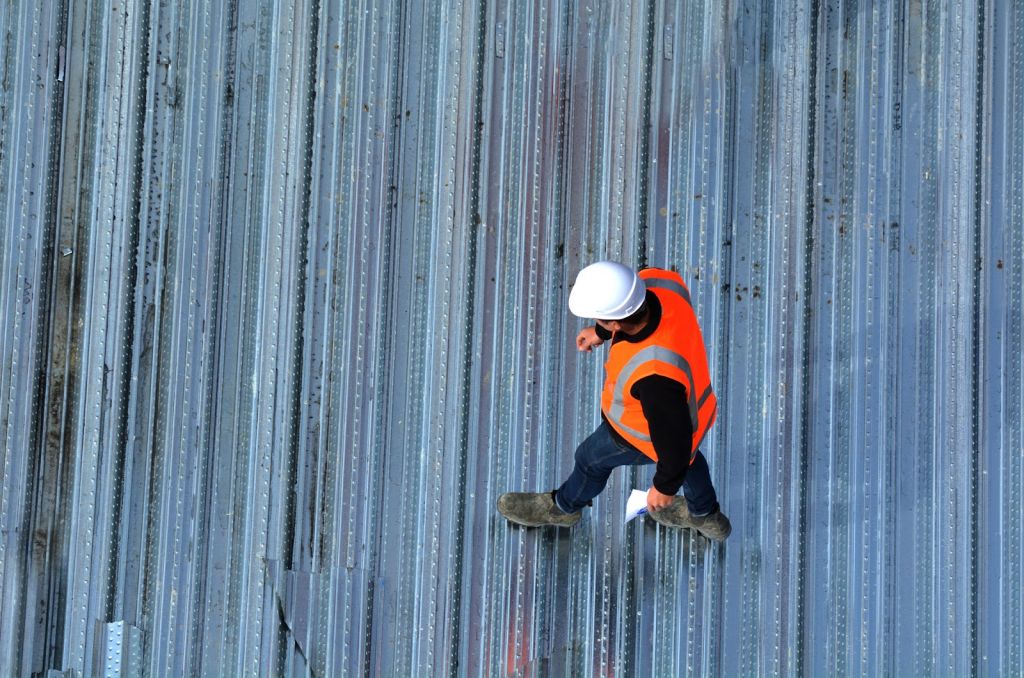
Every inspection produces a written roof condition report. Findings are photographed, described clearly, and prioritised by urgency. The detailed report is structured so property owners, facilities managers, and insurers can use it directly.
Book a regular inspection programme with Roof Inspection Australia for your Sydney property
What is included in a commercial roof condition report?
Our roof condition report is a detailed document, not a summary. It covers the current condition of the roof across all inspected components — surface materials, drainage systems, flashings, penetrations, gutters, and any identified structural concerns. Each finding is supported by photographic evidence taken during the inspection.
We identify existing damage and deterioration clearly, with descriptions that explain what was found, where it is, and what it means for the roof’s performance. Repair recommendations are included and prioritised so building owners understand what needs immediate attention and what can be scheduled.
These reports are useful beyond maintenance planning. Insurance companies often request documented roof condition for commercial buildings. Investors conducting due diligence before a property transaction rely on independent inspection reports to understand what they’re acquiring. A detailed roof condition report from an independent inspector carries weight that a contractor’s verbal assessment doesn’t.
Do building inspectors check the roof during property inspections?
General building inspectors cover a broad scope. They assess structural elements, electrical, plumbing, and overall building condition — including a visual check of the roof where accessible. But a standard building inspection report is not the same as a specialist commercial roof inspection.
The limitations are practical. A general building inspector conducting a full property assessment can’t allocate the same time or depth to the roof that a dedicated roof inspector would. For a commercial building where the roof represents a significant maintenance liability, that difference matters.
Independent commercial roof inspections fill that gap. We specialise in roofs — specifically commercial and industrial properties where roof complexity and size require focused expertise. A thorough inspection from a dedicated roof inspector produces a level of detail that a general building inspection simply isn’t designed to provide.
Schedule your commercial roof inspection with Roof Inspection Australia protect your investment with independent reporting.
Book a commercial roof inspection with RIA.
What are the most common roof problems found during inspections?
Routine inspections across commercial properties in Sydney reveal consistent patterns. These are the issues that appear most frequently:
- Water ingress and leaks — Often originating at penetrations, flashings, or membrane failures. Leaks can lead to internal damage that far exceeds the cost of the original roof repair
- Membrane deterioration — Particularly on older roofs where UV exposure and thermal movement have degraded membrane integrity over time
- Drainage blockages — Blocked gutters and outlets cause water to pond on roof surfaces, accelerating material breakdown and increasing leak risk
- Damaged or failed flashings — Around penetrations, parapet walls, and roof edges; one of the most common entry points for water on commercial roofs
- Structural damage — Weather events, age, and workmanship defects can compromise the structural integrity of roof framing and supports
Most of these issues are manageable when caught early. Left undetected, they escalate into costly repairs or, in serious cases, a full roof replacement. A well-maintained roof on a commercial building can serve its expected lifespan. A neglected one rarely does.
Issues before they become expensive repairs are exactly what regular inspections are designed to catch. It’s straightforward asset management, not precaution.
How often should commercial roofs be inspected?
Most commercial properties benefit from a roof inspection every two to three years as a baseline. For buildings with older roofs, a history of leaks, or roofing systems approaching the end of their service life, annual inspections make more practical sense.
After severe weather — storms, hail, or high winds — a post-event inspection is worth arranging regardless of inspection frequency. Storm damage isn’t always visible from the ground, and signs of damage caught early prevent secondary problems from developing. Sydney’s weather creates these situations more regularly than most building managers plan for.
Before a property purchase or sale, a dedicated commercial property roof inspection provides independent documentation of roof condition. Buyers use it to inform negotiations. Sellers use it to demonstrate maintenance history. Either way, it removes uncertainty from the transaction.
How Roof Inspection Australia Helps Protect Commercial Buildings in Sydney
We provide independent commercial roof inspection services across Sydney and Australia. Our role is assessment and reporting only. We don’t carry out repairs, and we don’t recommend contractors — which means our findings are objective and our reports are defensible.
Our inspectors deliver comprehensive commercial property roof inspections using all available technology, including drone inspections where roof access is restricted or unsafe. Every inspection produces a structured roof condition report with photographic evidence, defect descriptions, and prioritised recommendations. We work with building owners, asset managers, strata committees, and investors who need accurate information about the condition of their roof.
FREQUENTLY ASKED QUESTIONS
How long does a commercial roof inspection take?
It depends on roof size and complexity. Smaller commercial buildings may take one to two hours. Larger or more complex roofs can take half a day or more. Report preparation adds additional time after the on-site work is complete.
Can roof inspections detect hidden leaks?
In many cases, yes. We use high-resolution imaging and, where required, thermal imaging to identify moisture and water ingress that isn’t visible on the surface. Thermal imaging is particularly useful for detecting water trapped within roof assemblies.
Do commercial roofs require different inspections than residential roofs?
Yes. Commercial roofs are larger, more complex, and often include multiple penetrations, drainage systems, and access requirements that residential roofs don’t. The inspection methodology, safety protocols, and reporting standards are different.
What happens if roof damage is found during an inspection?
Our report documents the findings clearly, including severity and recommended action. We don’t carry out repairs. You use the report to obtain quotes from qualified roofing contractors or to plan maintenance through your facilities management process.
Can a roof inspection extend the life of a commercial roof?
Regular inspections support preventive maintenance, which directly reduces the risk of premature roof failure. Identifying and addressing minor issues early prevents them from developing into damage that shortens roof life significantly.
Should a roof inspection be done before buying a commercial building?
A pre-purchase commercial property roof inspection gives buyers independent documentation of roof condition before contracts are finalised. It identifies existing problems, informs negotiations, and prevents post-purchase surprises.
Who should perform a commercial roof inspection?
A specialist with experience in commercial roofing systems and a clear independent scope. A general building inspector covers too broad a range to provide the depth a commercial roof requires. A roofing contractor has a financial interest in finding work. An independent roof inspector — with no repair services — provides the most objective assessment.