


A roof can be leaking, ponding water, corroding beneath a lap joint or failing at a penetration long before anyone sees a stain on the ceiling. That is why are roof defects missed is the wrong question only if it assumes the defect is obvious. On commercial assets, the real question is whether anyone has looked in the right place, at the right time, with no incentive to minimise or monetise what they find.
For an asset manager, a missed roof defect is rarely just a maintenance issue. It can become an operational interruption, a tenant dispute, damaged stock, mould risk, warranty argument, safety concern or unplanned capital project. The cost is amplified because roofing failures often develop out of sight and are addressed only after water reaches the occupied building below.
Why Are Roof Defects Missed During Routine Inspections?
Many routine inspections are not inspections in the technical sense. They are brief visual walks undertaken to identify obvious damage, clear debris or price a repair. That has value, but it is not the same as assessing the condition, detailing, drainage performance, installation quality and remaining service life of a commercial roof system.
A roof may appear serviceable from a few metres away while concealed problems are developing at seams, terminations, flashings, rooflights, plant plinths and drainage sumps. On large industrial, healthcare, education and government sites, the roof area alone makes selective viewing a risk. Add restricted access, live operations and multiple roof levels, and important areas can be skipped without anyone recording the limitation.
The defect is then not necessarily missed because it was invisible. It is missed because the scope was too narrow, the inspection was not systematic, or the findings were not tested against the roof’s age, construction and known failure points.
Water does not always reveal the source
The point where water appears internally is often not where it entered the roof. Water can track along deck profiles, insulation, vapour barriers, services and structural members before reaching a ceiling or wall. A patch applied directly above a stain may therefore address the symptom while leaving the entry point untouched.
This is particularly common around complex penetrations and interfaces between roof systems. Mechanical plant upgrades, solar installations, communications equipment and ad hoc service works introduce new penetrations and disturbed flashings. If the original waterproofing logic is not understood, reactive repairs can create another weak point while attempting to fix the first one.
Defects can be intermittent
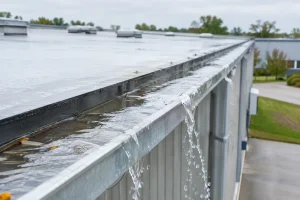
Some roofs only fail under specific wind direction, rainfall intensity or drainage load. A roof inspected after a dry period may look acceptable, yet fail during a short, intense storm. Ponding can also take time to become apparent. It may be caused by minor settlement, blocked outlets, inadequate falls or poorly detailed overflows, none of which will be confirmed by a quick walk-over.
This is where condition evidence matters. Photographs, moisture investigation where appropriate, drainage observations, roof plans and defect locations create a record that can be compared over time. Without that baseline, a recurring issue is too easily labelled as an isolated leak.
The Commercial Pressures That Hide Defects
Roof defects are frequently missed because the inspection process is shaped by competing commercial interests. A contractor asked to inspect a roof may act professionally, but they may also be asked to quote the remedial works. That structure creates an obvious tension: the same party identifies the problem, defines its extent and sells the solution.
The issue is not that every contractor recommendation is wrong. Many are sound. The problem is that the client has limited leverage when there is no independent assessment of whether the proposed scope is necessary, complete, proportionate or correctly prioritised.
At handover, the pressure is different but equally significant. Builders, developers and subcontractors are working to close out a project, release retention and achieve practical completion. Small defects can be treated as minor because the roof is new and no active leak has been reported. Yet incomplete terminations, inconsistent fastening, damaged membrane, poor sealant application or non-compliant drainage details can be latent defects. They may not cause failure until the warranty period is nearing its end.
A clean roof is not proof of a compliant roof. Nor is a contractor statement that the works are complete.
Visual presentation can override technical evidence
A newly coated roof, fresh sealant or a recently completed repair can create false confidence. Surface treatment may improve appearance while concealing cracking, corrosion or deterioration beneath. Equally, one visibly poor area can attract all attention while less obvious defects elsewhere are ignored.
Commercial decisions need evidence that distinguishes cosmetic ageing from functional failure. Not every defect warrants immediate replacement. Some can be monitored, some repaired locally and some should trigger a broader design review. The point is to make that decision from condition data, not presentation or sales urgency.
Common Blind Spots on Commercial Roofs
The highest-risk defects are often concentrated at transitions rather than broad roof fields. Details fail first because materials move differently, water is redirected, trades overlap and workmanship is harder to inspect once covered.
Key blind spots commonly include:
- penetrations for mechanical, electrical, hydraulic and solar services;
- flashings at parapets, walls, rooflights and expansion joints;
- box gutters, sumps, outlets and overflow provisions;
- laps, seams and fixings in metal and membrane systems; and
- interfaces created by later alterations, repairs or plant replacement.
These areas deserve close inspection because failure can be local while consequences are widespread. A single poorly detailed penetration above a critical electrical room or operating theatre does not need to be large to become expensive.
Drainage is another frequent blind spot. Standing water is often dismissed as a housekeeping issue, but persistent ponding can accelerate coating breakdown, corrode metal roofing, load membranes, reduce drainage capacity and expose design or installation shortcomings. The right response depends on the roof system and the duration and depth of water. It should not be reduced to simply clearing the nearest outlet.
How to Reduce the Chance of Missed Defects
The most reliable control is a properly defined, independent roof condition assessment. Independence matters because the assessor’s role is to establish the facts, not create a repair pipeline. Roof Inspection Australia does not sell roofing works, which keeps the advice focused on risk, evidence and the client’s commercial position.
A useful assessment starts with available records: roof age, previous reports, leak history, warranties, drawings, maintenance logs and planned building works. It then examines the roof systematically, including accessible details, drainage paths, interfaces and representative areas of each roof zone. Access constraints should be stated clearly rather than buried in vague qualifications.
The final report should do more than list defects. It should identify likely cause, location, consequence, priority, recommended action and the level of certainty behind each finding. It should separate urgent risk controls from planned maintenance and future capital expenditure. That distinction allows facility teams to act without turning every observed issue into an emergency.
Use inspection findings to control procurement
Independent findings give asset owners a stronger position before requesting quotes. Instead of asking contractors to tell them what the roof needs, they can issue a defined scope and assess competing responses against the same requirements.
This does not remove the need for contractor expertise. It makes that expertise accountable. Where proposals differ materially, the owner can test assumptions about extent, methodology, access, materials, warranties and exclusions before committing funds.
The same approach is valuable during construction and remediation. Hold-point inspections can identify defects before they are concealed by subsequent work. At completion, evidence-based reporting can document outstanding items and support a more defensible handover process. Waiting for the first leak is not quality assurance.
Not Every Defect Requires the Same Response
A mature roof with isolated defects may be a good candidate for targeted repairs and active monitoring. A roof with widespread deterioration, repeated leak history, poor drainage and multiple incompatible repairs may require a larger capital decision. The correct pathway depends on condition, risk exposure, operational requirements, remaining service life and the cost of disruption.
That is why a simple pass-or-fail report is rarely enough for high-value assets. Decision-makers need a staged plan: what must be made safe now, what should be repaired in the maintenance cycle, what needs further investigation and when replacement planning should begin. It gives finance, facilities and executive stakeholders a common evidence base rather than competing opinions.
The practical lesson is straightforward: do not wait for a ceiling stain to validate a roofing concern. Ask whether the roof has been independently examined with enough detail to expose defects before they dictate the budget. That is where control starts.