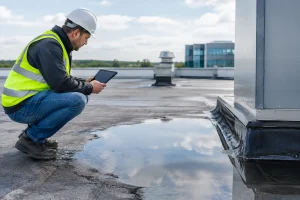
Roof Inspection Australia is an independent inspection firm. Our role is to provide unbiased documentation that gives asset managers, developers and property owners a clear understanding of roof condition, as independent roof asset intelligence and nothing else.
Searching for a roof inspection near you returns pages of contractors eager to inspect your roof. Here is what most property owners do not realise: many of these companies profit from finding problems, not just identifying them. A roofing contractor who offers free inspections makes their money through repair work, which creates an obvious conflict of interest that can cost you thousands in unnecessary fixes. Knowing how to choose a roof inspector, and how to tell a genuinely independent one from a contractor using the language of independence, is the difference between a report you can trust and a sales pitch dressed up as an assessment.
Request an Independent Roof Inspection
The Difference Between a Roof Inspector and a Roofing Contractor
The two roles sound similar and are fundamentally different. A roofing contractor inspects in order to sell the work that follows; an independent roof inspector charges for the assessment itself and has no stake in whether repairs happen at all.
That difference shapes everything about the report you receive. A contractor’s income comes from repair work, so their findings tend to lean toward “you need work.” An independent national roof inspection means the inspector’s income comes from accurate reporting, so their findings reflect what is actually on the roof. When you are deciding how to choose a roof inspector, this is the first thing to establish, because it determines whether you are buying a diagnosis or a quote.
Independent Roof Inspector vs Repair Contractors
Repair contractor (“free inspection”) | Independent roof inspector (RIA) | |
How they earn | From the repair work they recommend | From the assessment itself, fee-for-service |
Incentive | Find work to quote | Report the roof accurately |
Report | Verbal summary or quote-focused | Detailed report, photos, condition grading |
Use for insurance, sale, dispute | Limited, perceived conflict of interest | Suitable, independent third-party evidence |
Who does the repairs | The same business | Your choice, no tie to the inspector |
That independence, the hallmark of an independent national roof inspection, is what makes it evidence-based roof consulting for high-value assets rather than a lead-generation exercise.
Why Independence Eliminates Bias and Protects Your Wallet
Independent roof inspectors operate on a simple principle: they charge for expertise, not for the sales opportunity a roof problem creates. Because there is no repair revenue attached to the findings, there is no reason to overstate a defect, invent urgency, or recommend a replacement when a repair would do.
That matters most when the stakes are high. A single missed or misdiagnosed defect can cost $15,000 or more in water damage and remediation, and an inflated recommendation can cost almost as much in unnecessary work.
An independent assessment protects you from both, delivered as roof performance and risk advisory with no financial angle. For a property owner weighing how to choose a roof inspector, “who profits from the outcome” is the question that separates protection from pressure.
The Three-Question Independence Test
The fastest way to establish whether an inspector is genuinely independent is to ask three direct questions. A truly independent inspector answers no to all three, without hedging:
Do you carry out repairs?
If the company also performs roofing work, the inspection is a lead for that work. Independence means the inspector never profits from the repairs they recommend.
Do you receive referral fees or commissions from contractors?
“Trusted partners” and referral arrangements are a financial tie by another name. A genuinely independent inspector receives no commission from any third party.
Do you sell roofing products?
Product sales are another revenue stream that can shape findings. True independence means zero financial connection to contractors, suppliers or repair work of any kind.
If the answer to any of these is yes, or if the inspector hedges, you are talking to someone whose income is tied to what they find, not to the accuracy of the report. This is the core of a genuine building envelope risk assessment and advisory: the findings serve you, not a sales funnel.
How to Verify Qualifications and True Independence Before You Hire
Independence is the first test, but competence and credentials matter too. Before you engage a roof inspector, verify the following:
State licensing
Confirm the inspector or firm holds the relevant state licence, such as a QBCC licence in Queensland or a NSW Building Commission licence in New South Wales. Licensing is the baseline that a qualified professional will hold and be happy to evidence.
Professional indemnity insurance
A credible inspector carries professional indemnity insurance, which is what makes their report a document you can rely on for governance, insurance or a dispute. Ask for it directly; a professional will provide it without hesitation.
Professional memberships
Membership of bodies such as Master Builders or relevant industry associations signals a commitment to ethical guidelines and current standards. It is not mandatory, but it is a positive signal.
Transparent, upfront pricing
Independent inspectors charge for their time and expertise, full stop. If pricing is vague or “depends on what we find,” you are dealing with someone whose income ties to the severity of the problems they report, which is the exact conflict you are trying to avoid.
Verifying these before you hire is how you turn “how to choose a roof inspector” from a guess into a checklist. An inspector who clears all four is positioned to deliver independent roof asset intelligence you can act on.
Red Flags That Signal a Sales Pitch, Not an Inspection
Some warning signs tell you an “inspection” is really a lead-generation exercise. Walk away, or at least treat the findings with caution, if you see any of these:
- The inspection is free, and the same company quotes for the repairs
- Pricing “depends on what we find” rather than being fixed upfront
- The inspector hedges on whether they do repairs, or mentions “trusted partners”
- No professional indemnity insurance, or reluctance to provide it
- Pressure to decide on major work immediately, framed around fear
- A verbal summary or quote instead of a documented, photo-backed report
A trustworthy assessment does the opposite, as roof performance and risk advisory: it explains what happens if you delay a given repair, because some issues worsen rapidly while others remain stable for years. That context lets you make an informed decision rather than a reactive one driven by pressure.
When a Building Envelope Risk Assessment and Advisory Is Worth It
Not every roof question needs a formal independent assessment, but several situations genuinely call for one, and knowing which is part of choosing well.
Before buying a property, an independent inspection tells you the roof’s real condition before you commit, and gives you documented evidence to negotiate with. Before or during a dispute with a builder or contractor, an independent report is the objective evidence mediation and tribunals rely on. For an insurance claim, particularly after a storm, an independent assessment feeds capital planning support for roofing assets and substantiates the damage in a way a repairer’s estimate does not. And for anyone managing property as an asset, regular independent inspections build the documented history that underpins portfolio roof condition and risk assessments, capital planning support for roofing assets and defensible budget decisions.
In each of these, the common thread is that the report has to answer to you, not to a repair invoice. That is the whole reason independence is the first thing to check when deciding how to choose a roof inspector.
What a Comprehensive Roof Inspection Report Should Include
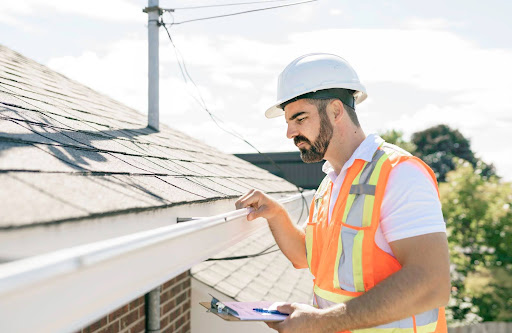
Whoever you choose, the report is the product, and a good one, a genuine evidence-based roof consulting for high-value assets, has a consistent shape. It should include full photographic documentation of every significant finding, plain-English descriptions of each issue and its likely cause, condition grading that separates urgent problems from those to monitor, prioritised recommendations with a sense of timeline, and assessment against the relevant Australian Standards, which you can review through the Australian Building Codes Board.
A report that does all of this is genuine independent roof asset intelligence, useful across a property’s life: it supports maintenance planning as a building envelope risk assessment and advisory, it gives buyers and sellers documented evidence during a transaction, and for owners of more than one property it drives strategic roof asset management and consolidates into portfolio roof condition and risk assessments and feeds capital planning support for roofing assets. A report that is a one-page summary with three photos does none of that.
How Documentation Delivers Independent Roof Asset Intelligence
Photographic evidence is what turns an opinion into a record. When every finding is documented with a dated image and a clear description, the report becomes usable well beyond the inspection: to substantiate an insurance claim, to negotiate a property purchase, to hold a builder to account at handover, or to demonstrate a maintenance history at sale.
Recommendations based on fact, rather than fear, are the other half of that protection. A trustworthy inspector explains the consequence of delaying a given repair so you can decide, rather than pressuring you into reactive spending. That evidence-and-context combination is what makes a documented assessment strategic roof asset management rather than a moment-in-time opinion.
What a Professional Inspection Costs and How Long It Takes
Cost reflects expertise and scope, not a sales opportunity. We do not publish a fixed price, because a genuine assessment is scoped to your roof, not sold off a rate card. Cost is driven by roof size, complexity and access, and a commercial property roof inspection is scoped higher for scale and safety. Tell us about your property and we will provide a fixed fee in a free, obligation-free quote before any work is confirmed.
You are paying for evidence-based roof consulting for high-value assets, not a sales visit. On timeframes, a standard residential inspection takes one to two hours on site, with the report typically delivered within a couple of business days. Larger properties or complex roof designs take longer. What you are paying for either way is an accurate, documented assessment, and against the cost of an unnecessary repair or a missed defect, that is money well spent.
How RIA Delivers Independent, Fact-Based Inspections Australia-Wide
Backed by strategic roof asset management, Roof Inspection Australia carries out no repairs, holds no contractor relationships and receives no commissions, so we pass the three-question test without qualification.
As an independent national roof inspection service, we deliver national roof inspections on one consistent standard, so wherever your property is, the report is held to the same benchmark under one national roof inspections standard, as a commercial property roof inspection anywhere in the country. Our national roof inspections and portfolio roof condition and risk assessments mean a single home and a national portfolio are assessed the same way.
If you are still searching for a roof inspection near you, our roof inspection near me page covers local coverage and how to book. This page is about choosing well; that one is about getting started.
FREQUENTLY ASKED QUESTIONS
Ask three questions: do you carry out repairs, do you receive referral fees from contractors, and do you sell roofing products? A genuinely independent inspector answers no to all three without hedging. Also verify the relevant state licence and professional indemnity insurance.
No. A free inspection from a contractor who also does repairs is a lead-generation exercise, not an independent technical assessment. The findings are shaped by the contractor’s interest in identifying repair work, so it should not be treated as an independent condition record for insurance, sale or governance.
It depends on the roof: size, complexity and access, with commercial roofs scoped higher. Rather than publish a fixed price, we scope your roof and provide a single fixed fee in a free, obligation-free quote before any work is confirmed.
A standard residential inspection takes one to two hours on site, with the report typically delivered within a couple of business days. Larger or more complex properties take longer.
Photographic documentation of every finding, plain-English descriptions and causes, condition grading, prioritised recommendations with timelines, and assessment against the relevant Australian Standards.
Yes. We provide commercial property roof inspection and strata reporting across Australia as a full building envelope risk assessment and advisory, with the same independence and documentation standard as our residential work.
We document each problem with photographic evidence, explain its likely cause, and grade it by urgency with a recommendation, whether that is act now, schedule, or monitor, as roof performance and risk advisory. Because we do not do repairs, those recommendations are independent, and what you do next is your decision.