

A roof leak turns up, a contractor attends, and by the end of the week you have a price to “fix the issue”. That sounds efficient. In many cases, it is exactly how avoidable costs get approved. The real problem in repair quote vs defect diagnosis is that one gives you a number, while the other gives you the truth.
For commercial assets, those are not the same thing. A repair quote is usually a contractor’s proposed scope and price based on what they believe should be done. A defect diagnosis is an evidence-based technical assessment of what has actually failed, why it has failed, how far the issue extends, and what level of intervention is justified. If you approve works without that second step, you are often buying assumptions.
Why repair quote vs defect diagnosis matters
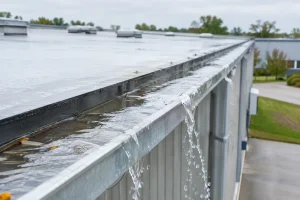
This distinction matters because roofing failures rarely sit neatly inside one visible symptom. A ceiling stain might point to membrane failure, but it could just as easily relate to drainage back-up, poor detailing at a penetration, movement at a lap, defective flashings, condensation, or workmanship issues from earlier trades. If the starting point is “price the repair”, the investigation can be shallow by design.
That does not mean every contractor is acting in bad faith. It means the commercial incentives are not neutral. A contractor is there to sell and deliver work. Their inspection process is usually shaped by that end point. The quote may be fast, familiar and confidently presented, but confidence is not evidence.
Defect diagnosis works differently. It asks harder questions first. What is the defect? Is it localised or systemic? Is it caused by age, design, product failure, installation error, deferred maintenance, access damage, ponding, or a combination of those factors? What are the risks if the issue is left untreated for three months, six months or twelve months? And just as importantly, what does not need to be done?
That last question protects budgets. Over-scoping is expensive. Under-scoping is worse.
A repair quote tells you the proposed spend
A quote has a purpose. If the defect is already understood and the scope is clear, a repair quote is necessary. Procurement teams need pricing. Asset managers need budget approvals. Facility teams need timeframes and access planning. None of that is controversial.
The problem starts when the quote is treated as diagnosis. It often includes phrases like “repair failed areas” or “reseal as required” without proving the extent of failure, confirming root cause, or distinguishing symptom from mechanism. On a commercial roof, that is not a small gap. It is the whole risk profile.
A weak quote can still look professional. It may include photos, marked-up plans and a short explanation. But if it has not been built on systematic inspection, moisture tracing, detail review, drainage assessment and defect classification, it remains a sales document. Useful for pricing, not reliable for decision-making.
In practical terms, that can lead to patch repairs where the substrate is already compromised, coating recommendations where the issue is poor falls, or full replacement recommendations where targeted remediation would have been enough. The numbers can be wildly different, but the common failure is the same: no independent diagnosis before money moves.
Defect diagnosis gives you technical leverage
A proper diagnosis gives decision-makers control. It converts a vague roofing problem into a defensible scope backed by evidence.
That matters across every stakeholder group. Asset managers need to justify expenditure. Facility managers need to act without creating repeat failures. Builders and developers need clarity during handover and defects periods. Government and institutional owners need a record that supports procurement integrity and audit scrutiny. In each case, diagnosis creates leverage because it narrows the space for guesswork, inflated scope and blame shifting.
What a commercial roof defect diagnosis should include
A genuine diagnosis is more than someone having a look and offering an opinion. It should connect symptoms, causes, extent and consequences.
At minimum, the process should identify the type of roofing system, the observed defects, the likely failure mechanisms, any contributing design or maintenance issues, and the priority of response. It should also distinguish between urgent risk items, short-term repairs, and broader lifecycle concerns. That is how you stop a leak response from quietly becoming an unplanned capital event.
For larger or more complex assets, the diagnosis may need to consider interfaces with services, plant supports, façade junctions, gutters, box gutters, overflows, rainwater discharge performance and membrane terminations. Many recurring failures are not isolated roofing defects at all. They are interface failures. If those interfaces are ignored, the repair may be neat, compliant-looking and still wrong.
A credible report should also stand up in a contractor discussion. If you are challenging a proposed scope, extending defect liability, or testing whether replacement is really necessary, you need more than general commentary. You need specifics.
Where clients get caught out
The biggest trap is urgency. Water ingress creates pressure, and pressure creates shortcuts. A tenant is unhappy, operations are disrupted, a weather event is coming, and someone wants a contractor booked immediately. Sometimes that is unavoidable. Active leaks may need temporary controls on the same day.
But temporary response and proper diagnosis are not mutually exclusive. In fact, they should sit together. Make safe if required. Protect the building. Then identify the actual defect before approving broad remedial works.
Another common trap is familiarity. A contractor who already services the site may be trusted and responsive. That can be useful operationally, but it does not remove the conflict. The more embedded the contractor relationship, the easier it is for assumed causes and habitual repair methods to pass without challenge.
Then there is the false economy of skipping the advisory step. Some owners see independent diagnosis as an extra cost on top of repairs. In reality, it is often the cheapest part of the whole event. One incorrect scope, one repeat leak, one avoidable replacement package, or one warranty dispute can dwarf the cost of getting the diagnosis right at the start.
Repair quote vs defect diagnosis in procurement terms
If you are responsible for commercial property, think about this through a procurement lens. You would not normally ask a supplier to define the problem, specify the solution and sell the remedy without any independent check where the stakes are high. Yet that is exactly what happens with roofs every day.
Repair quote vs defect diagnosis is really a governance issue. Do you want the scope set by the party that profits from the work, or by a party whose role is to identify the truth of the asset condition? There are situations where the answer may depend on scale, urgency and risk. A minor, obvious defect in a non-critical area may not justify a detailed technical review. A recurrent leak over occupied space, a warranty dispute, a handover issue, or signs of broader system failure absolutely does.
That is where independent consultants such as Roof Inspection Australia add value. Not by selling roofing works, but by defining the problem properly so the client can instruct works with clarity and challenge poor advice when necessary.
When a quote is enough, and when it is not
There are cases where a quote is enough. If the defect is visible, isolated and technically straightforward, and the consequences of getting it slightly wrong are low, a competent contractor quote may be perfectly reasonable. No one needs a full diagnostic exercise for every cracked sealant joint.
But once the issue is repeated, concealed, disputed, safety-critical, compliance-sensitive or potentially systemic, the threshold changes. If multiple repairs have failed, if internal damage is growing, if there is uncertainty about design intent, or if stakeholders are already arguing about liability, a quote-first approach becomes risky.
The size of the spend is only part of the equation. The bigger issue is decision confidence. Can you explain, with evidence, why this scope is necessary and proportionate? If not, you do not have enough information yet.
The better sequence
For complex commercial roofs, the smarter order is simple. Diagnose first. Scope second. Price third.
That sequence does more than reduce technical error. It gives you a cleaner basis for tendering, contractor comparison, budget forecasting and stakeholder communication. It also improves accountability after the works are complete, because the original defect and intended outcome were documented properly.
When roofing decisions are made on evidence rather than sales framing, fewer surprises make it into the budget. That is not theory. It is how mature asset management works.
Before you approve the next roofing spend, ask one blunt question: are you looking at a price, or are you looking at a diagnosis? The answer usually tells you how much risk is still hiding in the file.