

Industrial and Warehouse Roof Inspection | National Roof Inspections Australia
Request a Roof Inspection
Industrial Roofs Cover a Lot of Ground
Industrial roofs cover a lot of ground, literally. A single warehouse roof inspection can involve thousands of square metres of roofing, multiple penetrations, complex box-gutter drainage, and real access challenges. A residential approach does not scale to that, and neither does a contractor’s quick look from the yard.
Because we do not sell repairs, the industrial roof inspection reflects the true condition of the roof rather than the work someone hopes to win from it, delivered as evidence-based roof consulting for high-value assets built for the people who manage the asset, not the people who repair it.
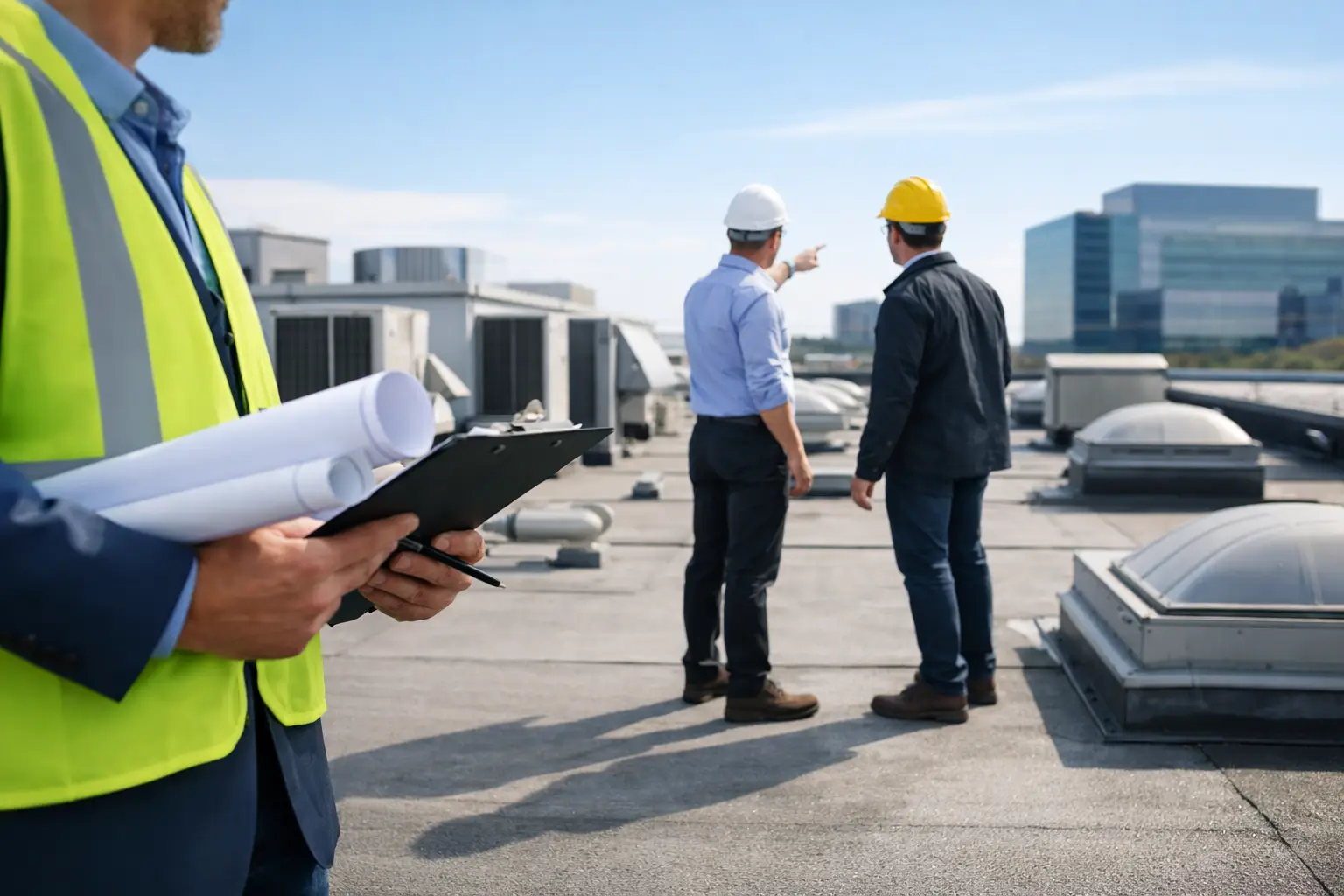
What an Industrial Roof Inspection and Assessment Covers
Our industrial roof assessment covers the entire roof system:
- Roof sheeting condition, including corrosion, sealant failure and fastener integrity
- Roof penetrations: skylights, vents, plant and equipment mounts, and service penetrations
- Gutters, downpipes and box gutters, including drainage capacity and condition
- Flashings at parapets, walls and roof junctions
- Structural elements visible from roof level, including any signs of movement or sagging
- Roof membrane condition on flat or low-pitch sections, where applicable
Every report assesses the roof against the manufacturer’s specifications and the relevant Australian Standards, giving owners a clear, defensible basis for understanding the roof’s condition and planning ahead, as genuine roof performance and risk advisory.
Industrial Roof Systems We Assess
Industrial and warehouse roofs come in a wider range of systems than most buildings, and each has its own defect profile. A credible industrial roof assessment covers each against the standard that governs it:
- Metal deck and corrugated steel, assessed for corrosion, fastener spacing and lap integrity against AS 1562.1
- Klip-Lok and standing seam concealed-fix systems, where clip and rib failure are the common defects
- Torch-on and modified bitumen membranes on flat sections, assessed against AS 4654.2
- Colorbond and Zincalume profiles, for coating degradation and cut-edge corrosion, especially in coastal or process-heavy environments
Because the defect profile differs by system, an assessor who knows the difference finds problems a generalist misses, which is the essence of roof performance and risk advisory. Assessing each system against the right standard, referenced from the Australian Building Codes Board, is what makes the report a proper building envelope risk assessment and advisory rather than a surface glance.

Building Envelope Risk Assessment and Advisory: How We Inspect a Large Warehouse Roof Safely
Safety is a defining consideration for any industrial roof assessment. Large warehouse and industrial roofs present real risks: height, fragile roof sheeting, and skylights that are not load-rated for foot traffic.
Our assessment process is built around managing those risks. Inspectors follow safe work practices for roof access, including appropriate fall protection, awareness of fragile roofing materials, and safe movement across large roof areas.
For roofs where physical access presents elevated risk, or where the roof area is simply too large to inspect comprehensively on foot within a reasonable timeframe, we offer drone inspection as part of the assessment. Combining drone survey with targeted physical assessment gives owners comprehensive coverage of the entire roof surface without compromising on safety, and produces a full building envelope risk assessment and advisory across every square metre.
What's in Your Industrial Roof Inspection Report
The report is built to support the people who use it: facility managers, asset managers, property owners and their maintenance contractors. Every report includes:
- A summary of the overall condition of the roof, assessed against Australian Standards
- Section-by-section reporting for each roof zone or building where the site has multiple roof areas
- Photographic documentation of every defect, including corrosion, sealant failure and damaged flashings
- Gutter and drainage assessment, including any areas affecting drainage capacity
- Identification of any active leaks or water ingress, with likely source
- Recommendations for repair, maintenance or replacement, with priority levels for capital planning support for roofing assets
For larger sites, reports can be structured by zone or building, making it easier for facility teams to plan and track maintenance across a large property, and feeding portfolio roof condition and risk assessments where a single owner manages several sites. This is independent roof asset intelligence the maintenance team can act on directly.
Reports Built to Defend a Decision
For an asset manager, the value of independent roof asset advisory and risk management is that the CAPEX data in your maintenance plan is not inflated by contractor interest. It reflects the actual condition of the asset. Because every defect is documented with photographic evidence and referenced to the relevant Australian Standards, our reports carry a technical authority and defensibility that a contractor’s quote does not.
That defensibility matters when a report is used beyond routine maintenance. An independent industrial roof inspection report is structured to stand up in insurance claims, disputes with roofing contractors, strata defect proceedings and due diligence for property transactions. This is evidence-based roof consulting for high-value assets, and it is what turns a condition report into capital planning support for roofing assets an asset team can defend at budget and audit.
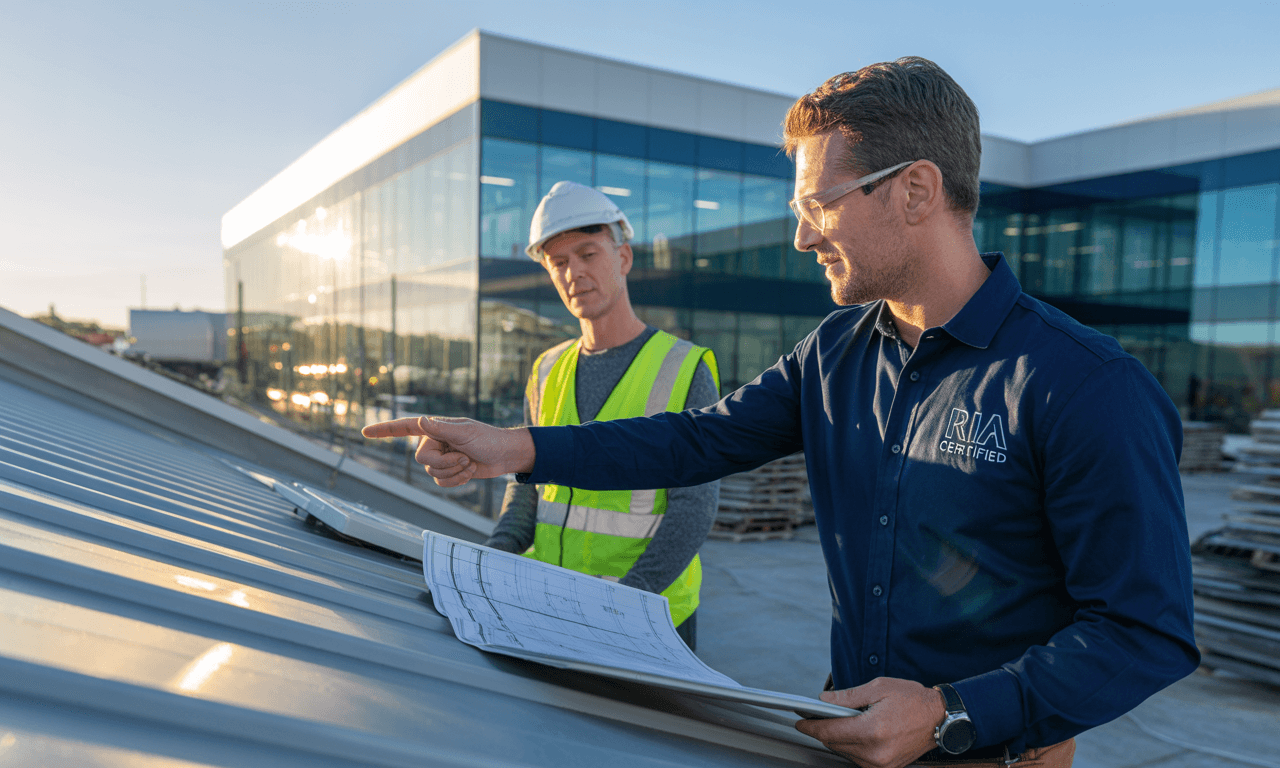
Common Findings on Industrial and Warehouse Roofs
Across the industrial and warehouse roofs we assess, certain issues come up consistently:
- Fastener and sealant failure on metal roof sheeting, particularly on older roofs, where loosening fasteners and degraded sealants let sheets lift and water enter
- Box gutter and drainage issues, a significant risk where box gutters carry large volumes of water. Debris build-up, corrosion or inadequate fall can cause overflow into the building
- Skylight and penetration seal failure, common where roofs have many service penetrations. Each is a potential entry point once seals degrade
- Corrosion on sheeting, fasteners and flashings, especially in coastal areas or where internal industrial processes create corrosive conditions, a core focus of our roof performance and risk advisory
- Roof membrane issues on flat or low-pitch sections such as loading dock canopies and plant rooms, including ponding, cracking and seam failure not visible from ground level
Ready to Get Strategic About Your Roof?
Don’t wait for a leak or a lawsuit. Get an independent industrial roof inspection and take control of your roofing risk, budget and reputation. Contact Roof Inspection Australia today.
Strategic Roof Asset Management for Warehouse Portfolios
The right frequency depends on the age, condition and design of the roof, and the operational risk of a roof failure.
As a general guide, an annual industrial roof inspection suits most industrial properties, with six-monthly assessments for older roofs, roofs with a history of problems, or sites where a failure would halt operations. After any significant weather event, an additional assessment is worthwhile regardless of the schedule. For owners with multiple sites, and as part of roof asset audits and lifecycle planning, staggering assessments across the year spreads cost and workload while keeping every property covered as portfolio roof condition and risk assessments, as strategic roof asset management rather than a series of reactive callouts. Building this cadence into roof asset audits and lifecycle planning turns industrial roofing from an unpredictable expense into a budgetable line.
Industrial Roof Inspection and Assessment Built for Industrial Assets
Industrial roof inspection needs a different approach to residential work: larger, more complex roofing systems, and a greater emphasis on safety, drainage and compliance. Our inspectors bring that roof asset advisory and risk management specialisation to every site, and every assessment references the relevant Australian Standards and manufacturer specifications, so owners and managers get a report they can rely on for maintenance planning, budgeting and dispute or warranty purposes, as part of a wider roof asset audits and lifecycle planning programme.
We work with facility and asset managers, logistics and manufacturing operators, and owners managing industrial portfolios, from a single warehouse to sites across multiple states, delivering strategic roof asset management and capital planning support for roofing assets at whatever scale the estate requires.

National Roof Inspections Australia: Industrial Coverage
We assess industrial and warehouse property nationwide. As an independent national roof inspection service, we deliver national roof inspections on one consistent standard, whether you manage a single facility or need portfolio roof condition and risk assessments across a national estate.
For owners managing facilities in Sydney, Melbourne, Brisbane and beyond, our team can confirm coverage and scope an inspection programme as an independent national roof inspection service, and that consistency is what a genuine national roof inspection service provides.
As a commercial property roof inspection specialist, we bring the same standard to every industrial site, so a commercial property roof inspection at one warehouse matches the report at the next.
Other Ways We Protect Your Roof
FREQUENTLY ASKED QUESTIONS
Both involve a comprehensive assessment of a non-residential roof, but an industrial roof inspection typically deals with larger roof areas, more complex drainage such as box gutters, and operational and safety considerations specific to warehouses, factories and distribution centres.
Yes. Drone inspection is available for industrial roofs, particularly useful for very large areas, roofs with limited safe access, or as a first-pass assessment to identify areas needing closer physical review, as part of a full building envelope risk assessment and advisory.
We assess metal deck and corrugated steel, Klip-Lok and standing seam concealed-fix systems, torch-on and modified bitumen membranes, and Colorbond and Zincalume profiles, each against the relevant Australian Standard and manufacturer requirements.
Yes. Our industrial roof inspection reports are structured as independent technical documents with photographic evidence and Australian Standards references, and are used in insurance claims, contractor disputes, strata defect proceedings and property due diligence, as evidence-based roof consulting for high-value assets.
An annual industrial roof assessment suits most industrial properties, with six-monthly assessments for older roofs or sites where a failure would halt operations, and an additional assessment after any major weather event, as part of strategic roof asset management.
Yes. As a national roof inspection service, we provide national roof inspections and industrial assessments across every state on one consistent standard, so a portfolio owner gets the same commercial property roof inspection and report wherever the site is.
Cost depends on the size, complexity and access of the roof, the number of buildings, and whether drone survey is required. We scope each industrial roof inspection to the site and provide a clear quote before we start.