

Commercial Roof Inspection and Assessment | National Roof Inspections Australia
Request a Roof Inspection
The Roof Is Your Largest Exposed Asset
On a commercial building, the roof is one of the largest and most exposed components of the asset, and one of the most expensive to get wrong. Its condition drives maintenance budgets, tenant satisfaction, compliance obligations and, when a building changes hands, its valuation. Yet it is the part of the building most owners and managers see least.
A commercial roof inspection gives you an independent, documented picture of exactly where that asset stands. We work with owners, asset managers, strata committees, facility teams and developers who need to make decisions with real information behind them, not a contractor’s estimate written by the same people who want the repair work. This is independent roof asset intelligence, not a sales call.
Roof Inspection Australia inspects and assesses commercial and industrial roofs across the country. As an independent national roof inspection service, we do not carry out repairs and we do not sell maintenance, so every report reflects what is actually on the roof.
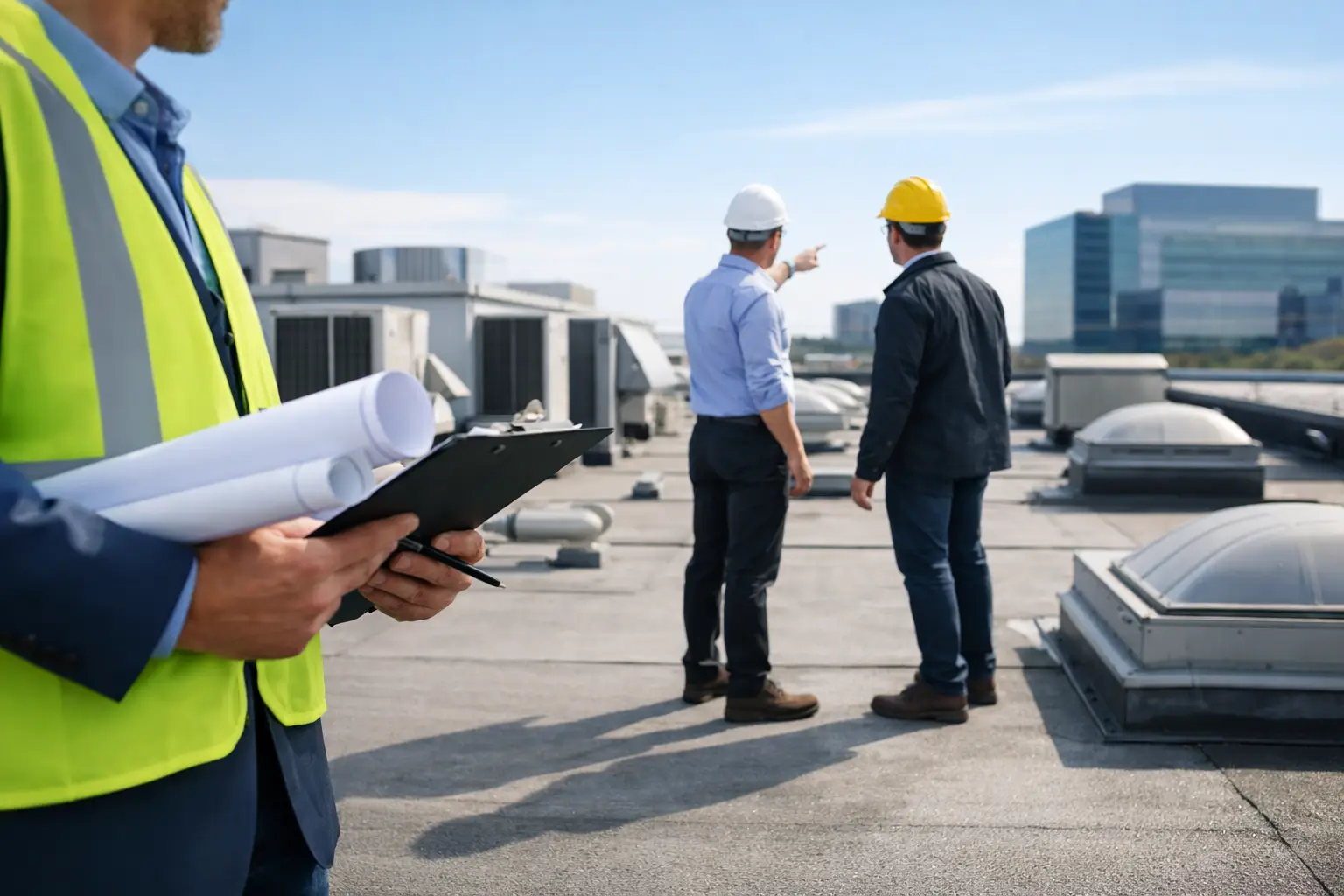
What an Ageing Commercial Roof Actually Costs You
- Water ingress is the expensive one. A leak in a commercial building rarely stays a roofing problem. It damages stock, equipment and fit-out, disrupts tenants, and shifts liability onto the owner or manager. Most significant leaks trace back to failures that were visible and fixable months earlier: deteriorating membrane, failed flashing, or blocked drainage. A commercial roof inspection catches them while they are still cheap.
- Reactive spending destroys budgets. Without current condition data, roof spending becomes a series of emergencies, each priced at emergency rates. A condition report replaces that with a prioritised plan, so you spend on what matters, when it matters, through strategic roof asset management and capital planning support for roofing assets.
- Due diligence gaps carry real risk. When a building is ageing, being bought or sold, or coming off a warranty, an independent condition report is the documented evidence that transactions, lease negotiations and insurers rely on. Without it, you take on the roof’s liabilities blind.
- Compliance failures compound. Roofs that do not meet the relevant standards create warranty, insurance and safety exposure that undermines capital planning support for roofing assets, and that surfaces at the worst possible time, usually during a claim or a dispute. Independent assessment against the standards flags this before it becomes a problem you own.
- Small faults become large remediation. A blocked drainage outlet or a single failed lap is inexpensive to correct. Left for a year, the same fault becomes interior water damage, disrupted tenants and a remediation bill many times the original cost.
What a Commercial Roof Inspection Is
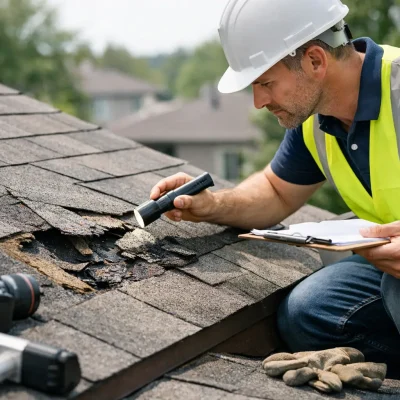
A commercial roof inspection is a systematic, independent assessment of a commercial building’s entire roof system, carried out by a qualified roof inspector. It examines the roof covering or membrane, flashings, parapets, drainage, penetrations and visible structural elements, and produces a written condition report that documents the state of each, as roof asset advisory and risk management rather than a repair quote.
A commercial roof is not a residential roof scaled up. Commercial and industrial roofs tend to be larger, flatter, and built from membrane or metal systems with more complex drainage, more roof-mounted plant, and more penetrations, each a potential failure point. They also serve more stakeholders. Owners, tenants, strata committees, facility managers and, on newer buildings, developers and builders all rely on the findings, so our reports are written for every one of them to act on.
That independence is the point. Because we do not quote for or carry out repairs, the assessment is not shaped by the work it might generate. That independence is what turns a report into independent roof asset intelligence and genuine roof performance and risk advisory.
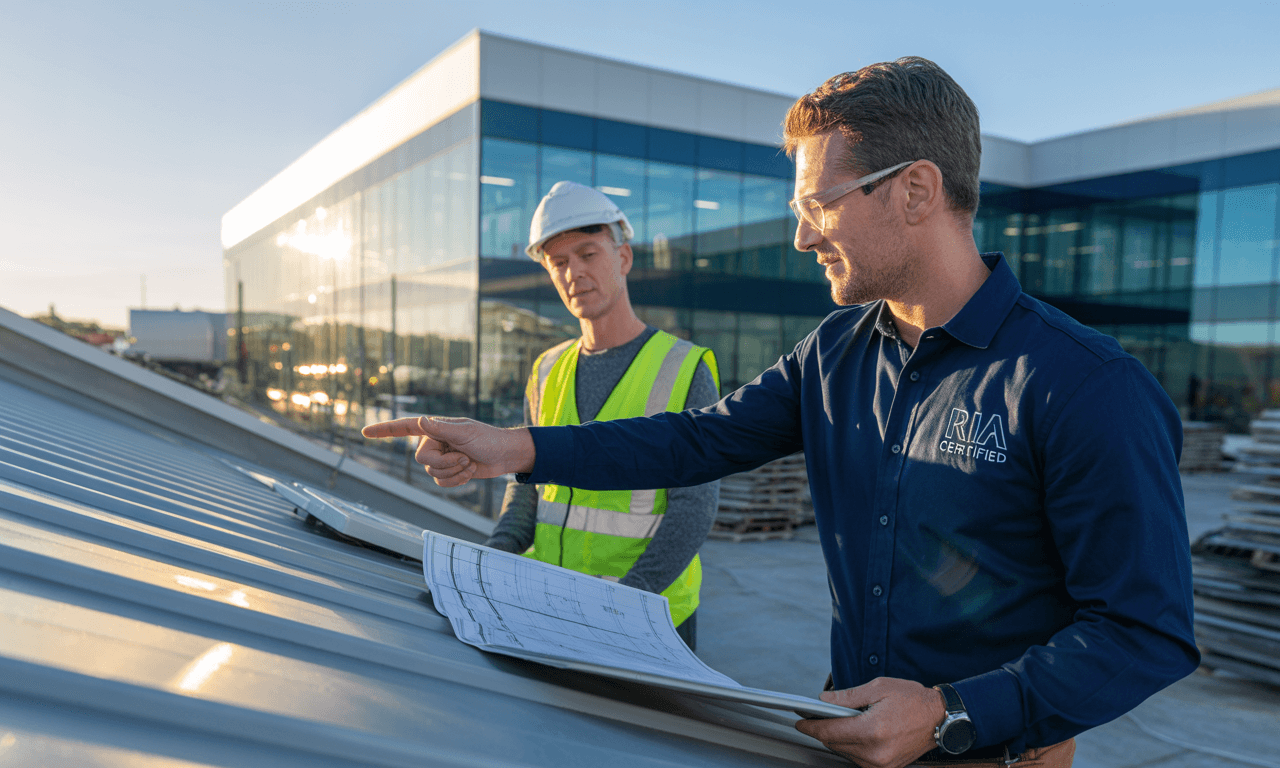
What a Commercial Roof Inspection and Assessment Covers
- Roof membrane and covering. Assessed for cracking, blistering, ponding, UV degradation, lap and seam integrity, and failing patch repairs. Membrane condition is the single biggest driver of remaining roof life, and assessing it properly is core roof performance and risk advisory.
- Flashings and parapets. Checked at every wall and roof junction for sealant failure, corrosion, lifting and separation, the most common entry points for water on a commercial roof.
- Drainage. Gutters, downpipes, box gutters, sumps and internal drains assessed for capacity, falls, blockages and overflow provision. Inadequate drainage is a frequent and serious defect on large flat roofs.
- Roof penetrations. Vents, HVAC and plant mounts, skylights, cable and pipe penetrations checked for seal integrity and correct detailing.
- Fixings and fasteners. Rivet and screw spacing, exposed or corroded fasteners, and fixing patterns assessed against the relevant standards, a common workmanship failure on new installations.
- Leak history and active leaks. Any active leak identified, with likely source, path and extent, mapped for reporting.
- Structural observations. Visible movement, deflection, sagging or stress affecting the roof structure, flagged for engineering referral where required, as part of a full roof performance and risk advisory.
- Safety and access. Visible condition of roof access, anchor points and fall-protection provisions, with referral to certified height-safety specialists where formal certification is needed.
Every assessment ends in a written condition report built to be used, not filed. It includes an overall condition summary up front, section-by-section findings with photographic evidence, condition ratings and a priority level against each defect, assessment against the relevant Australian Standards, and prioritised independent recommendations. For portfolios, reporting is consistent across sites as independent roof asset intelligence, so you can compare condition and plan capital works across the whole estate on a like-for-like basis, as portfolio roof condition and risk assessments.

The Diagnostic Tools Behind the Assessment
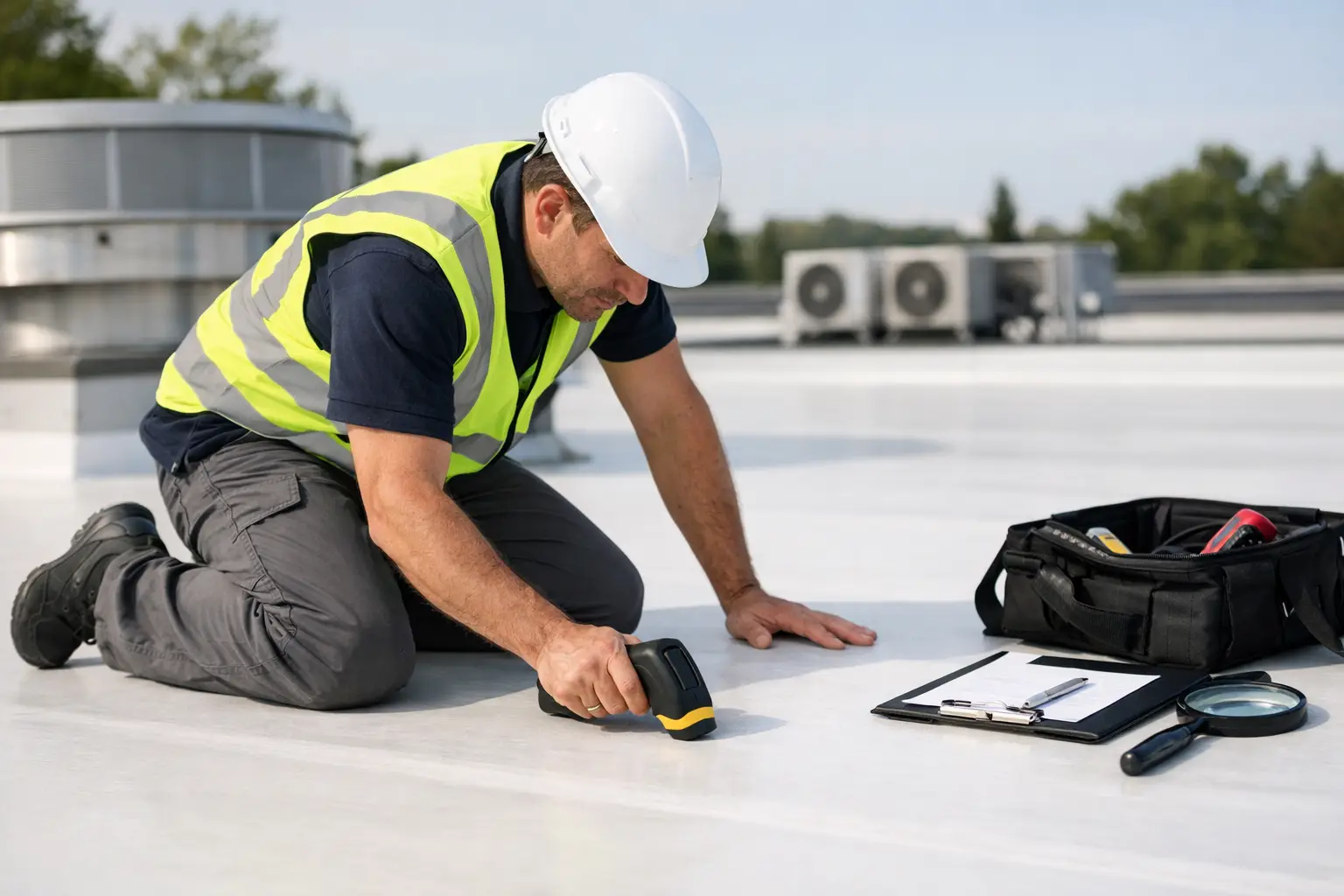
A thorough commercial roof inspection is more than a visual walkover. Where a defect needs more than the eye to confirm, we bring the right diagnostic tools to the roof:
- Drone survey for large-span, high or difficult-access roofs, capturing the full roof surface where walking every metre is unsafe or impractical.
- Thermal imaging to reveal trapped moisture and membrane saturation that is invisible from the surface, so a small leak is found before it becomes a failed roof section.
- Moisture assessment at suspected ingress points to confirm source and extent.
Used together, these turn a commercial roof inspection into a proper building envelope risk assessment and advisory, and the difference between guessing at a defect and documenting it precisely.
How a Commercial Roof Inspection Works
We scope the inspection to the decision it supports: routine assessment, due diligence, handover sign-off, warranty or dispute.
- Scope and brief. We scope the assessment to the outcome you need.
- Site walk-through and mapping. Inspectors physically examine the full roof system. On large sites we divide the roof into logical zones and map defects by location, so a 10,000 m² roof is reported precisely rather than in generalities.
- Documentation. Every defect is photographed, located and described, and assessed against the relevant Australian Standards.
- Condition report. Findings are compiled with condition ratings, priorities and independent recommendations, typically delivered within a few business days.
- Debrief and support. An optional walkthrough of the findings, and support through to rectification or tender if you need it. We never carry out the repairs, so the advice stays independent throughout.
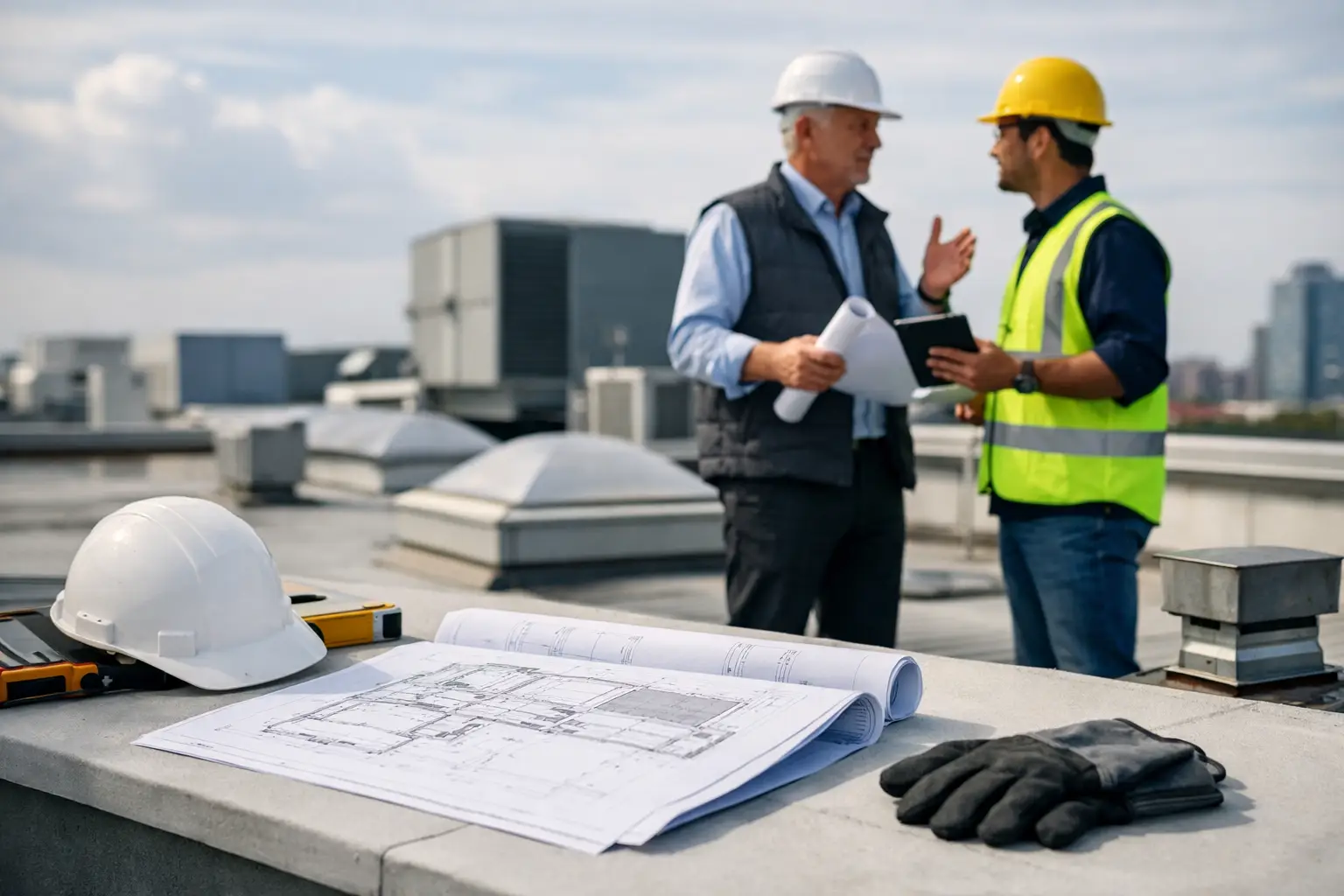
Building Envelope Risk Assessment and Advisory: Inspected Against the Standards That Matter
A commercial roof assessment, delivered as a building envelope risk assessment and advisory, is only as defensible as the standards behind it. Our inspections and reports reference the relevant Australian Standards and codes, including the National Construction Code (NCC 2022), AS 1562.1 for metal roofing, AS 3500.3 for roof drainage, and SA HB 39 for the installation of metal roofing and wall cladding. You can review the standards framework through the Australian Building Codes Board.
This matters most in three situations: at handover of a new roof, where workmanship and detailing must comply before the builder’s liability ends; in a warranty or defect claim, where compliance is the evidence the claim turns on; and in due diligence, where a buyer needs to understand the roof’s compliance exposure. This is the difference between a condition report and a defensible technical assessment.
Commercial Properties We Inspect
- Warehouse and logistics. Large-span metal roofs where drainage capacity, fastener condition and membrane laps are the common failure points. We report at portfolio scale for operators managing multiple sites, as portfolio roof condition and risk assessments.
- Retail and shopping centres. High-traffic assets where a leak affects tenants and trade directly. We assess trafficable roofs, plant-heavy areas and complex internal drainage.
- Industrial and manufacturing. Roofs exposed to process heat, chemicals and heavy plant loads, assessed for material degradation and structural stress.
- Office and mixed-use buildings. Every commercial property roof inspection here covers membrane and metal systems with rooftop plant and amenity, where waterproofing and compliance drive the assessment.
- Government and education facilities. Assets with strict compliance and reporting requirements. We are experienced across school portfolios and government facilities.
- Strata and multi-storey. Independent reporting that gives committees an unbiased basis for levy, capital works and contractor decisions, feeding portfolio roof condition and risk assessments across the estate.
- Hospitality and entertainment. Venues where downtime is costly and roof condition affects operations directly.
What a Commercial Roof Inspection Costs
The honest answer is that it depends on the roof, and any fixed figure online is a guide, not a quote. Cost is driven by the size and complexity of the roof, access and height, the number of buildings, and whether diagnostic tools like drone survey or thermal imaging are required.
A single-building commercial roof inspection sits well below the cost of the defects it routinely finds, and for a portfolio, per-site cost falls as volume rises. We scope every commercial roof inspection to the decision it supports as evidence-based roof consulting for high-value assets, and provide a clear quote before we start, so the assessment is evidence-based roof consulting for high-value assets with no surprises, including the price.
Strategic Roof Asset Management: When and How Often to Inspect
As a general guide, an annual inspection suits most commercial buildings, providing a regular condition benchmark that supports maintenance planning and budgeting. For older roofs, or those with a history of leaks, every six months is appropriate.
Beyond the regular schedule, several events should trigger an inspection: after a significant storm, hail or heavy rain event; before buying or selling a commercial property; at handover of a new or refurbished roof, while the builder is still liable; and when a warranty period is approaching its end. Building this cadence into strategic roof asset management and capital planning support for roofing assets replaces reactive emergency spending with a planned, defensible programme.
Ready to Get Strategic About Your Roof?
Don’t wait for a leak or a lawsuit. Get an independent commercial roof inspection and assessment and take control of your roofing risk, budget and reputation. Contact Roof Inspection Australia today.
Case Study: Gungahlin Marketplace, 10,000 m²
After handover of a major 10,000 m² new roof installation at Gungahlin Marketplace in the ACT, widespread roofing issues began to emerge. Tenant complaints followed, and the builder lost confidence in the original roofing contractor. They needed an independent expert to document the defects, validate those concerns and create a clear path to rectification.
Given the scale, our inspectors divided the 10,000 m² roof into logical zones to keep reporting precise. Each zone was inspected individually, with defects photographed, mapped and grouped by location, assessed against NCC 2022, AS 1562.1, AS 3500.3 and SA HB 39. The inspection revealed widespread critical issues, including non-compliant rivet spacing, exposed fasteners, unsealed flashing junctions and back trays at roof penetrations, and inadequate overflow provision in box gutter areas.
With practical completion already achieved, our independent documentation was critical in verifying the builder’s concerns and enabling decisive action. The zone-based reporting let the builder understand the extent and location of every defect, disengage the original contractor with confidence, and appoint a trusted contractor for staged rectification.
Independent, and Built for Decision-Makers
Independence is the core of what we offer. Our inspectors have no relationship with roofing contractors or product suppliers, so the findings reflect what is on the roof, not what would generate follow-up work. For an owner or strata committee deciding on budgets, levies and tenants, that removes the conflict of interest built into a contractor’s own assessment, and delivers genuine roof asset advisory and risk management.
We deliver commercial property roof inspection and reporting for the people who own, manage and protect major property assets: asset managers and REITs, commercial property and facility managers, developers and builders, government and education bodies, and industrial and logistics owners. Our reports are written for the decisions those roles make: capital planning, compliance, handover sign-off and dispute evidence. Behind them is real, named experience across commercial, industrial and government assets, including school portfolios and reports that have held up in dispute and court. That track record is why clients return, and it is the foundation of trustworthy evidence-based roof consulting for high-value assets.

National Roof Inspections Covering Australia
As an independent national roof inspection service, Roof Inspection Australia covers commercial property nationwide, delivering national roof inspections on one consistent standard, including Sydney, Melbourne and Brisbane. Wherever the asset is, the reporting standard is the same, which is what a genuine independent national roof inspection service provides. Get in touch and we will confirm coverage and scope your commercial roof inspection.
Explore Our Roof Assessment Services
FREQUENTLY ASKED QUESTIONS
It depends on the size and complexity of the roof. A smaller building might take one to two hours, larger properties or those with multiple roof sections longer. We provide a time estimate when scoping your commercial roof inspection.
A full condition assessment of the roof membrane, flashings, drainage and penetrations, with photographic evidence, condition ratings and prioritised recommendations, assessed against the relevant Australian Standards.
Yes. We regularly provide independent reports for strata committees, giving them an unbiased basis for decisions about maintenance, repairs and capital works funding.
Yes. We deliver national roof inspections and assessments across every state on one consistent reporting standard, so a portfolio owner gets the same commercial property roof inspection in Perth as in Sydney.
An annual inspection suits most commercial buildings, with more frequent inspections for older roofs or those with a history of issues, and additional inspections after significant weather events.
Yes. Where a roof is large, high or hard to access, or where trapped moisture is suspected, we use drone survey and thermal imaging as part of the assessment, as a full building envelope risk assessment and advisory.
Cost depends on the size, complexity and access of the roof, the number of buildings, and whether drone or thermal survey is needed. We scope each commercial roof inspection to the site and provide a clear quote before we start.