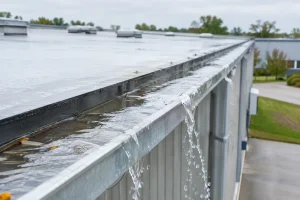




A roof defect rarely starts as a dramatic failure. More often, it shows up as a stain near a service penetration, ponding that lingers too long after rain, loose sheet laps on an exposed edge, or complaints from tenants that only surface when weather conditions line up badly. That is why knowing how to assess roof defects matters. If you wait for a leak to become obvious, the defect has already moved from manageable maintenance to operational risk.
For commercial assets, the real job is not spotting one visible issue and calling it done. It is determining what the defect is, what caused it, how far it extends, what risk it creates, and whether the proposed fix is proportionate. Plenty of money gets wasted when roofs are assessed by people who also want to sell the repair. Truth gets cloudy when the inspection is tied to the quote.
What a proper roof defect assessment is really trying to prove
A useful assessment does more than describe symptoms. It builds an evidence-based view of condition, failure mechanism and consequence. That means separating cosmetic issues from active defects, isolated defects from systemic failure, and workmanship problems from design limitations or maintenance neglect.
On a commercial roof, those distinctions matter. A few failed fasteners on an ageing metal roof are not the same as widespread fixing fatigue across multiple elevations. A split membrane at one detail is not the same as a waterproofing system that was never properly terminated. If the diagnosis is wrong, the budget decision will be wrong too.
This is where many asset owners lose control. They receive broad statements such as roof beyond repair or patch repairs recommended, with very little proof behind either position. A proper assessment should give you leverage, not guesswork.
How to assess roof defects without missing the real cause
The starting point is context. Before anyone steps onto the roof, the asset should be reviewed in terms of age, construction type, exposure, prior leak history, maintenance records, capital planning horizon and occupancy sensitivity. A hospital, school, logistics facility and CBD office tower may all have roof defects, but the risk profile is completely different.
Then comes the inspection itself. A competent assessment looks at the whole roof system, not just the area where water has shown up internally. Roof defects often migrate. Water entry points, moisture paths and internal manifestation points are regularly metres apart. Treating the ceiling stain as the defect location is one of the oldest mistakes in the book.
The inspection should examine roof coverings, laps, fixings, flashings, penetrations, cappings, joints, sealants, gutters, sumps, rainwater goods, overflow provisions, walkways and interfaces with plant. It should also consider substrate movement, blocked drainage, mechanical damage, prior repairs and signs of non-compliant detailing. On membrane roofs, seam integrity, blistering, shrinkage, ponding and edge terminations deserve close attention. On metal roofs, corrosion, loose fixings, failed washers, sheet end laps and thermal movement damage are frequent fault lines.
Surface symptoms are not enough
Visible defects are only part of the story. Good assessors test whether what they can see lines up with the likely mode of failure. If ponding is present, is it caused by structural deflection, poor falls, blocked outlets or local deformation from traffic? If corrosion is visible, is it superficial weathering or section loss that threatens performance? If sealant has failed, is that the primary defect or just a symptom of movement the detail was never designed to accommodate?
This is where commercial judgement matters. Not every defect needs immediate replacement. Not every leak can be responsibly managed with patching. The right answer depends on defect severity, spread, recurrence, safety risk, warranty implications and the cost of getting it wrong.
Evidence should be documented, not assumed
Photos alone are not an assessment. They are supporting evidence. A reliable process records defect type, exact location, likely cause, extent, consequence and recommended action. Where appropriate, it should also rank urgency and identify whether further intrusive investigation is required.
For larger assets or portfolio decisions, defect mapping becomes especially valuable. It helps distinguish isolated repairable areas from repeating patterns that point to design, product or installation failure. That matters when you are deciding whether to spend on maintenance, challenge a contractor, or bring forward capital replacement.
Internal signs should be matched to external causes
Internal moisture marks, mould, damaged ceiling tiles and wet insulation are useful clues, but they are not proof of roof failure by themselves. Condensation, services leaks and façade issues can be misread as roofing problems. Equally, a roof defect can be dismissed because the internal evidence appears minor.
A proper assessment correlates internal observations with roof details, weather exposure, drainage behaviour and building use. That cross-check stops false positives and false economies.
Common errors when assessing commercial roof defects
The biggest error is treating the loudest symptom as the main issue. The second is relying on advice from a party that benefits from a particular outcome. If the same business inspects, diagnoses and sells the remedial works, independence disappears quickly.
Another common failure is assessing only accessible areas. Defects cluster around penetrations, plant zones, parapets, gutters, sheet laps and transitions between materials. If these areas are ignored or only viewed from a distance, the assessment will be thin where the risk is highest.
Timing also matters. Some defects are easiest to observe after rain. Others need dry conditions to inspect safely and properly. A single site visit can be enough in some cases, but not all. If the roof has intermittent leakage, weather-dependent failure, or conflicting contractor opinions, more than one inspection may be justified.
Then there is the paperwork problem. Vague reports create expensive ambiguity. Terms such as monitor, repair as needed or poor condition are not useful without scope, evidence and consequence. Decision-makers need something they can act on, defend internally and use in procurement discussions.
How to assess roof defects for budget and risk decisions
The assessment should lead to a clear commercial path. That means sorting defects into practical categories such as immediate safety or water ingress risk, short-term maintenance issues, medium-term deterioration, and end-of-life indicators. Without that structure, every issue competes for urgent funding, which is not realistic and usually not necessary.
For example, isolated flashing defects on an otherwise serviceable roof may justify targeted repair and follow-up review. Widespread membrane failure with repeated leakage history, trapped moisture and poor drainage detailing may point to staged replacement planning. A roof near handover with obvious workmanship defects may require builder engagement before warranties or defect liability positions weaken.
This is why an independent roof consultant adds value beyond simple fault finding. The question is not just what is wrong. It is what response best protects capital, operations and negotiating position. Roof Inspection Australia is built around that distinction. We do not sell roofing works, which means the assessment is not trying to steer you toward a preselected answer.
When destructive testing or further review is needed
Not every defect can be confirmed from a visual inspection alone. Moisture trapped beneath membranes, concealed corrosion, substrate deterioration and hidden drainage failures may need more invasive investigation. That should not be the default starting point, but it should not be avoided when the consequences of uncertainty are high.
The decision depends on asset criticality, history of failure, occupancy impact and the cost difference between repair options. Spending more on diagnosis can save a great deal when it prevents the wrong scope being approved.
What a strong assessment report should give you
A useful report should tell you what defects exist, how serious they are, what likely caused them, and what should happen next. It should also distinguish observation from conclusion. That sounds basic, but many reports blur the two.
For commercial stakeholders, the report should support more than maintenance. It should help with contractor management, capital forecasting, dispute resolution, compliance records and executive communication. If a roof report cannot withstand scrutiny from a builder, facilities team, insurer or board-level budget review, it is not doing enough.
Clarity is the real deliverable. You need to know whether to patch, investigate further, hold a contractor accountable, accelerate replacement planning or simply monitor with confidence. Anything less leaves risk sitting where it always sits when roof defects are handled badly – with the asset owner.
A roof will not care about optimism, vague scopes or sales-driven advice. It will respond to physics, weather, workmanship and time. Assess it accordingly, and you keep control before the defect takes it off you.