
A roof failure rarely begins with a dramatic ceiling collapse. More often, it starts with ponding water around a drain, a split at a penetration, deteriorated sealant, or a repair that was never properly tied into the existing system. This facility manager roof guide is about finding those issues while they are manageable – not after they have disrupted tenants, stock, operations or capital budgets.
For facility managers, the roof is not simply another maintenance line item. It is a building-wide risk control. It protects electrical systems, interiors, plant, inventory and people below. When its condition is unclear, every maintenance decision becomes harder to defend.
A facility manager roof guide starts with evidence
The common mistake is to treat roof maintenance as a response to leaks. By the time water appears inside, the defect may have been active for months. Moisture can travel beneath membranes, through insulation, along structural elements and around services before it presents at the ceiling below. The visible leak is often not the source.
A useful roof strategy begins with a documented condition assessment. Not a quick walkover and not a quotation dressed up as an inspection. The assessment should identify roof types, ages, visible defects, drainage performance, known repair history, access constraints and likely remaining service life. It should also distinguish between observed facts, probable causes and recommendations requiring further investigation.
That distinction matters. A contractor may reasonably identify work they can perform. An independent consultant is there to establish whether that work is necessary, whether the proposed scope addresses the actual failure mechanism and whether cheaper or more durable options exist. The difference can be substantial when capital works are being considered across a large portfolio.
Inspect according to risk, not routine
Annual inspection is a sensible baseline for many commercial assets, but a calendar alone does not manage risk. A low-slope roof with ageing waterproofing, frequent ponding and critical operations below may need closer monitoring, particularly before and after severe weather. A newer roof with a clear maintenance history may require a different level of attention.
Inspection frequency should reflect the consequences of failure, roof condition, design complexity, drainage behaviour, site exposure and recent works. Hospitals, schools, logistics facilities, data-sensitive spaces and occupied commercial buildings can all carry very different operational consequences from a roof leak. The right program is proportionate, not generic.
What your roof records need to show
A report that says a roof is in “fair condition” gives little practical direction. Facility teams need records that support decisions, procurement and stakeholder communication. Each inspection should make it easy to answer: What is wrong? Where is it? How urgent is it? What happens if it is deferred? What is the recommended action?
A decision-ready roof record should include:
- roof plans or marked-up photographs locating each defect and area of concern
- clear photos showing defect type, extent and surrounding conditions
- a prioritised action schedule separating urgent repairs, planned maintenance and capital renewal
- commentary on drainage, flashings, penetrations, plant interfaces and previous repairs
- a stated basis for estimated remaining service life and any assumptions that affect the recommendation.
This level of detail prevents a familiar problem: a vague report is issued, a contractor scopes broadly, and the budget grows before anyone has established the real extent of the issue. Evidence creates leverage. It also allows facility managers to compare proposed scopes on more than price.
Find the failure mechanisms that drive cost
Not every defect requires immediate replacement. Equally, repeated patching is not always prudent maintenance. The right response depends on why the roof is failing and whether the wider system is still performing.
Drainage is not a minor detail
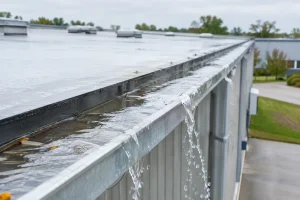
Blocked outlets, undersized drainage, poorly formed falls and ponding water are recurring causes of membrane deterioration and leaks. Water that remains on a roof after expected drainage time can accelerate breakdown, expose workmanship defects and add unnecessary loading.
Drainage reviews should look beyond clearing leaves from a grate. Check the condition and placement of outlets, overflows, sumps, gutters, downpipes and surrounding roof falls. Where water consistently ponds, identify whether the cause is local settlement, construction tolerances, altered plant loads or a design issue. Cleaning the drain may solve the symptom. It may not solve the cause.
Penetrations and interfaces deserve close scrutiny
Most commercial roofs are interrupted by services, plant supports, skylights, hatches, vents, solar installations and mechanical equipment. Every penetration is an interface where water can enter if detailing, sealants or flashings fail.
These areas are also commonly disturbed by trades who are focused on their own work rather than the waterproofing system beneath it. A new cable tray, condenser unit or pipe support can create a leak path if it is installed without appropriate roofing oversight. Require documented approval for penetrations and ensure completed works are inspected before access equipment is removed and the trade leaves site.
Repairs can conceal a wider problem
A roof covered in patches may be serviceable. It may also be signalling that the membrane, flashings or substrate have reached the point where isolated repairs no longer represent value. The decision depends on repair frequency, defect pattern, age, water ingress history and the cost of operational disruption.
Do not accept “replace the whole roof” or “just patch it again” without a clear diagnosis. Both recommendations can be wrong when they are not supported by condition evidence.
Turn inspection findings into a funded plan
A condition report only becomes valuable when it changes the maintenance and capital plan. Facility managers should separate actions into immediate risk controls, scheduled maintenance and lifecycle renewal. Mixing all defects into one urgent works list creates panic spending. Treating all findings as long-term capital works creates avoidable exposure.
Immediate actions address active leaks, unsafe access conditions, loose materials, blocked drainage or defects that threaten operations. Planned maintenance covers tasks such as targeted repairs, resealing, cleaning, minor flashing works and rectification of damage caused by other trades. Lifecycle renewal deals with systems approaching the end of economic service life, where maintaining the roof through reactive repairs is no longer commercially sensible.
Prioritise by consequence as well as condition
Two roofs with similar defects can require different decisions. A minor leak above an empty warehouse bay does not carry the same consequence as one above a switchboard, operating theatre, server room or classroom. Priority should consider the likelihood of failure alongside the business impact if it occurs.
This approach makes budget conversations more defensible. Rather than asking for funds because a roof is “old”, present the documented defect, likely failure pathway, consequence of deferral and recommended intervention. Boards, asset owners and government stakeholders respond to evidence tied to risk and cost.
Use independent advice to control contractor scope
Roofing contractors play an essential role in repairing and replacing roofs. But they are not independent of the work they propose. Their commercial model is to perform works, supply materials or both. That does not make their advice invalid. It does mean the client should understand the conflict and apply appropriate controls.
Before issuing a repair or replacement package, confirm the scope is based on an established diagnosis. Define the required outcomes, materials, interfaces, access requirements, testing, warranties, quality hold points and defect rectification process. If multiple contractors are pricing, ensure they are pricing the same documented scope. Otherwise, the lowest price may simply exclude the work needed for a lasting result.
Independent inspection during works is equally valuable. Many defects are hidden once membranes, flashings or plant bases are covered. Hold-point inspections give the client an opportunity to identify non-compliant work before it becomes expensive to access. Roof Inspection Australia operates on this principle: no roofing products, no repair agenda, and no reason to inflate a scope.
Treat handover as a risk event
New roofs and major refurbishments can inherit defects from poor detailing, rushed installation or incomplete documentation. Handover should not be reduced to collecting a warranty certificate. A warranty is only useful if the installed system complies with its conditions and the defect can be proven.
Review completed works against the specification, approved details and contract scope. Confirm drainage paths are clear, penetrations are properly detailed, laps and terminations are complete, plant interfaces are finished, and repairs to adjacent surfaces have not been overlooked. Obtain records of materials, warranties, test results, maintenance requirements and any agreed departures from the original design.
This is particularly relevant where roofs have been altered during construction to accommodate services, solar equipment or late design changes. Those changes can compromise waterproofing if they are not assessed as part of the whole roof system.
Make roof decisions before weather makes them for you
The most effective roof management is quiet. It is a current condition record, a prioritised plan, controlled contractor scopes and evidence that supports each budget request. It avoids emergency call-outs becoming the only source of information about a critical asset.
Start with the roofs where failure would hurt most, establish the facts, and act on the cause rather than the loudest quotation. That is how facility teams retain control of cost, risk and asset performance.