
A contractor tells you the roof is at end of life and needs full replacement. The budget impact is immediate. So is the risk if that advice is wrong. In commercial property, the real question is rarely repair or replace on instinct. It is roof audit vs replacement – which decision is supported by evidence, and which one is being driven by someone who profits from the outcome?
That distinction matters more than most owners, facility teams and project stakeholders realise. A replacement can be necessary, justified and overdue. It can also be premature, poorly scoped or based on a narrow view of one failure point rather than the whole roof asset. The cost difference between targeted remediation and full replacement can be enormous. So can the operational disruption, procurement burden and exposure to disputes if the decision is made without independent technical clarity.
Why roof audit vs replacement is a commercial decision
Too many roofing decisions are framed as a trade problem. They are not. They are asset, risk and capital planning decisions.
A commercial roof is not just sheeting or membrane. It is drainage, penetrations, flashings, insulation performance, waterproofing transitions, safety interfaces, compliance exposure and lifecycle timing. When one part fails, the temptation is to treat the whole system as failed. That is where money gets burned.
A proper roof audit asks harder questions. What is actually defective? How widespread is it? Is the issue isolated, systemic or age-related? Has drainage design accelerated deterioration? Are leaks caused by the roof covering, the detailing, the services interface or poor workmanship from a previous project? If you cannot answer those questions with evidence, replacement is not a strategy. It is a guess with a large invoice attached.
For portfolio owners and public sector asset managers, this matters even more. Every dollar committed to unnecessary capex is a dollar unavailable for other priority works. Every delayed decision on a roof that genuinely is failing increases the risk of internal damage, tenant disruption, safety incidents and emergency spend. The commercial value of an audit is not academic. It is control.
What a roof audit actually tells you
A roof audit is not a quick look from the access hatch and a few photos in a report. Done properly, it establishes condition, causation and consequence.
Condition means understanding the current state of the roof system, not just whether it leaked during the last storm. Causation means identifying why defects are occurring, because recurring leaks are often symptoms of design flaws, detailing failures or drainage problems rather than simple wear and tear. Consequence means assessing what those defects mean for operations, compliance, asset value and future spend.
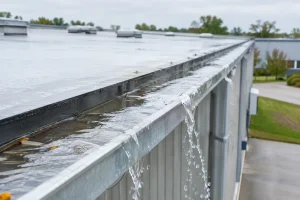
That matters because some roofs look tired but remain structurally serviceable with targeted intervention. Others look reasonable from ground level but are carrying serious concealed risk. Fastener failure, substrate deterioration, membrane fatigue, ponding water, blocked outlets, unsafe access conditions and non-compliant modifications rarely announce themselves politely.
An independent roof audit should also separate urgent defects from manageable defects. Not every issue needs immediate capital works. Some require maintenance, some require staged remediation, and some justify replacement planning within a defined timeframe rather than a panic response.
This is where independent advice changes the quality of decision-making. If the assessor is not selling rectification works, there is far less incentive to inflate scope, oversimplify the diagnosis or push replacement because it is commercially convenient.
When replacement is genuinely the right call
There are roofs where replacement is the correct answer. Pretending otherwise is just as costly as replacing too early.
If the roof system has broad end-of-life deterioration, repeated failures across multiple zones, chronic water ingress, obsolete materials, structural concerns or extensive non-compliant work that cannot be economically rectified, replacement may be the most defensible option. The same applies when patch repairs have become a cycle of spend without restoring reliability.
But even then, replacement should be based on evidence and scope discipline. A roof can require replacement without every associated element needing to be stripped and rebuilt. Equally, some replacement projects fail because they focus on the visible roof covering while ignoring drainage falls, penetration detailing, overflow provision or traffic-related damage that caused the problems in the first place.
A sound audit does not just say replace. It helps define why, where, when and to what extent. That is the difference between a controlled capital project and a reactive procurement exercise.
The hidden cost of getting the call wrong
The roof audit vs replacement question is really about the cost of error.
Replace too early and you may spend hundreds of thousands, or several million across a portfolio, before the asset actually requires it. You also take on tender risk, disruption to occupants, weather exposure during works and the possibility of buying a badly designed new roof if procurement is weak.
Replace too late and the damage spreads. Water ingress affects ceilings, services, stock, plant, finishes and internal operations. Mould risk increases. Safety incidents become more likely. Insurance and compliance discussions become harder. Emergency works almost always cost more and deliver less value.
There is also a third cost that gets less attention – loss of leverage. Once you accept a contractor’s recommendation without independent review, your ability to challenge scope, sequencing, exclusions and pricing drops sharply. You are negotiating from their diagnosis, not your own evidence base.
Commercial property teams need that leverage. It supports procurement, internal approvals, budget submissions and contractor accountability. It also gives decision-makers something many roofing discussions lack: a defensible position.
How to decide between a roof audit and replacement
Start with the quality of the information you already have. If the current recommendation is based on leak history, age alone, or a contractor inspection tied to potential works, you do not have enough clarity to commit major capital.
The next step is to assess whether the issue is localised or systemic. A roof with isolated failure points, poor maintenance history or specific drainage problems may not warrant full replacement. A roof with widespread deterioration across materials, detailing and support elements may.
Timing also matters. If the asset is approaching refurbishment, tenant turnover, redevelopment or broader services upgrades, replacement timing may need to align with other works. But coordination is not a substitute for diagnosis. It just shapes the delivery strategy.
Decision-makers should also look at consequence, not just condition. A moderate defect on a warehouse with low sensitivity may be managed differently from the same defect on a hospital, school or data-critical facility. Risk tolerance changes with occupancy, compliance demands and operational impact.
This is why generic roofing advice performs poorly in complex portfolios. The right answer depends on the building, the failure mechanism, the business use and the capital context.
Why independent assessment changes the outcome
The biggest problem in roofing is not a leak. It is conflicted advice.
When the party diagnosing the roof is also quoting the solution, there is an obvious commercial bias in the process. That does not mean every contractor recommendation is wrong. It means the client needs to understand the incentive structure behind it.
Independent consultants exist to remove that distortion. They do not benefit from a larger scope, a faster replacement decision or a particular product outcome. Their value is in establishing the facts, documenting the evidence and helping the client choose the most commercially sound path.
For asset managers, developers and facility teams, that independence is practical, not philosophical. It protects budgets, strengthens tendering, clarifies lifecycle planning and gives stakeholders confidence that major roofing decisions are being made on merit. That is the standard Roof Inspection Australia is built around – no repair agenda, no product agenda, just the truth about the asset and what it needs.
If your roof has become a capital question, do not start with the invoice. Start with the evidence. A replacement may be the right move, but it should never be the first answer simply because it is the most profitable one for somebody else.