

Roof Inspection Australia is an independent inspection firm. Our role is to provide unbiased documentation that gives asset managers, developers and property owners a clear understanding of roof condition, as independent roof asset intelligence and nothing else.
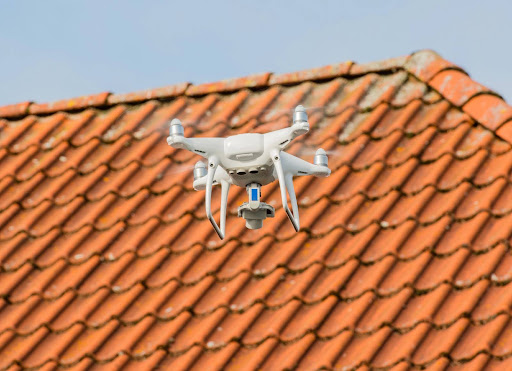
Drone technology has transformed how roofs are inspected, replacing dangerous ladder climbs and scaffolding with aerial surveys that capture remarkable detail. Property owners increasingly ask whether a drone roof inspection can match the accuracy of a traditional one. The short answer is yes, with important caveats about what drone technology can and cannot detect from the air. A modern drone roof inspection combines high-resolution imaging with specialist software to produce visual documentation that often surpasses what an inspector sees from a ladder, genuine evidence-based roof consulting for high-value assets. But understanding when drones work best, and when physical access is still necessary, is what separates a confident decision from a costly assumption. This guide breaks down the accuracy factors, the technology, the regulatory framework, and the hybrid approach that gets the most out of both.
How a Drone Roof Inspection Compares to Traditional Assessment
For visible, surface-level defects, a well-flown drone roof inspection matches or exceeds a traditional visual assessment. The elevated perspective removes the viewing-angle limitations of ground-level observation, and high-resolution imagery captures detail across the whole roof in a fraction of the time, feeding precise roof performance and risk advisory.
Where the two differ is depth. A traditional assessment brings tactile examination, a drone brings coverage and safety. Neither is strictly “better”, they answer different questions, and the most accurate outcome usually combines them. A drone roof inspection is a genuine building envelope risk assessment and advisory for everything the surface reveals; the hands-on component adds what the surface hides.
The Technology Behind a Professional Drone Roof Inspection
Modern inspection drones carry 4K and higher-resolution cameras capable of resolving hairline cracks, missing fixings and early weathering that are easy to miss from the ground. Multiple passes at different angles and altitudes build complete coverage, and specialist software stitches the imagery into documentation that is dated, located and permanent.
Thermal and Radiometric Imaging
The most important capability beyond the visible camera is thermal imaging. Radiometric thermal sensors detect subtle temperature differences caused by trapped moisture beneath a membrane, often revealing water infiltration before it produces any visible damage or an interior leak. This is a genuine advance: it means a drone can, in the right conditions, infer subsurface moisture that a purely visual inspection would miss entirely, which is why thermal-equipped drone survey has become central to serious roof performance and risk advisory on flat and membrane roofs.
Thermal has its own conditions, it works best with a temperature differential across the roof, typically early morning or late afternoon, and it indicates rather than confirms, so within evidence-based roof consulting for high-value assets a thermal anomaly is a reason to investigate, not a final diagnosis. Used well, it turns a drone roof inspection into a diagnostic tool rather than just a photographic one.
CASA Compliance: What a Legitimate Drone Inspection Requires
This is the part most property owners never think to check, and it matters. In Australia, all commercial drone operations are regulated by the Civil Aviation Safety Authority (CASA). A legitimate commercial drone roof inspection must be flown by a pilot holding a Remote Pilot Licence (RePL), operating under a Remotely Piloted Aircraft Operator’s Certificate (ReOC), with the drone registered and the site properly assessed for hazards and airspace.
That compliance is not bureaucratic box-ticking; it is what separates a professional survey from an uninsured hobbyist with a camera. You can read CASA’s requirements at the Civil Aviation Safety Authority. When you commission a drone roof inspection, asking about RePL and ReOC is a fast way to verify you are dealing with a legitimate operator, and it is part of the independent roof asset intelligence you are paying for: a report that stands up because the survey behind it was flown legally and safely.
Accuracy Thresholds: Where Building Envelope Risk Assessment and Advisory Needs a Hand
An honest account of drone accuracy has to cover what drones cannot do, because pretending otherwise is where property owners get caught out. A drone photographs surfaces exceptionally, but it cannot measure moisture content within a material by touch, test structural integrity through physical pressure, lift a tile to check what is beneath it, or inspect a roof cavity or underside from inside.
These are not minor gaps. A roof can look sound from above while the battens beneath are rotting, or while a flashing that photographs cleanly is failing at a junction only a hand can feel. This is precisely why the most accurate assessment pairs aerial survey with targeted physical inspection, and why a drone-only report should never be treated as a complete building envelope risk assessment and advisory on its own. Recognising the limitation is what makes the technology trustworthy.
Types of Defects a Drone Roof Inspection Detects Particularly Well
Drones excel at a specific and valuable set of findings:
- Missing or damaged materials: displaced tiles, torn metal sheeting and deteriorated membrane show instantly from above, with better detection rates than ground-level viewing, a real gain for any building envelope risk assessment and advisory
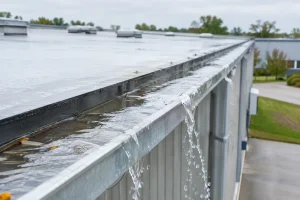
- Ponding and drainage problems: pools visible after rain reveal low spots, blocked outlets and inadequate fall on flat roofs, issues that cause premature membrane failure and often go unnoticed until water reaches a ceiling
- Storm and hail damage: high-resolution imagery zooms in on hail impacts, stress fractures and lifted sheets across a whole roof quickly, valuable for insurance documentation and roof performance and risk advisory
- Flashing and penetration condition: the elevated view captures the detailing around plant, skylights and junctions where leaks commonly begin
Documented across a portfolio, these findings feed portfolio roof condition and risk assessments and give an asset manager comparable, dated evidence for every building on one standard, the backbone of portfolio roof condition and risk assessments at scale.
Are Drone Roof Inspection Reports Accepted by Insurers?
Yes. Drone inspection reports are widely accepted by Australian insurers, and the detailed imagery and thermal data they contain often exceeds the documentation a traditional inspection produces. For a storm or hail claim in particular, a dated, high-resolution aerial record of the damage, captured close to the event, is exactly the kind of evidence that substantiates a claim.
The credibility comes from two things together: a compliant, well-flown survey, and a qualified inspector interpreting the imagery. Imagery alone is data; it becomes evidence-based roof consulting for high-value assets only when someone with roofing expertise reads it correctly. That is why the strongest drone reports come from operators who are both CASA-compliant pilots and experienced roof inspectors.
Safety, Speed and Strategic Roof Asset Management
For an owner practising strategic roof asset management, the safety case is the starkest. Falls from height account for roughly 30 per cent of construction fatalities in Australia, and a drone eliminates the need to put a person on a steep, fragile or high roof at all. That alone justifies aerial survey on many buildings before any question of accuracy.
Speed and documentation follow. A single flight captures comprehensive data across roof, gutters, flashings and penetrations in a fraction of the time scaffolding would take to erect, and every image is stored digitally as a permanent, dated record. For an owner running strategic roof asset management across multiple sites, that combination, safer, faster, fully documented, is what makes regular assessment practical rather than a once-a-decade event, and it underpins capital planning support for roofing assets.
How to Choose a Drone Roof Inspection Provider
Not all drone inspections are equal, and the gap between a good one and a poor one is wide. A few checks separate a professional service from a fly-by.
Verify CASA credentials
Ask whether the pilot holds a Remote Pilot Licence and operates under a ReOC. A legitimate commercial operator will answer without hesitation. If they cannot, the survey may be uninsured and non-compliant.
Confirm roofing expertise, not just piloting
A drone captures imagery; a qualified inspector interprets it. The strongest providers combine CASA-compliant piloting with genuine roofing knowledge, so the report reads the imagery correctly rather than just presenting pictures. Ask who analyses the footage and what their roofing background is.
Check for independence
A provider who also sells repairs has the same conflict of interest as any other contractor. An independent drone roof inspection charges for the assessment alone, so the findings reflect the roof, not a repair opportunity. That independence is what turns imagery into independent roof asset intelligence you can rely on.
Ask what happens when the drone finds something it cannot confirm
A good provider will tell you plainly that a thermal or visual anomaly needs physical confirmation, and will offer to add that hands-on component. A provider who claims the drone alone settles everything is overselling the technology.
When a Physical Roof Inspection Is Still Necessary
Some situations call for hands-on assessment regardless of how good the drone imagery is. Pre-purchase inspections, where the cost of a missed defect is high and the roof cavity matters, warrant a physical component. Suspected structural issues need tactile testing a camera cannot provide. And any defect a thermal or visual survey flags as an anomaly needs close, physical confirmation before it becomes a recommendation.
The honest position is that drone-only is sufficient for many routine and surface-level assessments, and insufficient for the highest-stakes ones. Knowing which is which is the expertise, and it is why the method matters less than the judgement applied to it.
RIA’s Hybrid Approach: Drone Survey Plus Inspector Expertise
Roof Inspection Australia does not treat drones as a replacement for expertise; we treat them as a tool that expertise directs. Our approach combines drone survey for coverage, safety and thermal detection with targeted hands-on assessment wherever the roof, the purpose or a flagged anomaly requires it. The value is not the drone; it is the qualified inspector deciding where to fly, what the imagery means, and where a hand is still needed.
That is the difference between a fly-by and a genuine independent national roof inspection: one produces pictures, the other produces a defensible assessment. As an independent national roof inspection service, we bring that hybrid standard to every job, and an independent national roof inspection reads the same wherever it is flown, and a commercial property roof inspection across a portfolio is held to the same benchmark whether it is one building or many, so a commercial property roof inspection in one city matches another interstate. Our national roof inspections mean the method is consistent wherever your assets sit, and national roof inspections on one standard keep every building comparable, and it underpins capital planning support for roofing assets you can budget against.
What a Drone Roof Inspection Costs
We do not publish a fixed price, because a genuine assessment is scoped to your roof, not sold off a rate card. Cost is driven by roof size and complexity, the level of detail required, whether thermal imaging is included, and the standard of evidence needed, a report prepared for a legal matter such as an NCAT hearing demands a higher standard of evidence handling than a routine condition check. Tell us about your property and we will provide a fixed fee in a free, obligation-free quote before any work is confirmed.
For a fuller breakdown of what drives the price, see our roof inspection cost guide. Either way, an independent drone-and-inspector assessment is a small cost against the defects it documents, which is the logic of capital planning support for roofing assets.
National Roof Inspections Australia Services
FREQUENTLY ASKED QUESTIONS
Yes. Modern drones with 4K cameras and thermal sensors capture imagery sufficient to identify most visible roof defects, with accuracy matching or exceeding a traditional visual inspection. For the highest-stakes assessments, best practice pairs drone survey with a targeted physical component.
Drones cannot measure moisture content by touch, test structural integrity through physical pressure, lift materials, or inspect roof cavities and undersides. They photograph and thermally scan surfaces exceptionally but miss problems that need tactile assessment or interior access.
Yes, when flown by a CASA-compliant operator. Commercial drone operations require a pilot with a Remote Pilot Licence (RePL) operating under a ReOC, with the drone registered. Asking about these is a quick way to verify a legitimate operator.
Yes. Drone reports are widely accepted by Australian insurers, and the detailed imagery and thermal data often exceed traditional documentation, which is particularly useful for storm and hail claims and for portfolio roof condition and risk assessments across multiple buildings.
It depends on the roof: size, complexity, the detail required, whether thermal imaging is included, and the evidentiary standard needed. Rather than publish a fixed price, we scope your roof and provide a single fixed fee in a free, obligation-free quote before any work is confirmed.
Drones can survey most roof types on a residential home or a commercial property roof inspection, and they are especially valuable on steep, high, fragile or hard-to-access roofs where physical access is dangerous. Some assessments still need a hands-on component, which we add where the roof or purpose requires it, and every drone survey runs to the same national roof inspections standard.