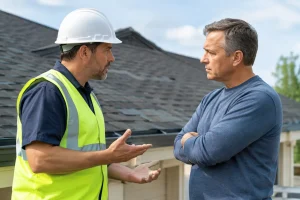

A roof can look serviceable from the ground while water is tracking beneath membranes, ponding around outlets, or entering failed junctions above occupied space. By the time a leak reaches the ceiling, the commercial roofing problem is rarely small. The immediate repair may be modest, but the wider cost can include tenant disruption, stock damage, safety exposure, mould, insurance claims, lost operating time and an unplanned capital decision.
For asset managers and facility teams, the issue is not simply whether a roof leaks today. It is whether the roof is performing as an asset should, whether its remaining life is understood, and whether the advice being received is genuinely in the owner’s interests.
Commercial roofing is an asset management issue
Commercial roofs are often treated as a maintenance line item until they fail. That approach gives up control. Roof systems protect some of the most valuable and operationally critical parts of a property portfolio, yet they are frequently out of sight, lightly documented and assessed only after a visible problem emerges.
A proper assessment considers more than the condition of a roof covering. It examines drainage performance, waterproofing interfaces, flashings, penetrations, safety systems, ponding, previous repairs, detailing, substrate movement and workmanship. It also considers how those issues interact. A membrane may be intact in isolation, for example, but repeated ponding, blocked outlets or poorly detailed penetrations can shorten its effective service life substantially.
The right question is not, “Can this be patched?” The right question is, “What is the condition, cause, consequence and best commercial response?” Those are different questions, and they produce different decisions.
The conflict built into contractor-led advice
Many roof inspections are undertaken by businesses that also sell repairs, replacement systems or roofing products. That does not automatically make their findings wrong. It does mean the client should understand the commercial incentive behind the recommendation.
A contractor may identify genuine defects while still proposing a scope that is broader than necessary, premature, or poorly matched to the building’s lifecycle plan. The reverse also occurs: reactive repairs can be offered repeatedly when the underlying failure mechanism requires a more fundamental intervention. Either way, the owner can end up spending money without resolving risk.
Independent commercial roofing advice changes the balance of power. It gives the asset owner a documented position before entering a procurement process, challenging a variation, accepting practical completion or approving a capital works programme. The consultant has no repair revenue to protect. Their role is to establish the facts, explain the risk and recommend an evidence-based path forward.
That independence matters most when the stakes are high: a new development handover, a disputed warranty claim, recurring leaks at a hospital or school, a logistics facility with sensitive stock, or a multi-site portfolio approaching a capital planning cycle.
What a decision-ready roof assessment should provide
A useful report does not bury a client in technical language or produce a vague recommendation to monitor the situation. It should create a clear basis for action.
First, it should identify defects precisely. General comments such as “poor drainage” or “membrane issues” are not enough. Decision-makers need locations, photographs, likely causes, severity and an explanation of what may happen if the issue is left unresolved.
Second, it should distinguish between defects that need urgent attention and defects that require planned management. Not every imperfection justifies immediate capital expenditure. Some issues can be monitored or addressed as part of scheduled maintenance. Others, particularly failed waterproofing interfaces, blocked drainage paths, loose sheets, deteriorated safety elements or defects affecting occupied areas, require a quicker response.
Third, it should address the commercial pathway. This includes whether a targeted repair is technically defensible, whether further investigation is required, whether a replacement scope should be developed, and what information is needed before going to market. A recommendation without a pathway leaves the client holding a problem rather than controlling one.
Finally, the assessment should be useful beyond the roof. Clear evidence supports internal approvals, budget submissions, insurer discussions, contractor negotiations and board reporting. It turns a technical concern into a defensible asset decision.
The failures that create avoidable cost
Most major roof expenditure is not caused by a single dramatic event. It develops through ordinary defects that are missed, misunderstood or repeatedly deferred.
Drainage is a common example. Water that does not leave the roof as intended adds load, accelerates material degradation and finds weaknesses in laps, penetrations and transitions. The visible ponding may be a symptom of blocked outlets, inadequate falls, settlement, poorly designed overflows or changes made after the original construction. Clearing a drain may help. It may not solve the cause.
Penetrations are another recurring weakness. Air-conditioning upgrades, communications equipment, solar installations and maintenance access can introduce new interfaces into a roof system. If penetrations are not properly detailed and sealed, the original warranty position may be compromised and water ingress can occur far from the apparent source.
Poor workmanship is equally expensive because it can remain hidden until the roof is under stress. Inadequate laps, poorly terminated membranes, unsupported flashings, incompatible materials and incomplete detailing may not reveal themselves during a brief defects liability period. By the time the issue is obvious, responsibility can be harder to establish.
This is why handover and compliance inspections matter. A new roof is not automatically a good roof, and a warranty document is not proof that the installed work meets the required standard.
When repair, restoration or replacement makes sense
There is no responsible one-size-fits-all answer. A full replacement can be the right decision when the system is broadly deteriorated, its remaining life is limited, defects are widespread, or repeated repairs are no longer economical. It can also be wrong when a discrete failure has been mistaken for system-wide failure.
Targeted repair makes sense where the roof is otherwise performing, defects are isolated and the repair addresses the real cause. The risk is treating repairs as a default response. Small works can become a cycle of invoices, call-outs and tenant complaints if the drainage design, substrate condition or waterproofing detail remains unresolved.
Restoration or recoating may extend service life on some systems, but it depends on substrate condition, preparation, moisture levels, compatibility and detailing. It should not be treated as cosmetic maintenance or a cheaper substitute for investigating failure. A coating over active defects merely conceals them for a time.
The decision should be based on condition, consequences of failure, expected service life, operational constraints and whole-of-life cost. The cheapest option at tender is not always the lowest-cost decision over five or ten years.
Use roof data to protect capital budgets
Portfolio owners need more than reactive leak reports. They need a forward view of roof condition across sites, with enough consistency to compare risk and allocate capital rationally.
A condition assessment programme can identify which roofs need immediate remediation, which should be monitored, and which are likely to require replacement within a defined planning window. This helps avoid the common budget shock where a roof reaches failure before funding has been approved.
The quality of the underlying data matters. If reports use inconsistent ratings, lack photographic evidence or do not explain the basis for remaining-life estimates, the capital plan becomes difficult to defend. Good roof intelligence gives property teams leverage: they can prioritise works, package procurement, challenge unsupported contractor recommendations and communicate clearly with executives and stakeholders.
For large or complex assets, project oversight also protects the investment once works begin. An appropriate scope can still fail if site practices, material installation, drainage detailing or quality records are not properly checked. Independent review during critical stages gives the owner visibility before defects are covered up.
Control starts before the next leak
Commercial roofing should not be managed by assumption, sales advice or the last person to attend site. It should be managed with evidence, a clear risk position and a plan aligned to the asset’s operational and financial realities.
Roof Inspection Australia does not sell repairs or replacement systems. That separation allows owners to obtain a clear view of condition and scope before committing funds or accepting someone else’s version of the problem.
The most useful time to assess a roof is not after water reaches the floor below. It is while there is still time to choose the right response, set the right budget and hold the right party accountable.