
Property managers overseeing residential and commercial buildings deal with roof-related issues more than most people realise. Tenant complaints about leaks, water stains, and ceiling damage often trace back to roof problems that were developing quietly for months before anyone noticed. Roofing inspections catch those problems earlier — before they become tenant disputes or emergency repair situations.
Independent roof inspection reports give property managers documented evidence of a building’s roof condition. That documentation supports maintenance planning, justifies budget requests to owners, and creates a clear record of compliance. At Roof Inspection Australia, we provide comprehensive roof inspection and reporting services across Sydney and NSW — with no repair agenda and no contractor relationships influencing our findings.
In this guide, we cover why roofing inspections matter for property managers, how independent roof inspection reports support maintenance planning and budgeting, what the inspection process involves, when to schedule inspections, and how Roof Inspection Australia delivers unbiased roof condition reports across Sydney and NSW.
Why Roofing Inspections For Property Managers Are Essential For Building Maintenance
Property managers are responsible for multiple buildings at once. A roof problem in one building can escalate quickly while attention is elsewhere. Regular roofing inspections create a structured process for monitoring roof condition across a portfolio rather than reacting to problems as they emerge.
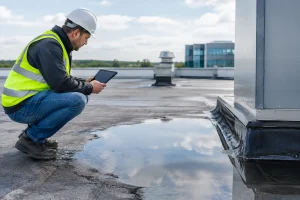
Roof problems are rarely visible until damage has already occurred. A blocked gutter, a failed flashing, or a membrane starting to lift won’t announce itself — it’ll show up as a water stain on a tenant’s ceiling after the next heavy rain. By that point, the repair scope is wider and the cost is higher than it would have been with early detection.
Regular roof inspections allow property managers to identify structural issues, roofing material deterioration, and drainage failures before they cause internal damage. That shift from reactive to proactive maintenance improves building safety, extends asset longevity, and reduces the volume of urgent repair work that disrupts day-to-day building management.
Contact Roof Inspection Australia to set up a regular inspection programme for your managed properties.
How Roof Inspections Help Property Managers Prevent Tenant Complaints
Roof leaks often lead to water damage inside apartments and commercial units well before a tenant formally reports the problem. Damp patches, mould growth, and ceiling staining are the visible symptoms — but the roof condition that caused them may have been deteriorating for months. Proactive roofing inspections identify those risks before they reach a tenant’s ceiling.
Tenant complaints about water leaks are among the most disruptive issues a property manager handles. They require urgent coordination with roofing contractors, communication with owners, and sometimes temporary accommodation arrangements. Each complaint is time-consuming to resolve and creates friction that affects tenant satisfaction and retention.
Documentation from roof inspections also helps property managers resolve disputes cleanly. When a tenant raises a complaint about water damage, an inspection report showing the roof was assessed and maintained provides evidence of due diligence. Without it, the timeline of when a defect developed becomes harder to establish and easier to contest.
What does a professional roof inspection involve?
We inspect the full roofing system — not just the surface. That means assessing roofing materials for wear, age-related deterioration, and workmanship defects, as well as checking the roof structure where accessible. On residential and commercial properties, the scope covers everything that affects the roof’s ability to perform over time.
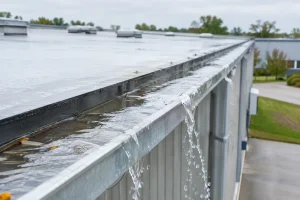
Drainage systems and gutters are assessed for blockages, fall, and installation condition. Blocked or poorly maintained gutters are one of the most common contributors to water ingress on managed properties — and one of the most preventable. Flashings and penetrations are inspected closely for sealing failures, lifting, and separation from adjoining surfaces.
Each inspection results in a detailed report documenting all findings with photographic evidence. The report identifies defects, describes their severity, and provides recommendations that give property managers the information they need to plan repairs and maintenance. It’s structured for practical use — not a generic summary, but a document you can take to an owner or strata committee with confidence.
Why Independent Roof Inspectors Provide Better Inspection Reports
A roofing contractor inspecting a roof they might also repair has an obvious conflict of interest. We’re not saying every contractor inflates findings — but the commercial relationship creates a bias that’s difficult to separate from the assessment. An independent roof inspector has no stake in what gets repaired or who does the work.
Our reports focus on the actual condition of the roof. We document what we find, describe what it means, and recommend action where it’s warranted. We don’t recommend specific roofing contractors, and we don’t carry out repairs. That independence keeps our findings unbiased and our reports credible.
For property managers, that credibility matters. When you present an inspection report to a building owner or strata committee to justify a maintenance budget, a report from an independent roof inspector carries more weight than one produced by a company that also quoted for the work. We deliver a roof condition report that stands on its own.
How Roof Inspection Reports Help Property Managers Plan Maintenance Budgets
Inspection reports identify both immediate repair needs and longer-term maintenance requirements. That separation is useful for budget planning — it tells property managers what needs funding now and what can be scheduled into future capital works plans. Without that clarity, maintenance budgets are built on guesswork.
Property managers can use roof condition reports to forecast roof repairs, plan for roof replacement as systems approach end of life, and prioritise works across a building portfolio. Owners and strata committees are more likely to approve maintenance budgets when the expenditure is supported by documented findings from a qualified roof inspector rather than a verbal recommendation.
Preventing unexpected large repair costs is where regular roofing inspections deliver the clearest financial return. A blocked drainage system left unaddressed for a year can cause water damage that costs ten times more to rectify than the drainage repair itself would have. Inspection reports give property managers the evidence to act before that escalation happens.
Schedule a roof inspection with Roof Inspection Australia to identify potential problems before they escalate.
Why a Thorough Roof Inspection Provides Peace Of Mind For Property Managers
A thorough inspection confirms the current state of your roof across all critical components. For property managers carrying responsibility for building safety and tenant welfare, that confirmation has practical value. It removes the uncertainty of not knowing whether a roof will hold up through the next storm season.
Roof inspection reports provide documentation for insurance and compliance purposes. Insurance companies increasingly require evidence of maintenance for commercial property and strata buildings. An independent inspection report demonstrates that the roof has been professionally assessed and that identified issues are being managed — that documentation can make a material difference when a claim is being processed.
Reducing emergency repair situations is one of the clearest benefits of regular roofing inspections for property managers. Emergencies are expensive, disruptive to tenants, and difficult to manage across a portfolio. A maintenance programme supported by regular inspections keeps the roof’s condition known and managed, replacing reactive crises with planned maintenance.
Case study: Gungahlin Marketplace Commercial Roof Inspection (ACT)
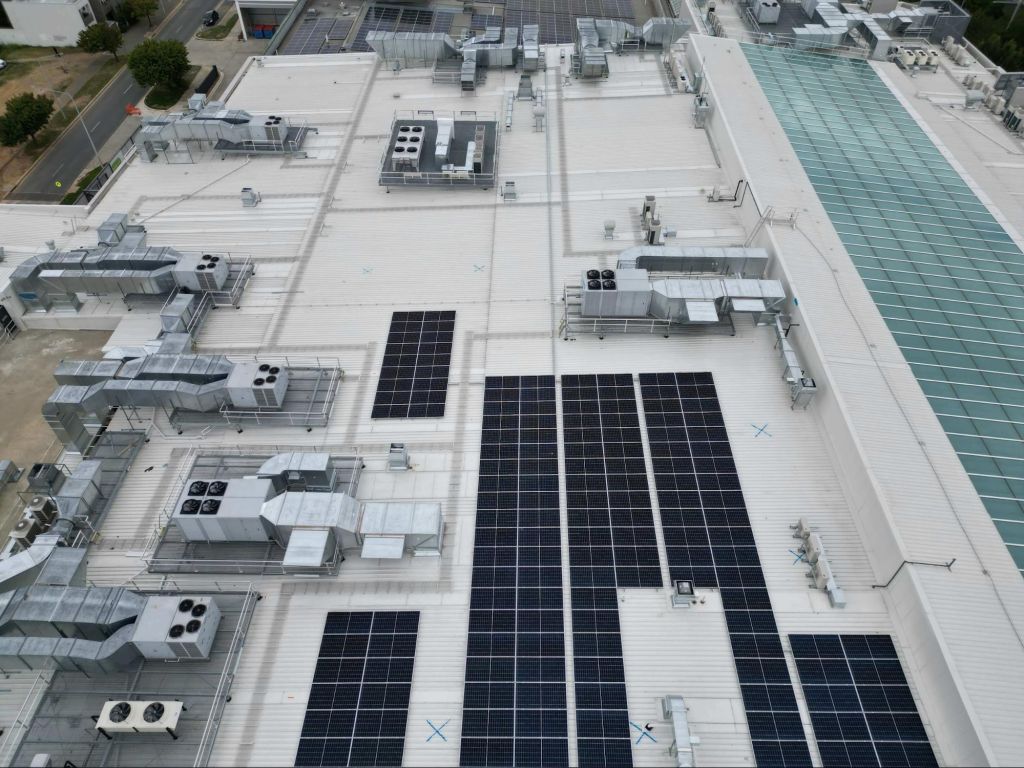
Roof Inspection Australia was engaged to conduct an independent roof inspection for Gungahlin Marketplace, a large commercial property in the ACT. The scale of the development required a comprehensive approach to assess roof condition accurately across multiple sections and roof types.
Project Overview
The inspection was commissioned to assess the overall condition of the roof and identify any defects or maintenance concerns across the full commercial property. Gungahlin Marketplace presented the challenges typical of large commercial buildings — extensive roof area, varied roof design across tenancies, and numerous penetrations requiring individual assessment.
Our team conducted a meticulous inspection of the entire roofing system, producing a detailed report that gave property stakeholders a clear picture of the roof’s condition and the issues requiring attention.
Inspection Process
We used drone roof inspections to access roof sections that were difficult or unsafe to reach manually. This approach ensured the condition of the roof was assessed fully, without the delay or cost of access equipment. Physical inspection of accessible areas provided close examination of flashings, sealant applications, gutters, and drainage outlets.
All findings were documented with high-resolution photography and structured commentary. The inspection and report process followed a systematic approach to ensure that every roof section was covered and every defect was captured.
Key Findings
Structural roofing issues were identified across several sections of the roof. Drainage problems were documented, with areas of inadequate fall and partially obstructed outlets flagged as requiring corrective action. Flashing installations at penetration points were found to be incomplete in specific locations, creating water ingress risk.
Each finding was recorded with photographic evidence, precise location descriptions, and an assessment of the likely consequence if the issue was not addressed.
Outcome
Property stakeholders received comprehensive roof condition reports that clearly identified defects and provided recommendations for rectification. Issues were addressed before they could escalate into more costly structural repairs. The inspection helped protect the long-term value of the commercial property and gave the management team the documentation needed to plan and budget for ongoing roof maintenance.
Schedule your commercial roof inspection with Roof Inspection Australia protect your investment with independent reporting.
Book a roof inspection today
Roof Inspection Australia: Trusted Roof Inspectors For Property Managers in Sydney and NSW
We provide independent roof inspection services for property managers overseeing residential and commercial properties across Sydney and NSW. Our role is inspection and reporting only. No repairs, no contractor referrals, and no commercial interest in the outcome of our findings.
Our commercial roof inspection services cover strata buildings, office buildings, retail properties, and mixed-use developments. We use drone inspections for difficult access areas and produce detailed inspection reports that are structured for maintenance planning, budget justification, and compliance documentation. We also service Queensland and across Australia where required.
Property managers who work with us get a qualified roof inspector with expertise and experience in residential and commercial roofing systems — and a report they can use confidently with owners, committees, and insurers.
For most managed buildings, annual inspections are a practical starting point. Older roofs or buildings with a history of leaks benefit from more frequent assessment. Post-storm inspections should be arranged separately from the regular inspection cycle.
Our reports include a condition assessment of all inspected roof components, photographic evidence of identified defects, location descriptions, severity ratings, and prioritised maintenance recommendations. Reports are structured for direct use in maintenance planning and owner communication.
Yes. Roofing inspections identify water ingress risks, drainage failures, and deteriorating materials before they cause internal damage. Addressing those issues proactively reduces the likelihood of tenants reporting leaks, mould, or ceiling damage.
A roofing company that also carries out repairs has a financial interest in its findings. Independent roof inspectors have no such interest — our reports reflect actual roof condition without commercial bias, which makes them more credible for owners, strata committees, and insurers.
Strata buildings carry shared maintenance responsibilities that make documented roof condition particularly important. Regular roofing inspections support strata maintenance planning, justify capital works levies, and provide compliance documentation that protects the owners’ corporation.
Inspection time depends on roof size and complexity. A standard residential building may take one to two hours. Larger commercial properties take longer, with report preparation completed in the days following the on-site inspection.
Our report documents the findings clearly with photographic evidence and recommended action. We don’t carry out repairs or provide repair quotations — the report gives you the independent evidence needed to obtain quotes from qualified contractors and make informed decisions about the works required.