
Commercial roofs are more than just a protective layer. They are your building’s first line of defence against water damage, UV exposure, and weather extremes. Yet, despite modern materials and technologies, many commercial roofs fail prematurely due to hidden defects in waterproofing membranes, coatings, and substrates. This article explores how expert roof inspectors identify these risks, why standard maintenance checks often miss them, and how independent inspections can safeguard your assets. Understanding these insights is essential for building owners, asset managers, and property investors seeking to avoid costly repairs and warranty disputes.
Common Waterproofing Defects Found in Commercial Roofs
A well-installed waterproof membrane is critical to the longevity and performance of any commercial roof. However, defects often compromise these systems, sometimes going unnoticed until significant damage occurs. Roof inspectors regularly encounter issues such as ponding water, damaged substrates, poorly adhered membranes, and improper detailing at roof penetrations.
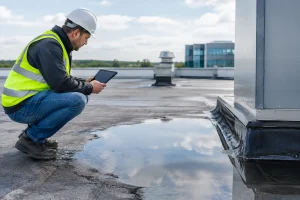
Ponding, for example, may seem harmless initially, but over time it accelerates membrane degradation and promotes leaks. Inspectors also find that UV exposure weakens coatings and PVC sheets, reducing their waterproofing properties. Even small lapses in installation, like misaligned seams or inadequate heat-welding on single-ply membranes, can allow water ingress during heavy rain or storm events.
By documenting these issues in detailed roof inspection reports, inspectors provide building owners with a clear picture of the roof’s current condition, highlighting areas that require remedial action before they escalate into costly repairs.
Identify hidden weatherproofing risks before leaks and failures escalate.
Membrane and Sheet Defects That Compromise Weatherproofing
Different types of membranes including PVC, TPO, bituminous, and liquid-applied coatings each have specific installation requirements. Roof inspectors often find that defects occur when membranes do not adhere properly to the substrate, have punctures from roof penetrations, or are inconsistently applied.
Sheet membranes, such as PVC sheets, can delaminate or tear due to poor adhesion or UV degradation. Inspectors also identify issues where coatings are applied too thinly or unevenly, reducing the overall waterproofing capacity. In commercial roof inspection services, assessing the substrate and existing membrane’s condition is critical, as damage to the underlying structure can lead to leaks and water damage even if the membrane appears intact.
Independent roof inspections go beyond visual checks, providing technical evaluation of elongation, adhesion, and flexibility. This ensures that the membrane waterproofing solution meets Australian standards and will stand the test of time.
Roof Penetrations and Detailing: Hidden Risk Areas
Roof penetrations such as HVAC units, solar panels, drains, and vents are common weak points in waterproofing systems. Inspectors often observe improper flashing, poorly sealed joints, and incompatible materials at these points. Even small gaps can allow water to seep into the building structure, leading to corrosion, mould growth, and structural damage.
In detailed roof inspection reports, these problem areas are flagged with photos and recommendations for remedial action. Roof inspectors assess whether flashings are heat-welded correctly, whether sealants have adequate adhesion, and whether any mechanical fasteners compromise the waterproofing integrity. For commercial roofs, addressing these vulnerabilities is essential to maintain compliance and prevent warranty claims from being voided due to installation defects.
Understand whether your membrane system is performing as intended.
The Role of Substrate and Roof Surface Condition
A membrane’s performance is heavily influenced by the condition of the roof substrate. Inspectors often identify problems such as cracked concrete, corroded steel, or uneven surfaces that prevent membranes from adhering properly. Substrate issues may also exacerbate ponding, leading to localized water accumulation and accelerated membrane wear.
Roof inspection reports include a comprehensive assessment of the substrate, detailing areas that require preparation or repair before waterproofing systems can function effectively. This proactive approach reduces the risk of leaks and water damage, and helps building owners ensure that the roof design is fit for its intended purpose.
Coating Failures and Material Compatibility
Liquid waterproofing membranes and bituminous coatings are popular solutions for flat roofs, but improper application or incompatible materials can compromise performance. Inspectors find that coating failures often occur due to insufficient curing times, application under adverse weather conditions, or the use of materials incompatible with existing membranes.
An independent roof inspector evaluates the coating thickness, adhesion, and continuity, providing a roof condition report that identifies defects likely to cause problems. In commercial roof inspection services, this ensures that remedial actions can be taken before leaks or water ingress lead to costly repairs and potential damage to the building’s structure.
Drainage and Ponding: Subtle but Serious Threats
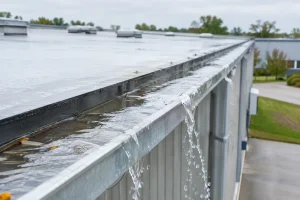
Even a high-quality waterproof membrane can fail if the roof’s drainage system is ineffective. Inspectors frequently encounter ponding due to inadequate slope, blocked drains, or insufficient ballast on flat roofs. Ponding accelerates membrane degradation, increases the risk of leaks, and can damage rooftop equipment.
Professional roof inspection reports highlight these drainage issues, recommending corrective measures such as re-sloping, additional scuppers, or improved ballast systems. For building owners, addressing drainage defects is a cost-effective way to extend the roof’s lifecycle and protect against water damage.
Prevent membrane failure caused by poor drainage and substrate defects.
Why Independent Inspections Protect Your Roof Investment
Standard maintenance checks or installer-provided inspections often miss subtle defects, particularly those that are hidden beneath membranes or coatings. Independent roof inspectors bring expertise and experience in detecting these hidden risks, providing unbiased and reliable inspections that go beyond the standard building inspection.
Independent roof inspection reports allow property managers and building owners to make informed decisions regarding roof maintenance, remedial work, and capital planning. These reports are particularly valuable for pre-purchase due diligence, insurance purposes, and warranty compliance. By investing in professional inspections, building owners gain peace of mind knowing that their waterproofing system is performing as intended and that defects are identified before they escalate into costly problems.
Common Defects Identified in RIA Case Studies
In several roof inspection – case studies conducted across Sydney, inspectors have uncovered common defects that compromise weatherproofing:
- Membrane tears or delamination: Often caused by UV exposure, ponding, or poor adhesion.
- Poorly sealed roof penetrations: Flashings and sealants not installed correctly around vents, drains, and rooftop equipment.
- Substrate deterioration: Cracks or corrosion beneath membranes, weakening the waterproofing system.
- Coating failures: Inadequate coverage or incompatible material layers reducing waterproofing effectiveness.
These defects, if undetected, can lead to leaks, water damage, and early membrane failure. RIA’s independent roof inspection reports document these issues with detailed images and recommendations, helping clients take timely remedial action.
Book a roof inspection today
Ensuring Long-Term Performance of Your Waterproof Roof
Regular inspections are essential to maintain roof waterproofing integrity. Inspectors recommend checking membranes, coatings, and substrate conditions at least once a year and after major weather events. Professional roof inspection services provide thorough inspections that include condition assessment, roof check, and evaluation of potential risks to the building structure.
By integrating independent roof inspections into a maintenance program, building owners can ensure their waterproof membranes continue to provide effective protection against water damage, UV degradation, and weather-related risks. This proactive approach extends the roof’s lifecycle, supports warranty compliance, and reduces the likelihood of costly repairs.
Final Thoughts
Protect your commercial property with RIA’s independent roof inspection services. Our expert team provides unbiased, reliable, and thorough inspections, identifying hidden defects that compromise your roof’s waterproofing system. From detailed roof inspection reports to actionable recommendations, RIA ensures that your building’s roof is safe, compliant, and fit for its intended purpose. Reach out today to schedule a comprehensive inspection and safeguard your investment against future risks.
A PVC membrane can perform exceptionally well across many roofing applications, but suitability depends on roof types, substrate conditions, and exposure levels. A PVC waterproofing membrane offers excellent resistance to UV light, UV radiation, and high solar exposure, making it highly durable on large commercial rooftops. However, inspectors often assess whether the membrane system selected aligns with the roofing systems in place, particularly on metal roofing, concrete roofs, or fibre cement decks, to ensure effective waterproofing and long-term performance.
For flat roof waterproofing, inspectors focus on how liquid membranes, sheet membrane systems, or bitumen-based solutions interact with concrete roofs. They evaluate adhesion, detailing, and transitions to confirm the waterproofing materials are preventing water ingress. Poor application or incompatible materials can lead to moisture retention, which may cause damage to the building and compromise the integrity of the building over time.
Quality workmanship is critical to any membrane system, regardless of whether it uses polyurethane, self-adhesive sheets, or liquid membranes. Inspectors look closely at the applicator’s techniques, including seam treatment, terminations, and penetrations, as membranes are commonly used in areas where errors are difficult to detect later. Even the best waterproofing solution can fail without proper installation by a competent installer.
Yes, green roofs and wet areas require specific waterproofing strategies due to constant moisture exposure and load conditions. Inspectors assess whether flexible waterproofing and seamless systems have been specified to accommodate movement and drainage. Rooftop waterproofing materials must also be compatible with soil, vegetation, or internal finishes to prevent hidden leaks and maintain a top-quality roof assembly.
Inspectors evaluate whether the selected waterproofing sheet or PVC roofing membrane is appropriate for the roof design, exposure, and intended lifespan. Factors such as excellent resistance to UV, material thickness, detailing quality, and compatibility with masonry or adjacent elements all influence durability. A trusted waterproofing solution is one that supports effective waterproofing, prevents water ingress, and protects roofing solutions from premature failure, especially in new construction projects.